
 Minxing Cable
 Jinhuanyu Cable
 Jinlongyu Cable
 Guangdong Cable
 Zhujiang Wire & Cable



Introduction
In the world of electrical infrastructure, few components are as critical—or as demanding—as heavy copper cable. Whether you are powering an industrial facility, a high-rise commercial building, or a renewable energy installation, the choice of cabling directly impacts safety, efficiency, and long-term reliability. Heavy copper cables are the backbone of modern power distribution, designed to handle substantial electrical loads while maintaining exceptional conductivity and durability.
But what exactly defines a “heavy” copper cable? How do you select the right Specifications for your project? And what standards should you look for to ensure compliance and performance? This comprehensive guide explores everything you need to know about heavy copper cable, from technical specifications to real-world applications, helping you make informed decisions for your next installation.
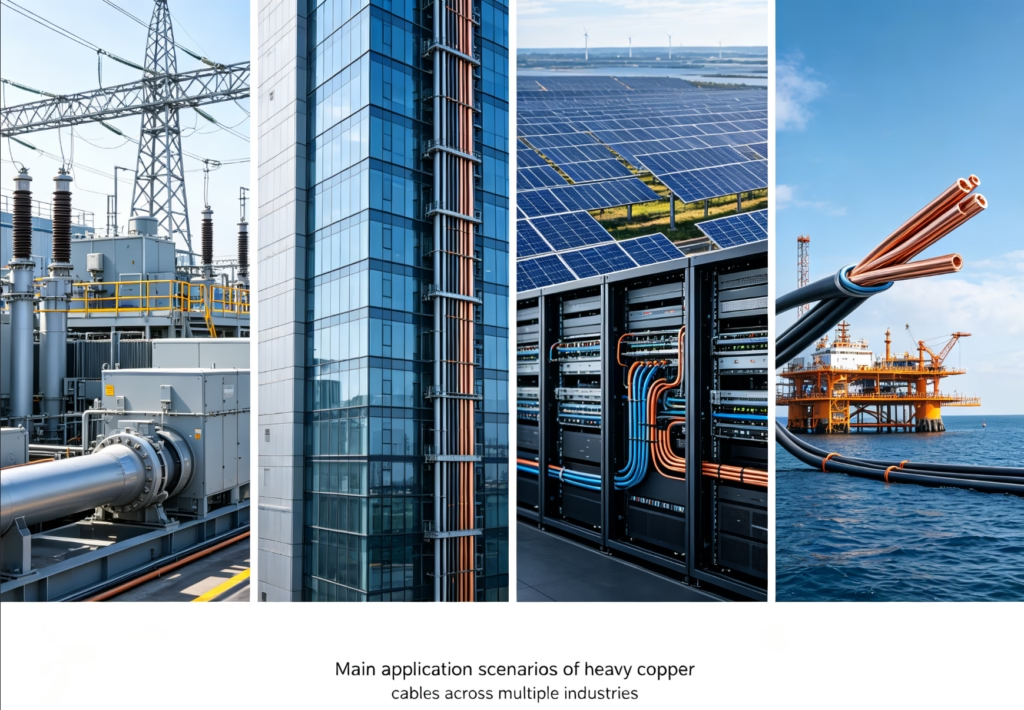
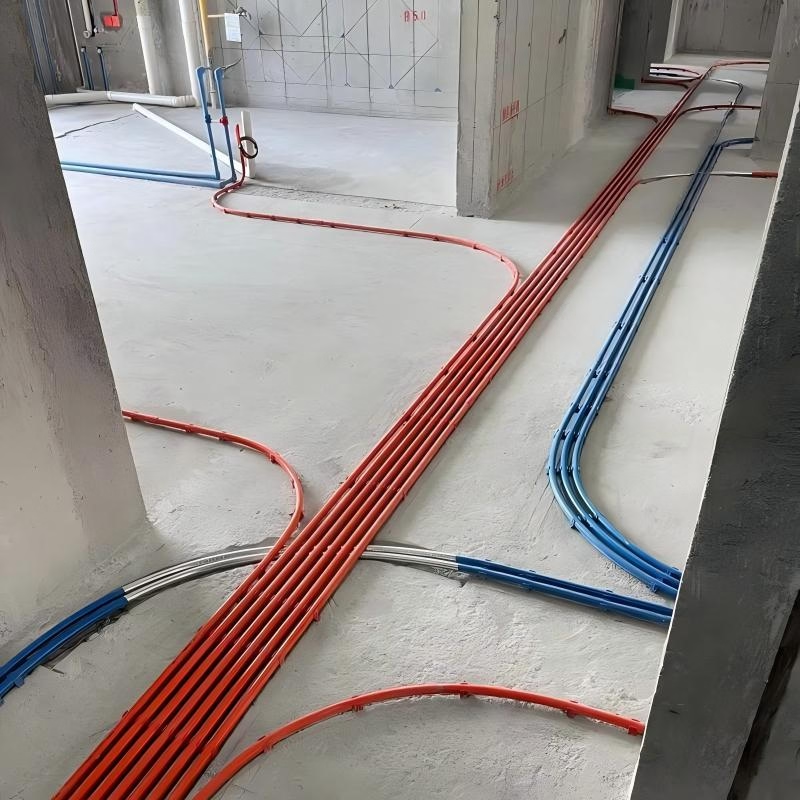
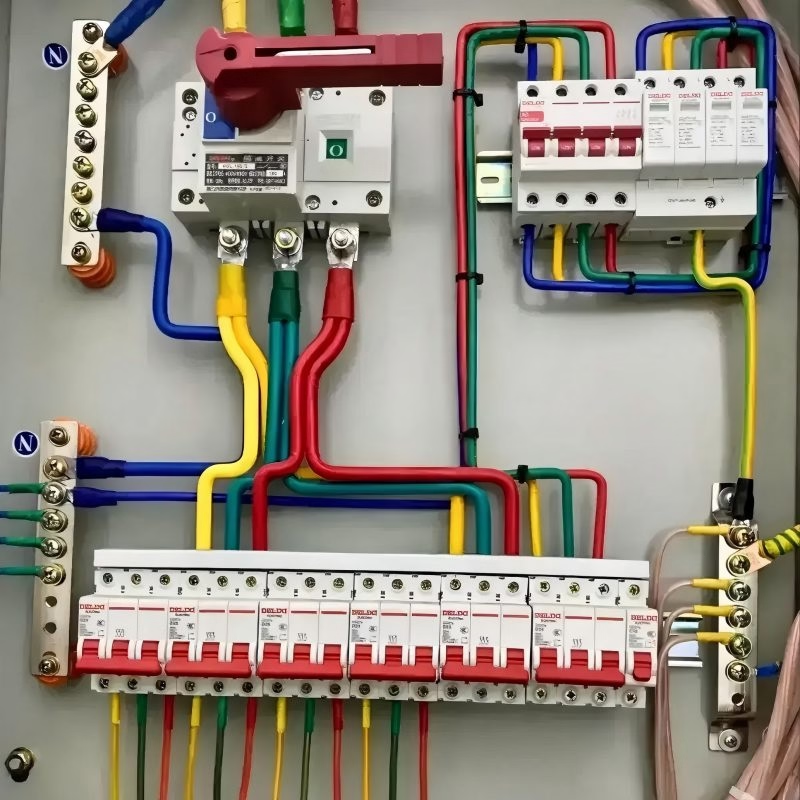
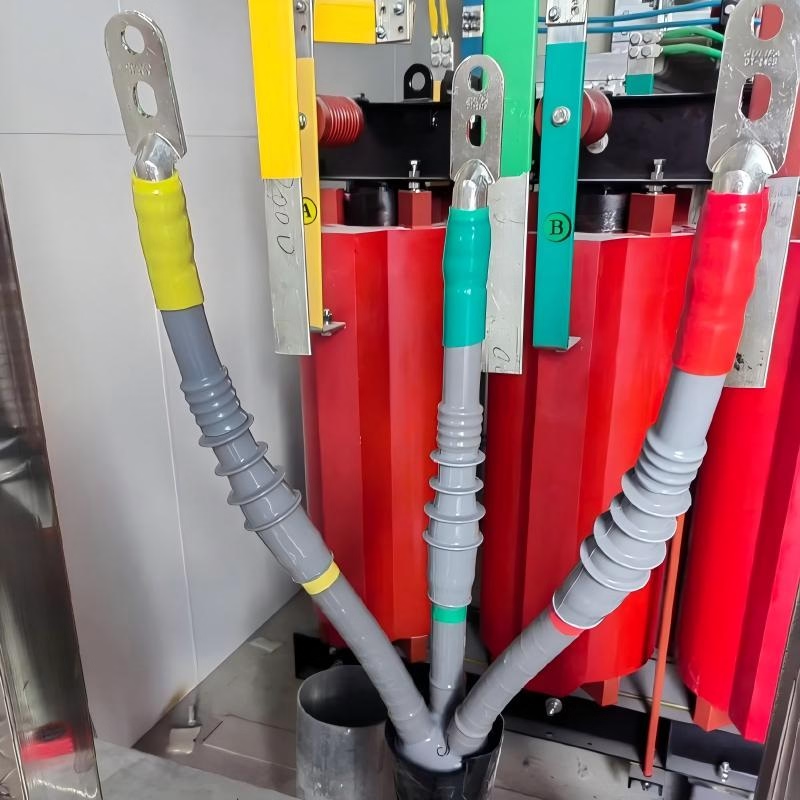
Main Application Scenarios Of Heavy Copper Cables Across Multiple Industries
What Is Heavy Copper Cable?
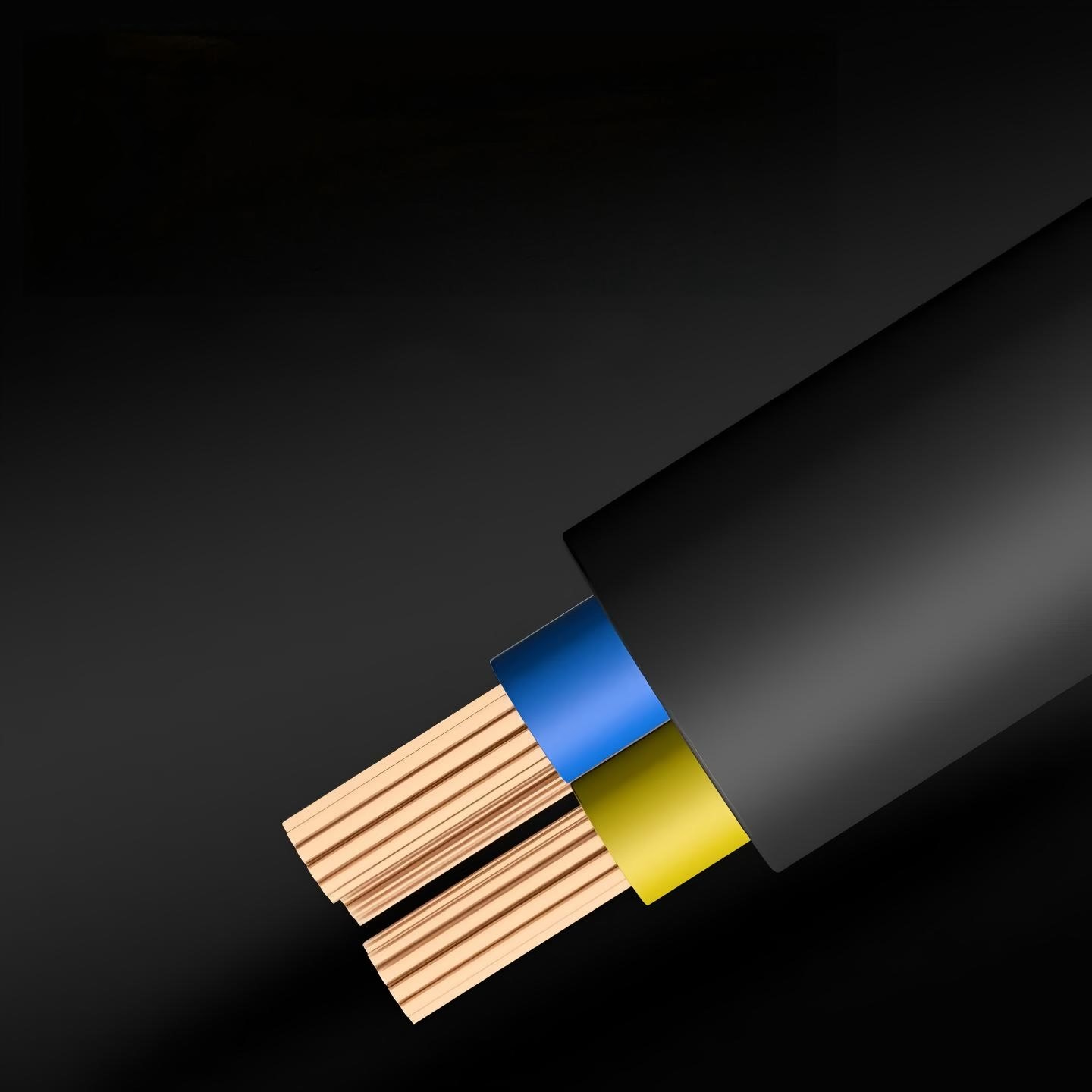
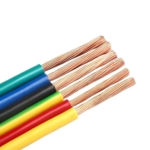
Heavy copper cable refers to electrical cables with larger conductor cross-sectional areas, typically ranging from 10 AWG (approximately 5.26 mm²) up to 2000 kcmil and beyond, designed to carry high currents over significant distances. These cables are characterized by:
Large conductor sizes that minimize voltage drop and resistive losses
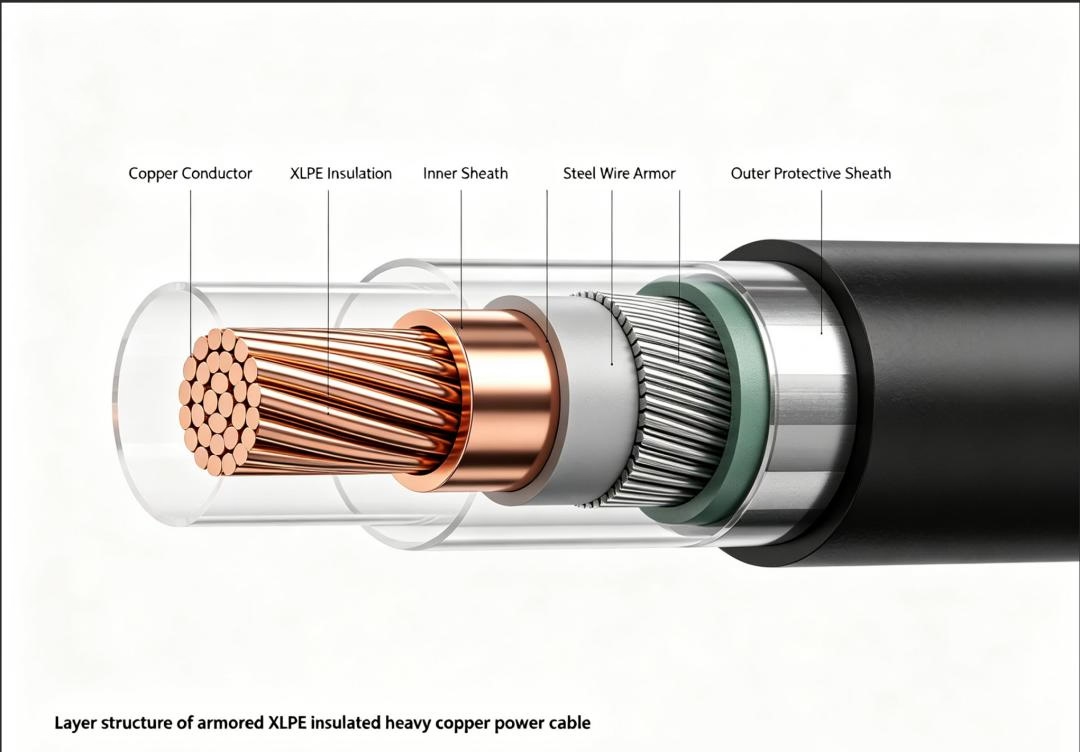
Thick insulation layers to withstand higher voltages and provide enhanced protection
Robust sheathing for mechanical protection in demanding environments
Compliance with stringent standards such as UL, ANSI, and IEC requirements
Unlike standard residential wiring, heavy copper cables are engineered for continuous operation under high electrical and thermal stress. They are commonly used in feeders, service entrances, industrial machinery connections, and large-scale power distribution networks.
Copper vs. Aluminum: Why Copper Remains the Preferred Choice
While aluminum cables are lighter and less expensive, copper offers several distinct advantages that make it the material of choice for critical heavy-duty applications:
| Property | Copper | Aluminum |
|---|---|---|
| Conductivity (IACS) | 100% | ~61% |
| Tensile Strength | Higher | Lower |
| Corrosion Resistance | Excellent | Moderate |
| Thermal Expansion | Lower | Higher |
| Creep Resistance | Superior | Inferior |
| Connection Reliability | Excellent | Requires special attention |
Copper’s superior conductivity means that for the same current-carrying capacity, a copper cable can be smaller than its aluminum counterpart, saving valuable space in crowded conduits and cable trays. Its higher tensile strength also makes it more resistant to mechanical damage during installation and throughout its service life.
Key Applications of Heavy Copper Cable
Heavy copper cables find use across a wide spectrum of industries and applications. Understanding where and how they are used helps in selecting the right product for specific needs.
1. Industrial Power Distribution
Manufacturing plants, refineries, and processing facilities require massive amounts of electrical power to operate heavy machinery. Heavy copper cables serve as the primary feeders from substations to distribution panels and from panels to individual equipment. In these environments, cables must withstand not only high electrical loads but also exposure to oils, chemicals, and temperature extremes.
2. Commercial High-Rise Buildings
Modern skyscrapers and commercial complexes rely on heavy copper cables for their main power risers. These cables run vertically through buildings, supplying electricity to every floor. The combination of high current requirements and long vertical runs demands cables with exceptional conductivity and mechanical strength. Many such installations now incorporate fire-resistant and low-smoke, halogen-free (LSZH) variants to enhance safety.
3. Renewable Energy Systems
Solar farms, wind turbines, and energy storage systems all depend on heavy copper cables to transmit generated power to inverters and grid connection points. The outdoor nature of these installations requires cables with UV resistance, weatherproofing, and the ability to handle fluctuating loads.
4. Data Centers
The explosive growth of cloud computing and AI has driven unprecedented demand for data center capacity. These facilities require massive power feeds to support thousands of servers and cooling systems. Heavy copper cables provide the reliable, low-resistance connections necessary to maintain uptime and energy efficiency.
5. Transportation Infrastructure
Airports, railway stations, and seaports utilize heavy copper cables for lighting, signaling, and power distribution. The demanding operating conditions—including vibration, temperature variation, and exposure to the elements—require cables built to the highest standards of durability.
6. Mining and Marine Applications
In the mining industry, heavy copper cables power excavators, conveyors, and processing equipment in some of the harshest environments on earth. Marine applications, including shipboard power distribution and offshore platforms, demand cables with exceptional resistance to saltwater corrosion and mechanical abuse.
Technical Standards and Compliance
When specifying heavy copper cable, compliance with recognized standards is non-negotiable. These standards ensure safety, performance, and interoperability.
North American Standards
UL (Underwriters Laboratories): UL 83 for thermoplastic-insulated wires and cables, UL 44 for thermoset-insulated wires and cables, and UL 1277 for tray cables
ANSI (American National Standards Institute): Establishes dimensional and performance requirements
AWG (American Wire Gauge): Defines conductor sizes, with larger numbers indicating smaller diameters
CU Cable products comply with UL Certification, US ANSI, and AWG Standards, ensuring they meet the rigorous requirements of the North American market.
International Standards
IEC (International Electrotechnical Commission): IEC 60502 for power cables with extruded insulation
GB/T (Chinese National Standards): Many manufacturers, including MINXING CABLES, produce cables to GB/T 12706 and GB/T 19666 standards.
BS (British Standards): BS 6387 for fire-resistant cable performance
Fire Safety Standards
Fire safety is a critical consideration in any installation. Heavy copper cables are available with various fire-performance ratings:
Flame Retardant: Cables that resist ignition and limit flame spread (ZC, ZB, ZA ratings)
Fire Resistant: Cables that maintain circuit integrity during a fire (NH series)
Low Smoke, Halogen-Free (LSZH): Cables that emit minimal smoke and no toxic halogen gases when burned (WDZ series)
B1 Grade: High-performance cables with low heat release and smoke production
CU Cable’s mineral insulated fireproof cables can withstand temperatures of 950°C–1000°C for up to 3 hours while maintaining electrical continuity, meeting the stringent requirements of the British BS6387 standard (C, W, Z ratings).
How to Select the Right Heavy Copper Cable
Choosing the appropriate heavy copper cable for your application requires careful consideration of several factors.
1. Current-Carrying Capacity (Ampacity)
The ampacity of a cable depends on its conductor size, insulation type, installation method, and ambient temperature. Always consult the manufacturer’s ampacity tables and apply appropriate derating factors for:
Ambient temperature: Higher temperatures reduce ampacity
Grouping: Cables installed in bundles or trays may require derating
Installation method: Buried cables have different ampacity than those in air
2. Voltage Rating
Heavy copper cables are available in various voltage ratings, including:
600V: Common for general-purpose power distribution
1kV: Standard for many industrial applications
3.6/6kV to 26/35kV: Medium-voltage cables for primary distribution
64/110kV: High-voltage transmission cables
3. Insulation and Sheath Materials
Different insulation materials offer different performance characteristics:
| Material | Max. Operating Temp. | Key Properties |
|---|---|---|
| PVC | 70°C | Cost-effective, good chemical resistance |
| XLPE (Cross-Linked Polyethylene) | 90°C | Excellent electrical properties, higher temperature rating |
| EPR (Ethylene Propylene Rubber) | 90°C | Flexible, good moisture resistance |
| Mineral Insulation (MgO) | 1000°C+ | Ultimate fire resistance |
XLPE-insulated cables are increasingly preferred for heavy-duty applications due to their higher temperature rating and superior electrical performance.
4. Environmental Conditions
Consider the installation environment:
Outdoor installations: Require UV-resistant and weatherproof cables
Underground installations: Require moisture barriers and mechanical protection
Hazardous locations: May require special cable constructions
High-temperature areas: Require cables with higher temperature ratings
5. Mechanical Requirements
For vertical installations or long spans, consider:
Tensile strength: Important for vertical risers
Bending radius: Ensure the cable can be installed without damage
Armor: Steel tape or wire armor provides mechanical protection
Installation Best Practices
Proper installation is essential to realize the full benefits of heavy copper cable.
Handling and Storage
Store cables on reels in a clean, dry area
Avoid dragging cables across sharp edges or rough surfaces
Use proper lifting equipment for heavy reels
Bending Radius Requirements
Exceeding the minimum bending radius can damage the cable. General guidelines:
Unarmored single-core: 20 × cable diameter
Armored single-core: 15 × cable diameter
Unarmored multi-core: 15 × cable diameter
Armored multi-core: 12 × cable diameter
Termination and Connection
Use only connectors and lugs rated for the cable size and material
Follow manufacturer torque specifications
Apply anti-oxidant compound on aluminum conductors (not required for copper)
Ensure proper stripping to avoid nicking conductors
Testing and Commissioning
Before energizing, perform:
Continuity testing: Verify all conductors are intact
Insulation resistance testing: Ensure insulation integrity
High-potential (hipot) testing: Verify voltage withstand capability
Partial discharge testing: For medium-voltage cables
Common Mistakes to Avoid
1. Undersizing the Cable
Perhaps the most common and costly mistake is selecting a cable with insufficient ampacity. This leads to overheating, voltage drop, and premature failure. Always calculate the required ampacity based on the actual load, not an estimate.
2. Ignoring Voltage Drop
For long cable runs, voltage drop can significantly impact equipment performance. As a rule of thumb, voltage drop should not exceed 3% for branch circuits or 5% for feeders. Using larger conductors reduces voltage drop but increases cost—finding the right balance is key.
3. Overlooking Fire Safety Requirements
Different applications require different fire performance levels. A cable that is adequate for a low-risk environment may be completely unsuitable for a high-rise building or a hospital. Always verify fire safety requirements with local codes and standards.
4. Improper Termination
Poor terminations are a leading cause of cable failures. Use the correct tools, follow manufacturer procedures, and ensure connections are properly torqued.
Maintenance and Lifecycle Considerations
Heavy copper cables are designed for long service lives—often 30 years or more. However, regular maintenance extends this life and prevents unexpected failures.
Visual Inspection
Check for physical damage, abrasion, or cuts
Inspect terminations for signs of overheating (discoloration)
Look for signs of moisture ingress
Thermal Imaging
Infrared thermography can identify hot spots that indicate loose connections or overloaded conductors.
Periodic Testing
Insulation resistance testing every 3-5 years
For critical installations, consider partial discharge monitoring
The Environmental Advantage of Copper
Copper is 100% recyclable without any loss of performance. Recycling copper requires only about 10% of the energy needed to mine and refine new copper, making it an environmentally responsible choice. Many manufacturers, including MINXING CABLES, are committed to sustainable manufacturing practices, with some facilities achieving “National Green Factory” status.
Frequently Asked Questions
Q: What is the difference between heavy copper cable and standard copper cable?
A: “Heavy” typically refers to larger conductor sizes, thicker insulation, and higher current-carrying capacity. While there is no formal definition, cables of 6 AWG and larger are generally considered heavy-duty.
Q: Can heavy copper cable be used outdoors?
A: Yes, provided it has appropriate UV-resistant and weatherproof sheathing. Many heavy copper cables are available with black PE or PVC sheaths specifically designed for outdoor use.
Q: How long does heavy copper cable last?
A: With proper installation and maintenance, heavy copper cable can last 30 to 50 years or more. Copper’s inherent corrosion resistance contributes to its long service life.
Q: Is copper cable worth the premium over aluminum?
A: For critical applications where reliability, longevity, and performance are paramount, copper’s superior conductivity, strength, and connection reliability justify the higher cost.
Q: What certifications should I look for?
A: For the North American market, look for UL certification and compliance with ANSI standards. For international projects, IEC or GB/T compliance may be required. Fire performance certifications (flame retardant, fire resistant, LSZH) are also important for many applications.
Conclusion
Heavy copper cable is an essential component of modern electrical infrastructure, providing the reliable, high-capacity connections that power our world. From industrial facilities to commercial buildings, from renewable energy systems to data centers, these cables deliver the performance and durability that demanding applications require.
When selecting heavy copper cable, consider not only the immediate electrical requirements but also the long-term factors: fire safety, environmental conditions, mechanical demands, and installation complexity. By choosing cables that meet recognized standards and following best practices for installation and maintenance, you can ensure decades of reliable service.
CU Cable offers a comprehensive range of heavy copper cables designed to meet the highest standards of quality and performance. With UL certification and compliance with US ANSI and AWG standards, CU Cable products provide the peace of mind that comes with knowing your electrical infrastructure is built to last.