

 Minxing Cable
 Jinhuanyu Cable
 Jinlongyu Cable
 Guangdong Cable
 Zhujiang Wire & Cable




Introduction
You have spent thousands of dollars on high-quality copper cable. You have carefully calculated the ampacity, selected the right insulation, and followed every code requirement. Then, you leave the cable lying on the floor, draped over rafters, or stuffed haphazardly into a conduit.
That is a mistake that could cost you far more than the few dollars you saved on proper cable management.
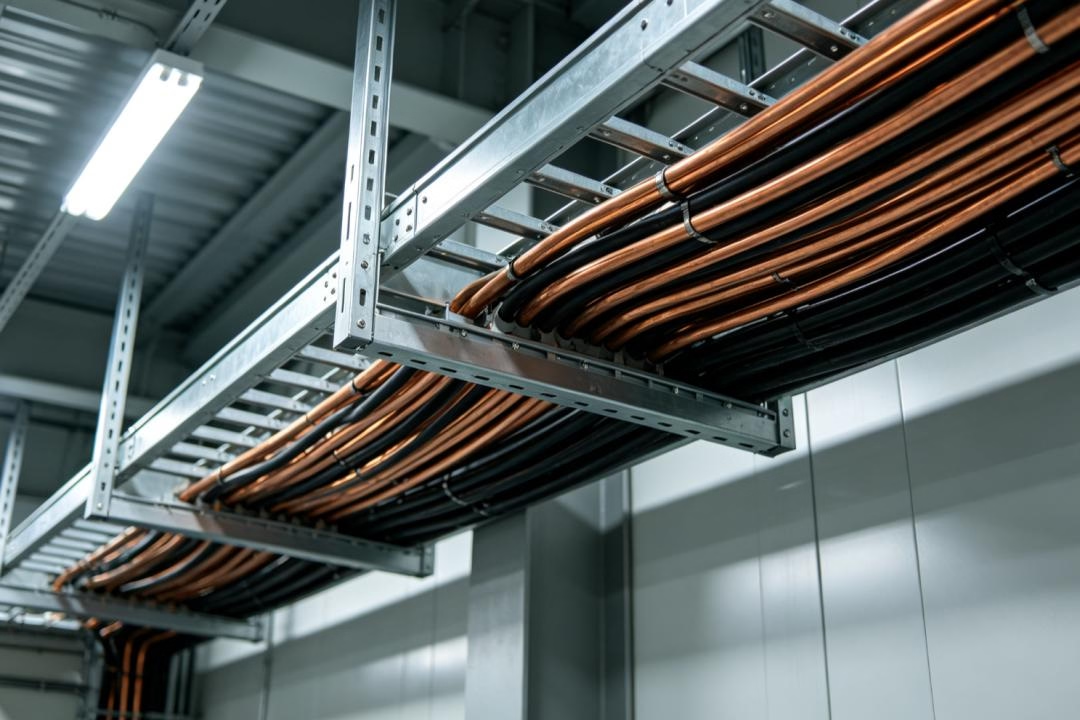
A copper cable tray is a rigid structural system used to support insulated electrical cables in power distribution and communication applications. It provides a safe, organised, and accessible pathway for cables, protecting them from mechanical damage, environmental factors, and electromagnetic interference.
The global cable tray market was valued at USD 4.69 billion in 2025 and is projected to reach USD 6.41 billion by 2032, with some forecasts suggesting growth to USD 16.14 billion by 2034 at a CAGR of over 10%. Within this massive market, copper cable tray systems—and the copper cables they support—play a critical role.
This guide explains what copper cable trays are, why they matter, how to select the right one, and what happens when you get it wrong.
What Is a Copper Cable Tray?
A cable tray is a structural system of metal or non-metal components used to support insulated cables and conductors for power distribution and communication. It consists of straight sections, fittings, and accessories that form a continuous pathway for cables.
A copper cable tray can mean two things:
A cable tray made from copper or copper alloys – While less common than steel or aluminium, copper cable trays are used in specialised applications where conductivity, corrosion resistance, or non-magnetic properties are required.
A cable tray system used to support copper cables – This is the most common interpretation. Steel or aluminium cable trays supporting copper power and control cables are ubiquitous in industrial and commercial installations.
In practice, most cable trays are made from steel (galvanised or stainless) or aluminium. Copper itself is rarely used as the tray material due to cost and weight. However, the cables supported by these trays are overwhelmingly copper.
The Three Main Types of Cable Trays
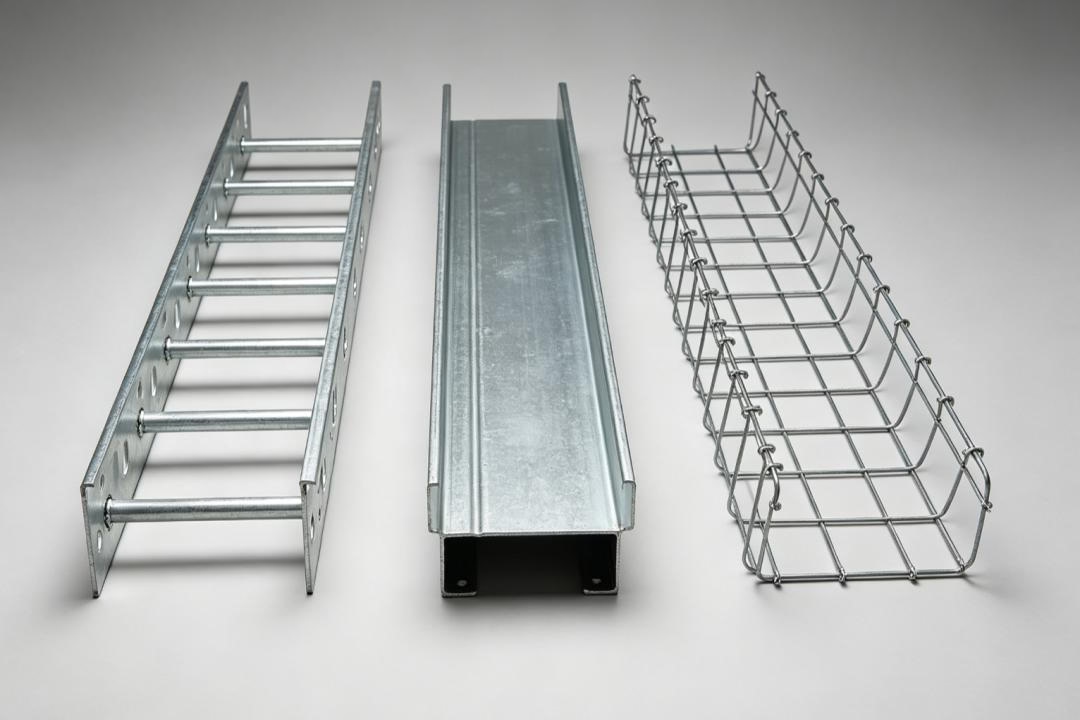
Studio Display Of The Three Most Common Cable Tray Variants. From Left To Right: Galvanized Ladder Cable Tray, Solid-Bottom Cable Tray, And Welded Wire Mesh Cable Tray. Each Design Delivers Distinct Advantages For Copper Cable Routing, Including Ventilation, Mechanical Protection, Flexibility, And Accessibility For Maintenance. Engineers Select Tray Style Based On Load Requirements, Environment, Cable Types And Cooling Demands.
1. Ladder Cable Tray
The most common type, consisting of two side rails connected by rungs. It provides excellent ventilation, is lightweight, and is ideal for long spans and heavy cable loads.
2. Solid Bottom Cable Tray
Features a continuous bottom surface, providing maximum cable protection. Used in applications where dust, oil, or moisture protection is required.
3. Wire Mesh Cable Tray
A lightweight, flexible option made from welded wire mesh. Popular in data centres and telecommunications for organising copper cabling. It provides easy access, excellent airflow, and allows cables to be routed through the mesh openings.
Why Copper Cable Tray Systems Are Essential
1. Superior Cable Protection
Cable trays protect cables from mechanical damage, crushing, abrasion, and environmental factors. In industrial environments—where cables are exposed to vibration, movement, and physical stress—a properly designed cable tray system is essential for long-term reliability.
2. Organised Cable Management
Cable trays eliminate the clutter of cables running across floors, walls, and ceilings. They provide a neat, structured pathway that makes installation, maintenance, and troubleshooting significantly easier.
3. Improved Airflow and Cooling
Cables generate heat. In a conduit, that heat is trapped, potentially reducing cable ampacity. Cable trays—particularly ladder and wire mesh types—allow air to circulate around cables, improving heat dissipation and allowing cables to carry higher currents.
4. Reduced Installation Costs
A cable tray wiring system uses 1,666 pounds less copper for the same capacity circuit than a conduit wiring system. Because cables in trays can be installed without the need for continuous conduit, material and labour costs are significantly reduced. There are also substantial installation cost savings available by using a cable tray wiring system instead of a conduit wiring system.
5. Flexibility and Scalability
Cable trays make it easy to add, remove, or reroute cables as system requirements change. This flexibility is invaluable in data centres, industrial plants, and commercial buildings where upgrades are frequent.
6. Safety
Cable trays provide a secure, supported pathway that reduces the risk of cables being damaged by foot traffic, equipment, or falling objects. They also facilitate proper grounding and bonding, reducing electrical shock hazards.
Copper vs. Aluminium: The Weight Difference That Matters
One of the most critical factors in cable tray selection is weight—both the weight of the tray itself and the weight of the cables it supports.
Tray Weight Comparison
A 20-foot length of cable tray weighs approximately 90.8 lbs in aluminium and 146 lbs in steel. Aluminium trays weigh roughly half as much as steel trays of the same size.
For a 36-inch wide, 24-foot section of ladder cable tray with a 6-inch side rail, a NEMA 20C hot-dip galvanised steel tray weighs about 200 lbs, whereas the same tray in aluminium weighs only about 100 lbs.
This weight difference has significant installation implications:
Fewer installers required – When installers must carry and position cable tray sections 30 feet or more above ground, aluminium’s lighter weight can mean the difference between needing just two installers instead of four.
Lower structural requirements – Lighter trays require less robust support structures.
Easier handling – Less physical strain on workers reduces injury risk.
Cable Weight Comparison
Copper cables are significantly heavier than aluminium cables. For the same current-carrying capacity, a copper conductor is smaller but denser. Big cables weigh more: thicker cables with more conductors mean more material, so they are heavier. Copper cables are heavier than aluminium ones. Armoured cables weigh more than unarmoured ones.
This means that a cable tray supporting copper cables must be designed to handle greater loads than a tray supporting aluminium cables of similar ampacity.
Applications: Where Copper Cable Trays Are Used
Copper cable tray systems are used across an extraordinarily wide range of industries and applications.
1. Data Centres
Wire mesh cable trays are increasingly popular in data centres for organising copper cabling. They provide wall-, floor-, or ceiling-based copper cable routing, allowing organised category cable bundling. Large mesh openings allow cables to be routed through the spaces if needed.
2. Industrial Facilities
Manufacturing plants, refineries, and processing facilities use cable trays to support power and control cables. Tray cables are permitted for use on power, lighting, control, and signal circuits; indoors or outdoors; in cable trays, raceways, and for direct burial.
3. Commercial Buildings
Office buildings, retail spaces, and institutional facilities use cable trays for power distribution, lighting, and data networks.
4. Power Generation
Generating stations, substations, and renewable energy facilities rely on cable trays for reliable power distribution.
5. Transportation
Airports, railways, and tunnels use cable trays for lighting, signalling, and communication systems.
6. Oil and Gas
Refineries, chemical plants, and offshore platforms use cable trays in harsh environments where durability and corrosion resistance are essential.
Tray Cable: The Cable Designed for Cable Trays
Cables installed in cable trays must meet specific requirements. Tray cable (Type TC) is a cable construction specifically designed for installation in cable trays.
Key Features of Tray Cable
Stranded copper conductors – Provide flexibility for installation and long-term reliability
High dielectric strength PVC insulation – Protects against electrical breakdown
Flame-retardant – Reduces fire risk in cable tray installations
Suitable for indoor and outdoor use – Can be installed in cable trays, raceways, channels, conduit, and duct
Direct burial rated – May be installed in direct burial or sunlight-exposed areas
Wet or dry location rated – Suitable for environments exposed to chemicals or oil
Common Tray Cable Types
Power cables – For distribution of electrical power
Control cables – For monitoring and controlling electrical circuits
Instrumentation cables – For transmitting low-voltage signals from sensors and measurement devices
Communication cables – For data and telecommunications
Installation Best Practices
Even the best cable tray system will fail if installed incorrectly. Follow these best practices:
1. Plan the Installation
Assess the installation environment. Avoid areas with extreme heat, corrosive substances, or strong vibrations. Ensure pathways are clear of obstructions and moisture.
2. Mount the Tray Correctly
Cable trays should not be laid directly on the floor or roof. They should be mounted far enough off the floor or roof to allow cables to exit through the bottom of the tray. Ensure each section is level and properly aligned before tightening connections.
3. Calculate Support Spacing
Calculate support spacing based on tray type and load. Ensure brackets and hangers are appropriately specified for the weight of the tray and cables.
4. Maintain Proper Cable Spacing
Spacing of cables on cable trays shall be 2 times the overall diameter of an individual cable up to a maximum of 90mm apart. This allows for proper heat dissipation and reduces the risk of overheating.
5. Avoid Sharp Bends
Ensure that pathways do not strain copper cable through sharp bends, twists, or crimping that can change the physical properties of the cable. Use sufficient rollers and guides to minimise side pressure when directing cables through bends.
6. Ensure Proper Grounding
Both side rails of the tray must be bonded together to the next section. Cable trays can be used as the only equipment grounding conductor (EGC), but they must meet certain criteria, including minimum cross-sectional areas and UL classification.
7. Use Proper Fittings
Use the proper cable tray fittings for specific applications. Ensure components comply with NEMA Standard VE-1.
Standards and Compliance
Cable tray installations must comply with relevant standards.
NEMA VE-1
NEMA VE-1 is the industry standard for metal cable trays. It specifies requirements for metal cable trays and associated fittings designed for use in accordance with the rules of the Canadian Electrical Code (CEC), Part I, and the National Electrical Code® (NEC).
NEMA VE-1 defines manufacturing, performance, and testing standards for cable tray systems. It includes class designations that indicate support span in feet (meters) plus working load designation.
NEMA VE-2
NEMA VE-2 provides cable tray installation guidelines.
National Electrical Code (NEC)
NEC Article 318 covers cable trays. Article 318 and Article 340 cover “Power And Control Cable Type TC”. Cables marked TC-ER may also be used between a cable tray.
UL Standards
Cable trays and tray cables must meet UL standards. Subject 1277 of Underwriters Laboratories covers tray cables.
The Market: A Growing Industry
The global cable tray market is substantial and growing rapidly:
2025 value: USD 4.69 billion
2032 forecast: USD 6.41 billion
CAGR: 4.55%
Other forecasts suggest even more optimistic growth:
Some reports project growth from USD 6.41 billion in 2025 to USD 16.14 billion by 2034, a CAGR of 10.35%
Others value the market at USD 3.1-3.6 billion in 2025 with a CAGR of 5.5-6.5%
This growth is driven by:
Increasing infrastructure investment – Urbanisation and industrialisation are driving demand for cable management systems
Data centre expansion – The explosive growth of cloud computing and AI is driving demand for cable trays in data centres
Renewable energy projects – Solar and wind farms require extensive cable management systems
Industrial automation – Factories are becoming more automated, requiring more power and control cables
Upgrades to electrical infrastructure – Aging infrastructure is being replaced or upgraded
Frequently Asked Questions
Q: What is the difference between a cable tray and a conduit?
A: A cable tray is an open support system that provides a pathway for cables, allowing for easy access, ventilation, and future additions. A conduit is a closed tube that completely encloses cables, providing maximum protection but making additions and modifications more difficult.
Q: Why use copper cables in cable trays?
A: Copper offers superior conductivity, durability, and reliability compared to aluminium. Copper cables are the standard for most power distribution and control applications.
Q: What is tray cable?
A: Tray cable (Type TC) is a cable construction specifically designed for installation in cable trays. It features stranded copper conductors, high dielectric strength insulation, and is flame-retardant.
Q: How much does a cable tray weigh?
A: A 20-foot length of cable tray weighs approximately 90.8 lbs in aluminium and 146 lbs in steel. A 36-inch wide, 24-foot section weighs about 200 lbs in steel and 100 lbs in aluminium.
Q: What is the global cable tray market size?
A: The global cable tray market was valued at USD 4.69 billion in 2025 and is projected to reach USD 6.41 billion by 2032. Some forecasts project growth to USD 16.14 billion by 2034.
Q: Where can I find official cable tray standards?
A: Official standards are published by NEMA (VE-1 and VE-2), UL (Subject 1277), and the National Electrical Code (NEC Article 318). The NEMA website (www.nema.org) and NFPA website (www.nfpa.org) provide access to these standards.
Conclusion
Copper cable tray systems are the unsung heroes of modern electrical infrastructure. They provide the safe, organised, and accessible pathways that copper cables need to deliver power and data reliably.
The numbers tell the story:
USD 4.69 billion market in 2025
USD 6.41 billion by 2032
1,666 pounds less copper required than conduit systems
50% weight reduction with aluminium trays compared to steel
11.2% CAGR in some market segments
When you choose a copper cable tray system, you are not just buying a support structure—you are investing in safety, reliability, and future-proofing. You are choosing the infrastructure that will support your electrical system for decades to come.
The copper cables inside those trays will carry the power that lights our cities, the data that connects our world, and the signals that control our industries. And the trays themselves will keep those cables safe, organised, and accessible.
That is not just cable management. That is infrastructure that matters.
References
GII Research – Cable Tray Market Report 2026-2032
Technavio – Cable Tray Market Growth Analysis 2025-2029
NEMA VE-1 – Metal Cable Tray Standards
National Electrical Code (NFPA 70) – Article 318, Cable Trays
Cooper B-Line – Cable Tray Weight Comparison Data
CableTrays.org – Cable Tray Applications and Benefits
Southwire – Tray Cable Specifications
This guide is for informational purposes only. Always consult the latest edition of applicable codes and standards and work with qualified professionals for electrical installations.