
 Minxing Cable
 Jinhuanyu Cable
 Jinlongyu Cable
 Guangdong Cable
 Zhujiang Wire & Cable
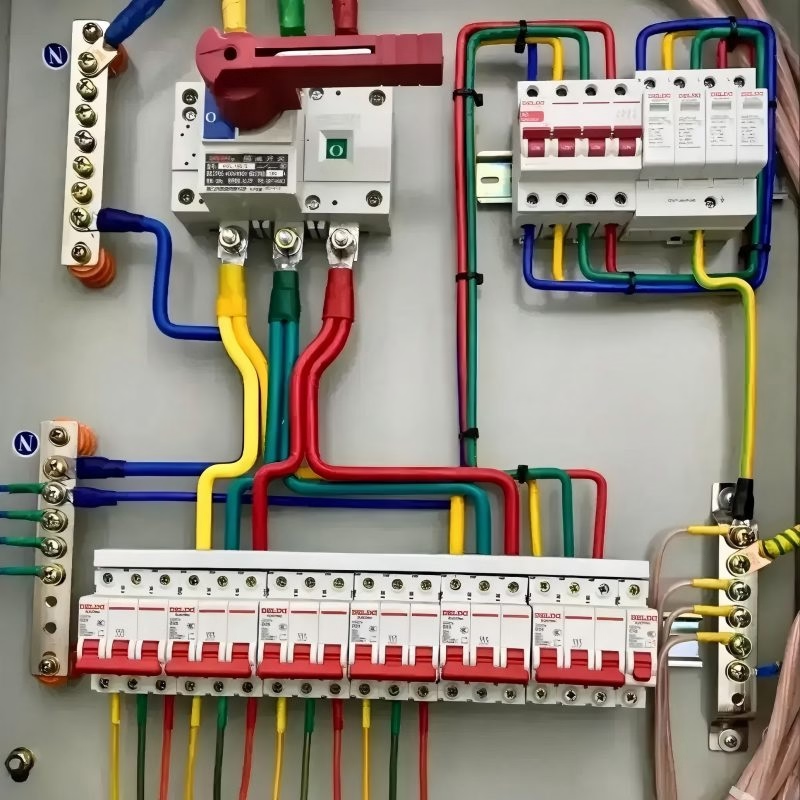
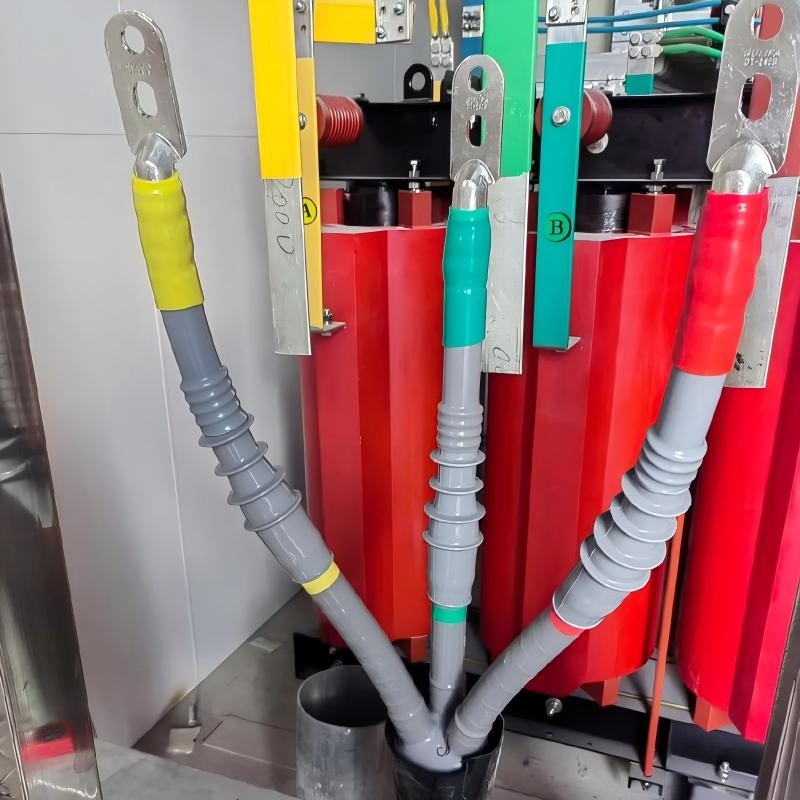
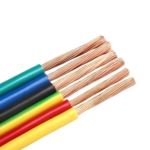



Introduction
Look around you right now. The light illuminating this page. The device you are reading on. The Wi‑Fi signal connecting you to the internet. The phone charging beside you. The air conditioning keeping you comfortable.
Every single one of these things relies on one material: copper cable.
It is everywhere, yet most people never think about it. It runs through walls, beneath floors, across ceilings, and underground. It connects your lights, your computers, your phones, your machinery, and your entire electrical grid. Without copper cable, modern civilisation as we know it would simply cease to exist.
But what exactly is copper cable? How does it work? Why has it remained the backbone of global infrastructure for over 150 years?
This guide answers those questions and more. Whether you are an engineer, a student, a network administrator, or simply someone who wants to understand the technology that powers your daily life, this article will give you a complete picture of what copper cable really is—and why it still matters more than ever.
What Is Copper Cable? The Simple Definition
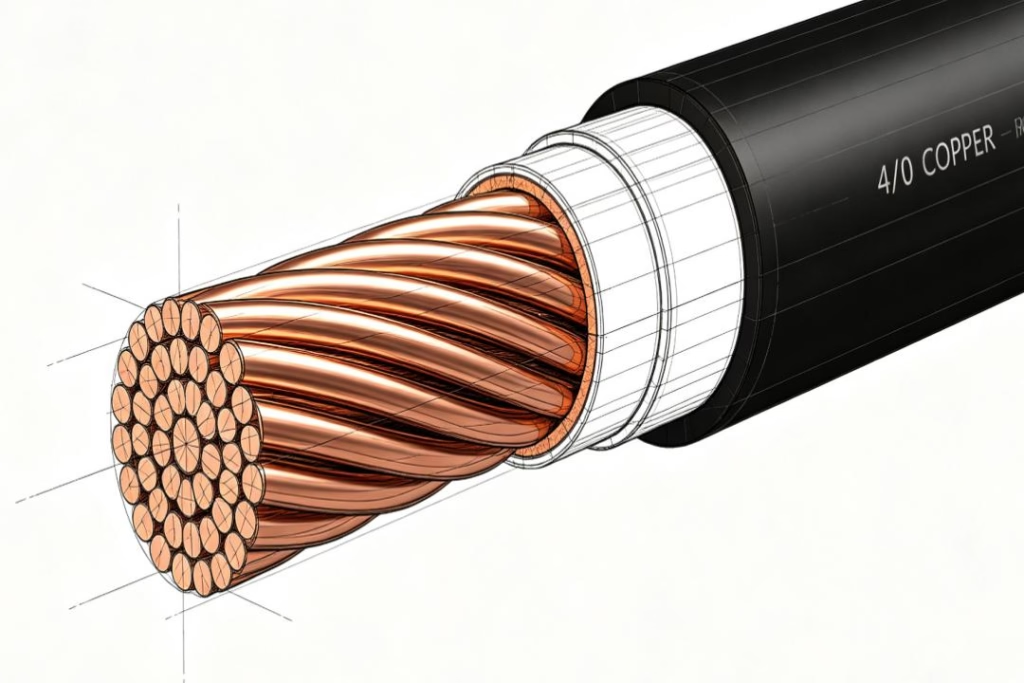
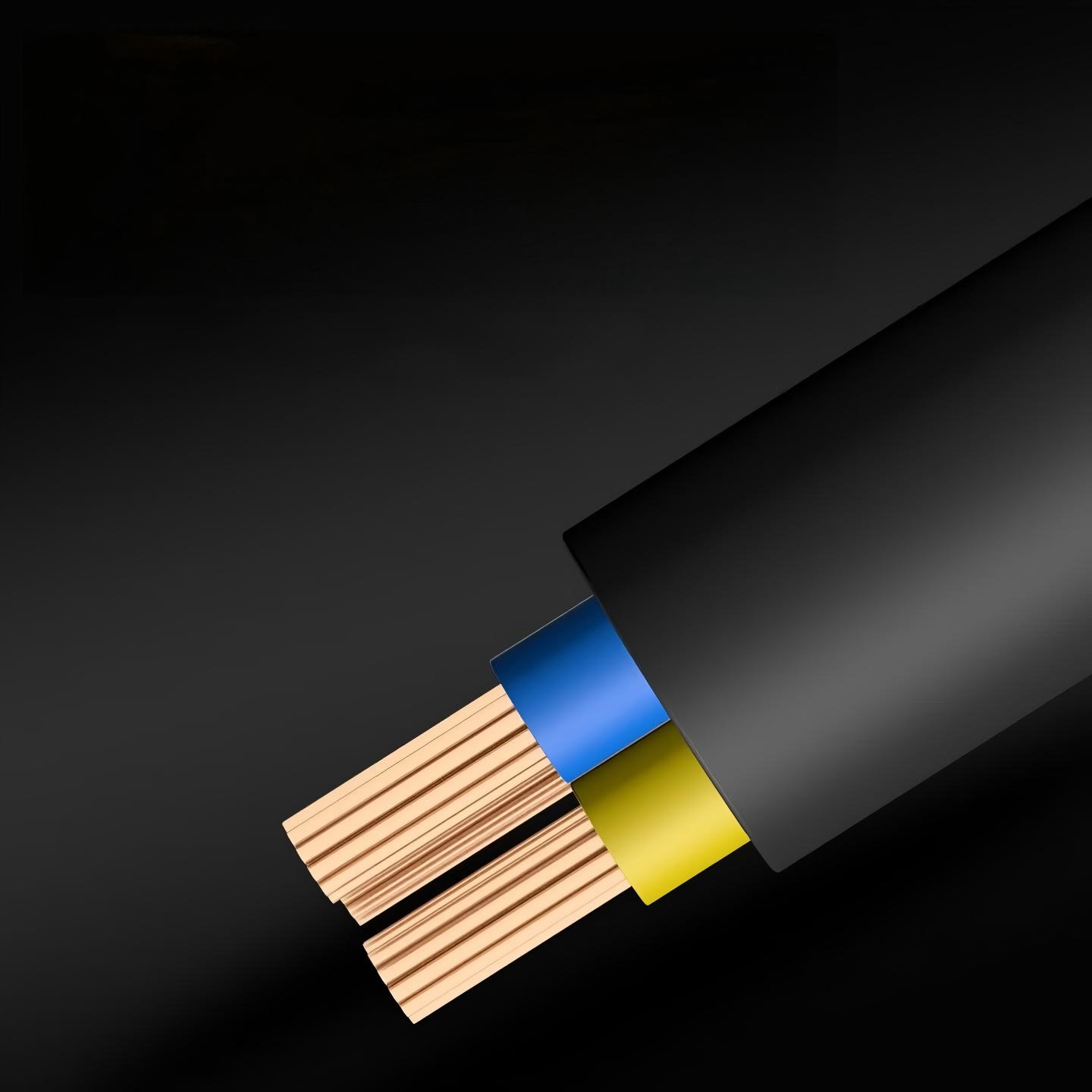
At its most basic level, a copper cable is an assembly of one or more copper conductors—each carrying electrical current—that are insulated from one another and enclosed within a protective outer sheath. This construction allows copper cables to transmit data, voice, and power reliably across various distances and environments.
Copper cables are the most widely used form of physical connectivity in modern networking and electrical environments. They contain strands or solid cores of copper—a highly conductive metal—encased in insulating material to facilitate the transmission of electrical signals.
The Three Essential Components
Every copper cable, regardless of its type or application, consists of three fundamental layers:
1. The Conductor – The copper core at the centre of the cable that carries electrical current or data signals. This is the heart of the cable, responsible for transmitting power or information from Point A to Point B.
2. The Insulation – The layer surrounding each conductor that protects it from environmental threats, prevents electrical interference between adjacent conductors, and ensures signal integrity. Common insulation materials include PVC, nylon, polyethylene, and cross‑linked polyethylene (XLPE).
3. The Jacket – The outer protective layer that shields the entire cable from physical damage, moisture, chemicals, and environmental factors.
Depending on the application, copper cables may also include additional layers such as shielding (to block electromagnetic interference), armour (for physical protection), a drain wire (for grounding), and a ground wire (for safety).
The History: How Copper Cable Became the Backbone of Civilisation
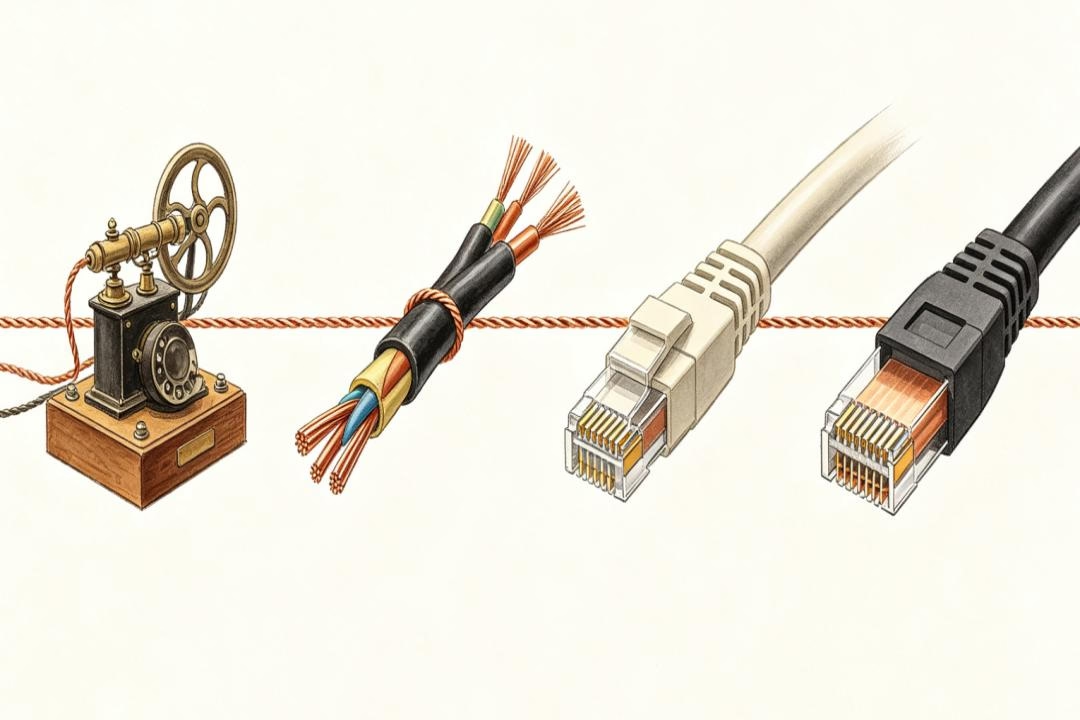
Vintage Technical Illustration Tracing The Evolution Of Copper Communication Infrastructure. Starting From The Early Telegraph Apparatus, Through Multi-Core Insulated Copper Cables, Up To Modern Twisted-Pair Ethernet Cables, Showing How Copper Conductors Have Continuously Adapted To Evolving Communication Demands For Over 150 Years.
Copper has been used in electrical wiring since the invention of the electromagnet and the telegraph in the 1820s. The invention of the telephone in 1876 created further demand for copper wire as an electrical conductor. Copper has been an essential part of data transmission since underground telegraph wires in the early 19th century.
Today, roughly half of all copper mined globally is used to manufacture electrical wire and cable conductors. Electrical wiring in buildings remains the single most important market for the copper industry.
From the first telegraph lines to today’s high‑speed data centres, copper cable has been the invisible backbone of every technological revolution. And despite the rise of fibre optics and wireless technology, it shows no signs of disappearing.
Why Copper? The Science Behind the Choice
Copper is not used in cables by accident. It possesses a unique combination of properties that make it the ideal conductor for most applications.
1. Unmatched Electrical Conductivity
Copper has the highest electrical conductivity rating of all non‑precious metals. Its electrical resistivity at 20°C is just 16.78 nΩ·m. This means copper can carry electrical current with minimal resistance, translating to less energy loss, less heat generation, and more efficient power transmission.
2. Excellent Thermal Conductivity
Copper’s high thermal conductivity allows it to dissipate heat effectively. In high‑current applications, this prevents dangerous heat buildup that could damage insulation, reduce performance, or create fire hazards.
3. Superior Mechanical Flexibility
Copper cables are easy to bend, route, and terminate, which simplifies installation and allows for compact cable management in racks and trays. This flexibility is invaluable in complex wiring environments.
4. Exceptional Durability
Copper is highly resistant to corrosion and can last for decades—even centuries—in the right conditions. Its durability makes it suitable for underground installations, industrial environments, and outdoor applications.
5. 100% Recyclability
Copper is 100% recyclable without any loss of performance. Recycling copper uses significantly less energy than mining new copper, making it an environmentally sustainable choice.
The Main Types of Copper Cable
Copper cables come in many varieties, each designed for specific applications. Understanding these types is essential for selecting the right cable for your needs.
By Conductor Construction: Solid vs. Stranded
The first major distinction is between solid and stranded conductors.
Solid Copper Cable consists of a single, solid copper wire per conductor. It offers better electrical characteristics and lower attenuation than stranded cable, making it ideal for permanent installations inside walls, floors, and ceilings. Solid conductors carry more current than stranded wire of the same diameter and are typically more affordable.
Stranded Copper Cable is made up of multiple smaller copper wires twisted together to form a single conductor. Stranded cables are much more flexible and can withstand more bending, making them ideal for patch leads, environments where cables are frequently bent or unplugged, and work areas with movable equipment.
In short: solid core cables are used for permanent infrastructure, while stranded cables are used for moveable connections such as patch cords.
By Shielding: Unshielded vs. Shielded
Copper cables can also be classified by whether they include shielding.
Unshielded Twisted Pair (UTP) relies solely on the twisting of the wire pairs to cancel out interference. It is flexible, cost‑effective, and ideal for standard office environments.
Shielded Twisted Pair (STP) adds an extra layer of foil or braided shielding to protect against heavy electromagnetic interference. Some cables use both foil and braid shielding to guard against both low‑ and high‑frequency EMI.
By Application: Common Cable Types
Twisted‑Pair Cable – The most common type of copper cable for networking. It consists of pairs of insulated copper wires twisted together to reduce interference. Twisted‑pair cables can transmit data at up to 1000 Mbps in some network architectures.
Coaxial Cable (Coax) – Features two or more separate materials sharing a common central axis. Coax is remarkably stable in its electrical properties at frequencies below 4 GHz, making it popular for cable television transmissions and local area networks (LANs).
Ethernet Cables (Cat5e, Cat6, Cat6a, etc.) – The most common form of copper cable in modern networking. These cables use twisted copper pairs for internal wiring and are available in different generations with varying specifications. Cat6a and Cat7 cables are thicker and more robust, making them heavier and harder to install, but they support higher speeds.
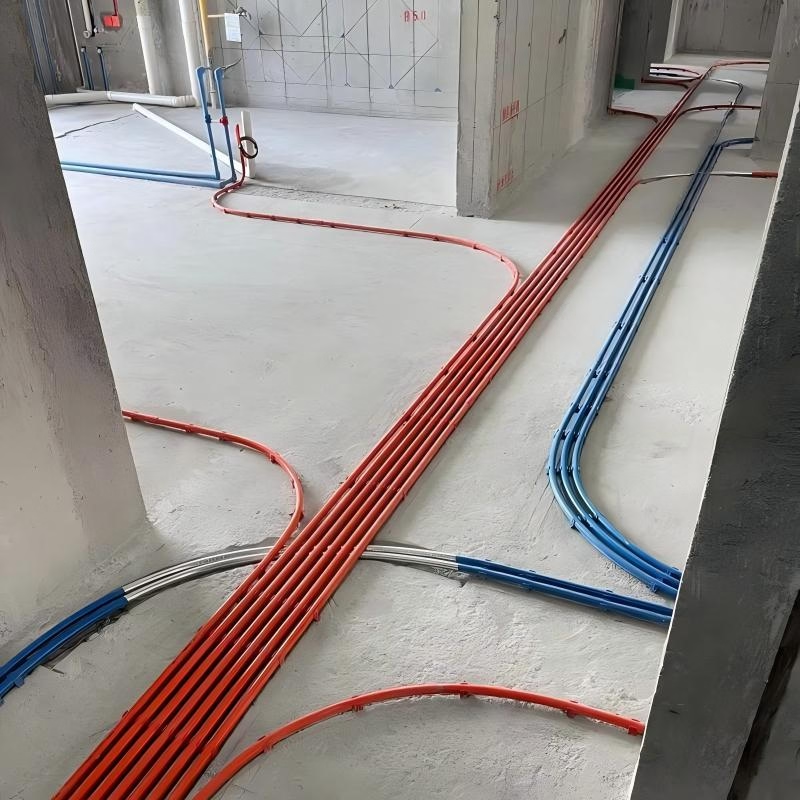
Building Wire (THHN/THWN) – Used for permanent electrical wiring in residential, commercial, and industrial buildings. These cables are installed in conduit, cable trays, or as part of a cable assembly.
Power Cable – Designed for distribution of electrical power at various voltage levels, typically featuring multiple conductors, insulation, bedding, and sheathing layers.
Control Cable – Used for monitoring, controlling, and protecting electrical circuits in industrial and commercial environments.
Copper Cable vs. Fibre Optic: The Critical Comparison
One of the most common questions about copper cable is how it compares to fibre optics. The answer depends on what you need.
The Fibre Advantage
Fibre optic cables transmit data using light signals through a glass or plastic core, while copper cables transmit data using electrical signals. Photons in fibre optics travel at the speed of light, while electrons in copper wires move much slower, giving fibre a significant speed advantage. Fibre offers much higher data rate ceilings than copper—several hundred times higher in some cases. Fibre also supports greater cable lengths, is more reliable (being less susceptible to electromagnetic interference), and is more durable.
The Copper Advantage
Despite fibre’s superior performance in long‑distance and high‑speed applications, copper remains the dominant choice for in‑building cabling. Copper cabling is significantly more affordable than fibre optics for shorter‑distance deployments. It is easier to install, easier to terminate, and widely compatible with existing equipment. Crucially, copper can carry both data and power simultaneously via Power over Ethernet (PoE), a capability fibre simply cannot match.
The Verdict
In the vast majority of local area networks (LANs), copper remains the default medium for connections under 100 metres. Fibre is the clear winner for long‑haul, high‑bandwidth applications. The two technologies are not competitors—they are complementary. Most modern networks use both: fibre for the backbone, copper for the last mile.
Key Applications of Copper Cable
Copper cables are used across an astonishingly wide range of industries and applications.
1. Networking and Data Communications
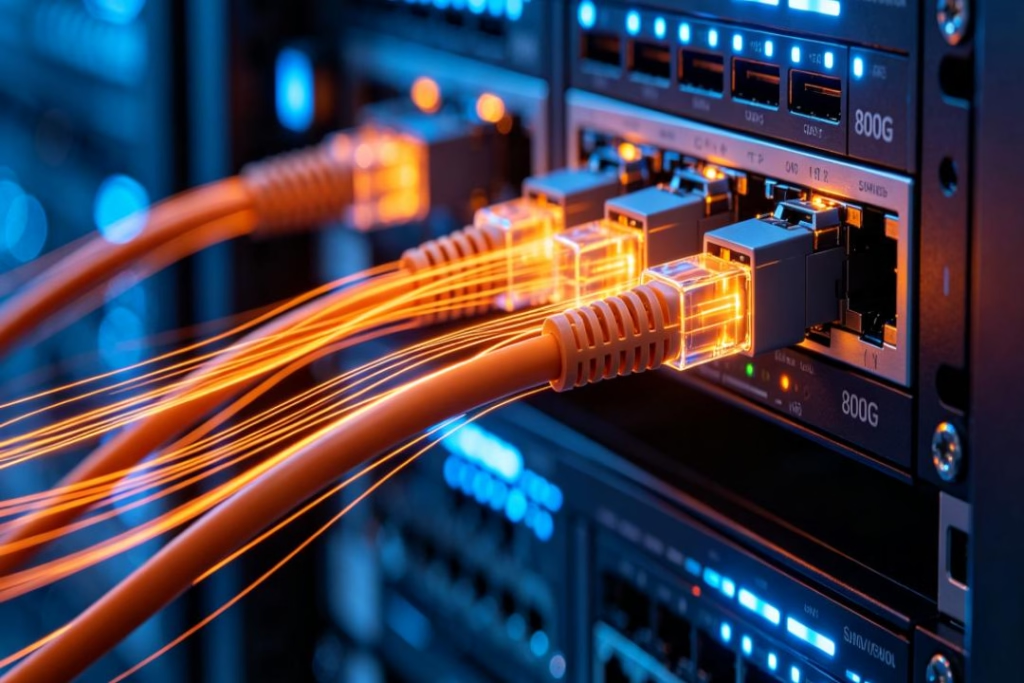
Copper cables are the most widely used form of physical connectivity in modern networking environments. They transmit Ethernet signals between routers, switches, servers, patch panels, and end‑user terminals. Categories such as Cat5e, Cat6, and Cat6a each offer increased bandwidth and reduced interference.
2. Power Distribution
Copper is the standard for electrical power distribution in residential, commercial, and industrial settings. Copper power cables are widely deployed in utilities, renewable energy projects, industrial plants, and large commercial facilities due to their high conductivity, superior current‑carrying capacity, and long operational life.
3. Power over Ethernet (PoE)
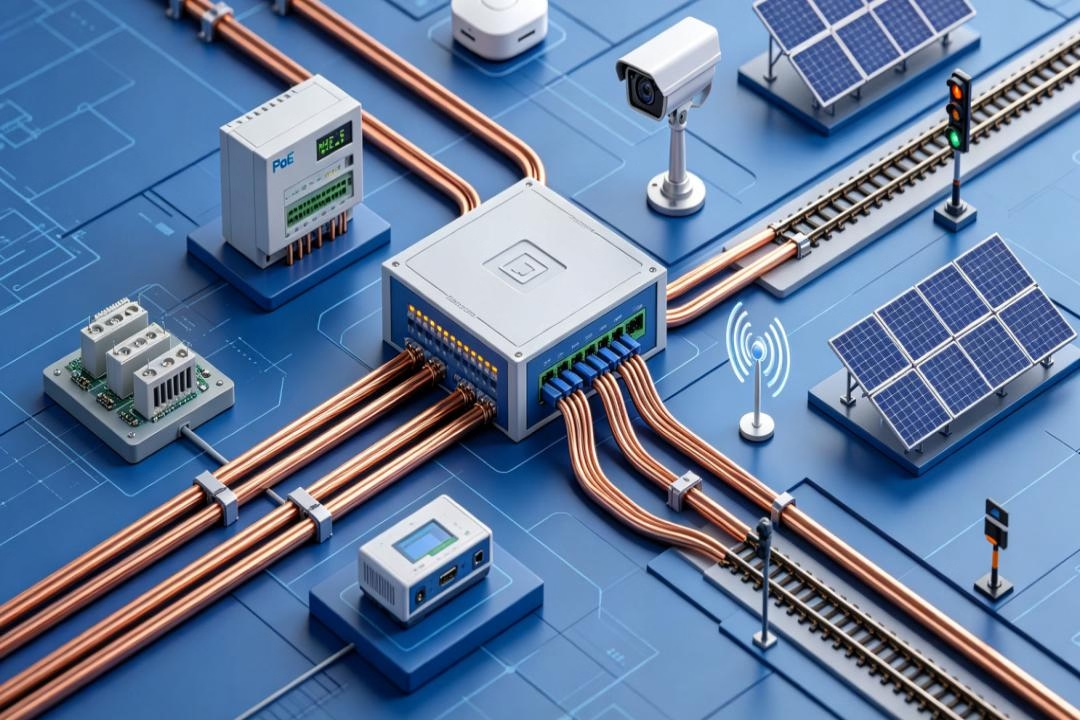
Copper’s ability to carry both data and power makes it ideal for powering devices like wireless access points, security cameras, and IoT sensors. This eliminates the need for separate electrical wiring, reducing installation costs and simplifying deployment.
4. Telecommunications
Copper cables have been a critical component in telecommunications for decades, serving as the primary medium for carrying voice and data signals.
5. Control and Instrumentation
Control cables are used for monitoring, controlling, and protecting electrical circuits in industrial environments. Instrumentation cables transmit low‑voltage signals from sensors, transmitters, and other measurement devices.
6. Transportation
Airports, railways, seaports, and tunnels use copper cables for lighting, signalling, power distribution, and communication systems.
7. Renewable Energy
Solar farms, wind turbines, and energy storage systems depend on copper cables to transmit generated power efficiently. Copper’s high conductivity minimises losses, maximising the return on renewable energy investments.
How to Choose the Right Copper Cable
Selecting the correct copper cable for your project requires careful consideration of several factors.
1. Determine the Application
Is this for permanent building wiring, flexible connections, power distribution, or data networking? Each application has different requirements.
2. Choose Solid or Stranded
Use solid copper for permanent installations and in‑wall wiring. Use stranded copper for flexible connections, patch cords, and applications requiring frequent bending.
3. Select the Appropriate Shielding
Standard office environments typically only need UTP. High‑EMI environments—such as industrial facilities or areas near power cables—may require STP or cables with both foil and braid shielding.
4. Choose the Right Category
For networking, select the appropriate category: Cat5e for budget‑friendly home networking, Cat6 for modern business LANs, Cat6a for high‑speed data centres and future‑proofing.
5. Verify Compliance
Ensure the cable meets applicable standards: NEC, TIA/EIA, ISO/IEC, or other relevant certifications.
Frequently Asked Questions
Q: What is the difference between a wire and a cable?
A: A wire is a single conductor of electricity. A cable is a bundle of wires that work together and are generally enclosed in the same protective jacket.
Q: Why is copper used in cables instead of aluminium?
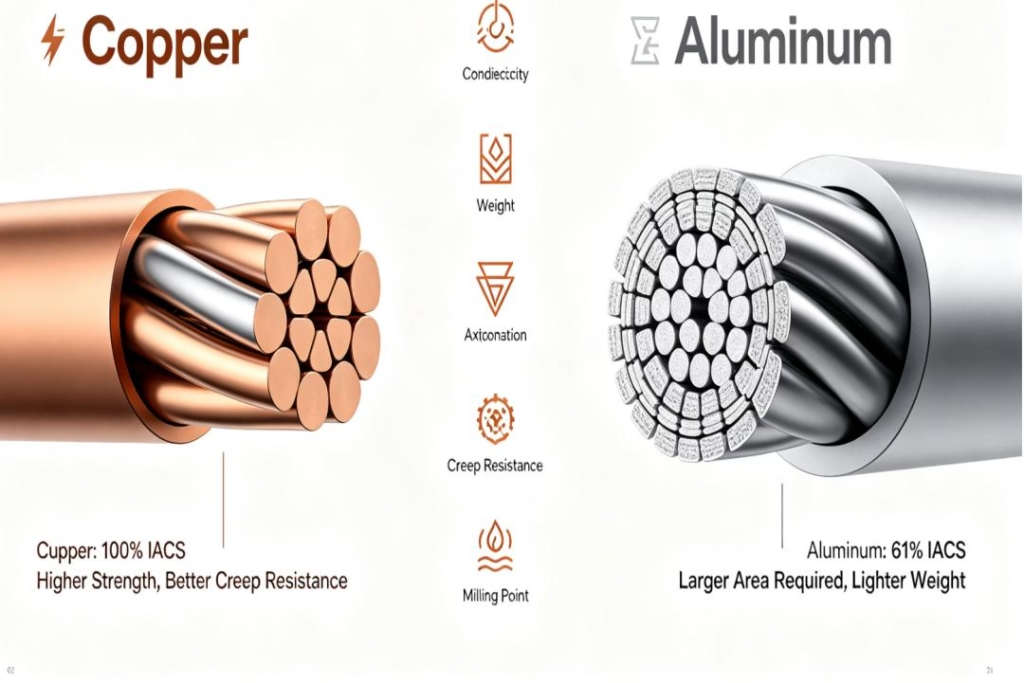
A: Copper has significantly higher conductivity than aluminium. For equivalent conductivity, the cross‑section of an aluminium conductor must be 1.6 times larger than that of a copper conductor. Copper also offers superior durability, corrosion resistance, and long‑term reliability.
Q: What is the maximum length for copper Ethernet cable?
A: The standard maximum channel length for copper Ethernet is 100 metres (328 feet).
Q: What is the difference between solid and stranded copper cable?
A: Solid uses a single copper wire per conductor and is used for permanent installations. Stranded uses multiple smaller wires twisted together and is used for patch cords and flexible connections.
Q: Can copper cable support 10 Gbps?
A: Yes. Cat6a supports 10 Gbps over the full 100‑metre channel. Cat6 can support 10 Gbps but only up to 55 metres.
Q: What is the most common type of copper cable?
A: Twisted‑pair cable—particularly Ethernet cables like Cat5e, Cat6, and Cat6a—is the most common type of copper cable in modern networking environments.
Q: Where can I find official information about copper cable standards?
A: Official standards are published by organisations such as TIA/EIA, ISO/IEC, and the National Electrical Code (NEC). Google search results provide numerous resources, including guides from Cable Matters, Belden, Fluke Networks, and Wikipedia.
Conclusion
Copper cable is not a legacy technology waiting to be replaced. It is a living, evolving technology that has powered the world for over 150 years and continues to do so today. From the telegraph lines of the 19th century to the 10‑gigabit Ethernet cables of the 21st, copper has adapted to every new demand placed upon it.
Its combination of excellent conductivity, mechanical flexibility, cost‑effectiveness, and the unique ability to carry both power and data makes it indispensable for modern infrastructure. While fibre optics dominate long‑distance and ultra‑high‑speed applications, copper remains the undisputed king of the last mile—the connection from the street to your home, from the switch to your desk, from the router to your device.
Understanding what copper cable really is—its types, its applications, its strengths, and its limitations—is essential for anyone who works with electrical or network systems. It is the invisible backbone that keeps the modern world running.
And it is not going anywhere.
References
Wikipedia – Copper conductor
ScienceDirect – Copper cable
Belden – 7 Layers of Copper Cable Construction
Cable Matters – Fiber Optic vs. Copper Cables
AndCorp – Copper Cables: Types, Uses & Network Performance
Various engineering reference sites including Wikipedia, ScienceDirect, Belden, and Cable Matters
This guide is for informational purposes only. Always consult the latest standards and work with qualified professionals for electrical and network installations.