 Minxing Cable
 Jinhuanyu Cable
 Jinlongyu Cable
 Guangdong Cable
 Zhujiang Wire & Cable



Introduction
Looking for high-quality copper and cable? Learn everything you need to know about copper and cable specifications, applications and selection tips.Copper and cable are two words that belong together. For over a century, copper has been the backbone of electrical infrastructure, enabling everything from the first telegraph lines to today’s high-speed data centers and renewable energy systems. Its exceptional conductivity, durability, and reliability make it the material of choice for engineers, electricians, and contractors worldwide.
But what exactly makes copper the ideal conductor for cables? What types of copper cables exist, and how do you select the right one for your project? This comprehensive guide covers everything you need to know about copper and cable—from the fundamental properties of copper conductors to practical selection criteria, installation best practices, and industry standards.
Whether you are wiring a residential building, designing an industrial facility, or planning a network infrastructure, understanding copper and cable is essential to ensuring safety, performance, and long-term reliability.
What Is a Copper Cable?
Before diving into the details, it is important to understand the distinction between a wire and a cable. A wire is a single conductor of electricity. A cable, on the other hand, is a bundle of wires that work together and are generally enclosed in the same protective jacket.
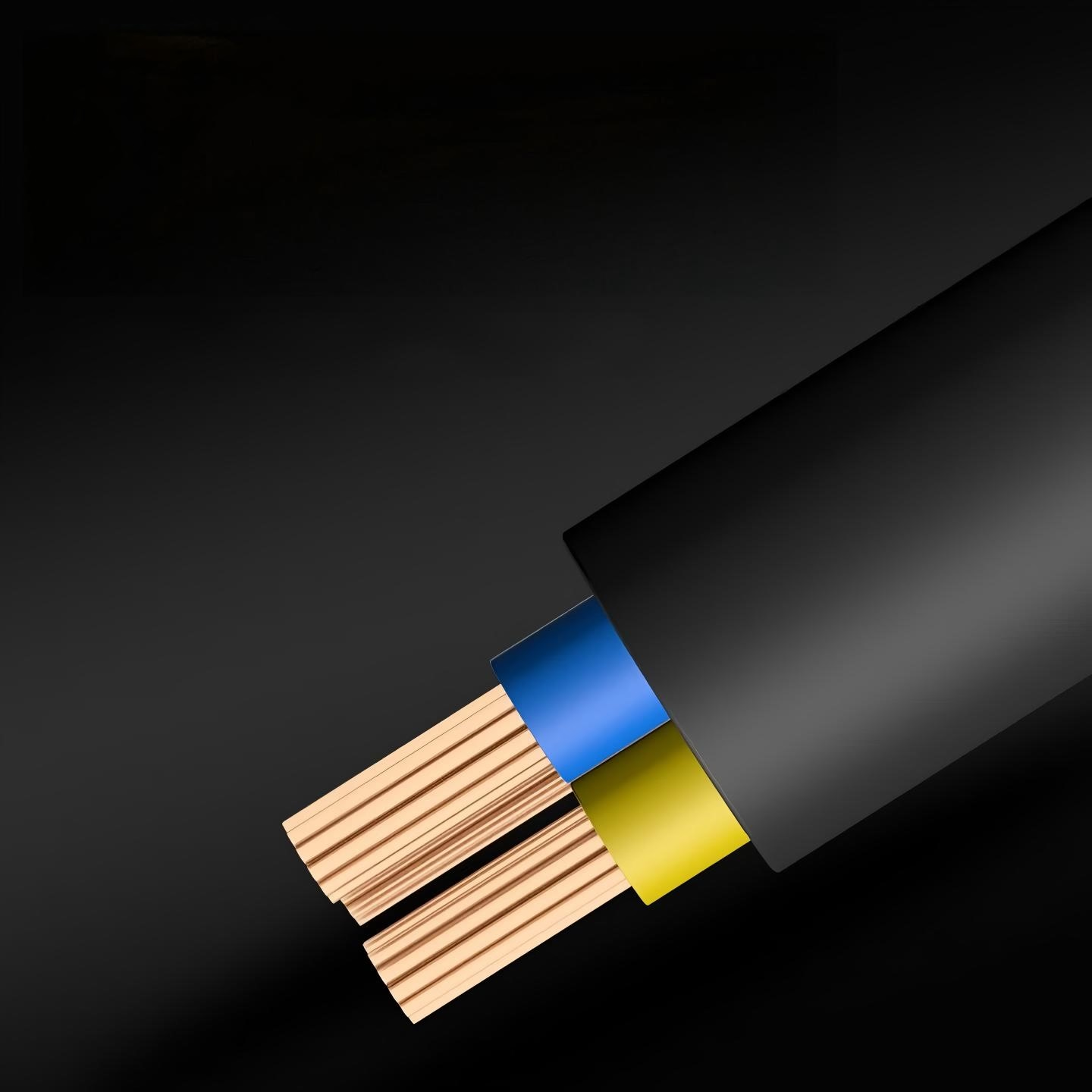
A copper cable, therefore, is an assembly of copper conductors—each carrying electrical current—insulated from one another, and enclosed within a protective outer sheath. This construction allows copper cables to transmit data, voice, and power reliably across various distances and environments.
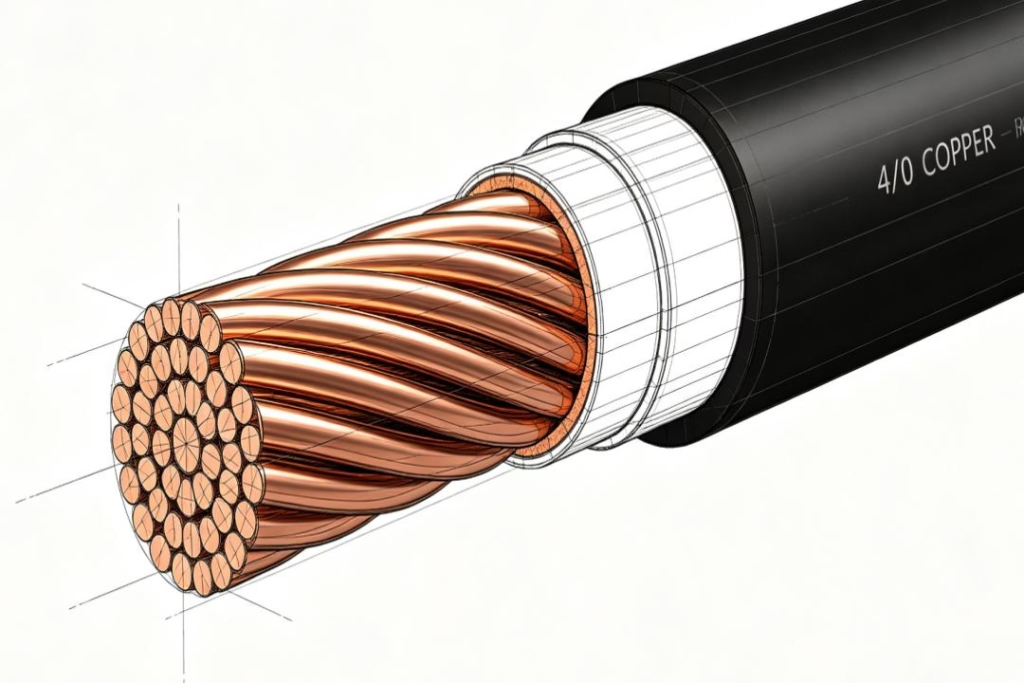
The inner workings of a copper cable are surprisingly universal. Every copper cable is made up of three key components:
The Conductor – The core of the cable, responsible for transmitting electrical signals. Copper is used most often because of its excellent conductivity, durability, and reliability.
The Insulation – Surrounds each conductor to prevent signal leakage, maintain data integrity, and protect against short circuits.
The Jacket – Ensures durability and protects the internal components from physical damage, moisture, and environmental factors.
Depending on the application, copper cables may also include shielding, armor, a drain wire, and/or a ground wire for additional protection and performance.
Why Copper? The Science Behind the Choice
Unmatched Electrical Conductivity
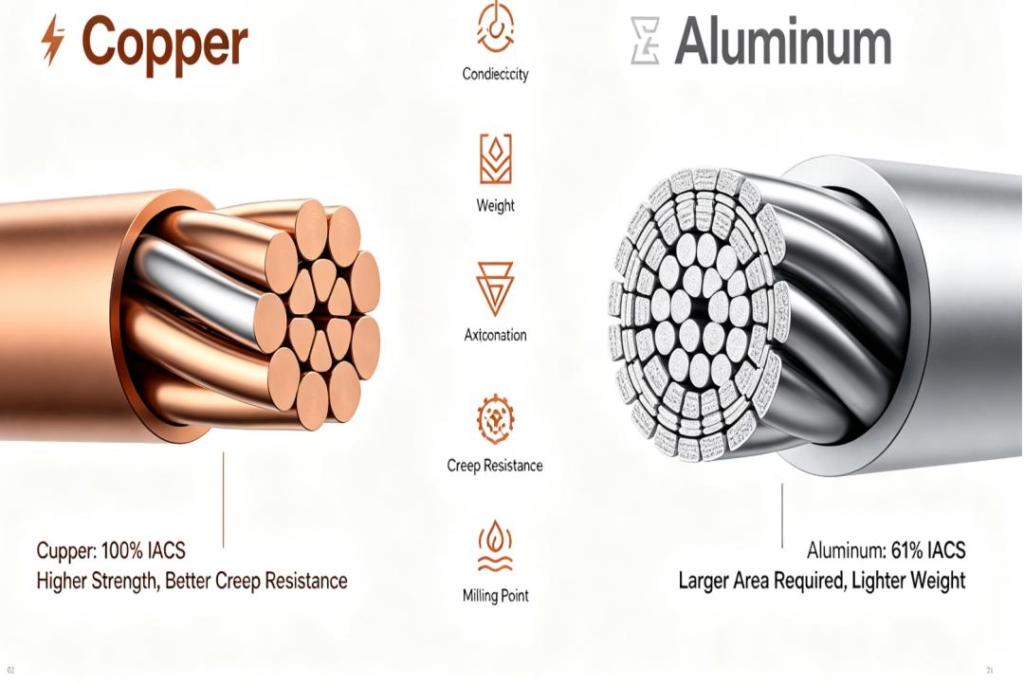
Copper is the second most conductive metal in the world, surpassed only by silver. With a conductivity of 100% IACS (International Annealed Copper Standard), copper outperforms aluminum—which achieves approximately 61% IACS—by a significant margin. This means that for the same current-carrying capacity, a copper conductor can be smaller than its aluminum counterpart, saving valuable space in conduits, cable trays, and equipment.
Copper’s low electrical resistance makes it ideal for high-speed data transmission with minimal signal loss.
Superior Thermal Performance
Copper’s high thermal conductivity allows it to dissipate heat more effectively than alternative materials. This is critical in high-current applications where heat buildup can damage insulation, reduce performance, or create fire hazards. The melting point of copper is 1,080°C, compared to just 660°C for aluminum. This makes copper the only viable choice for fire-resistant cables that must maintain circuit integrity during a fire.
Exceptional Mechanical Strength
Copper wires are more fatigue-resistant than aluminum wires. In high-cycle fatigue applications, copper can withstand up to 10⁶ cycles more than aluminum. This durability translates to longer service life, fewer failures, and lower maintenance costs over the lifetime of an installation. Copper’s tensile strength is roughly 40% better than aluminum, meaning copper is less likely to break during installation or operation.
Corrosion Resistance
Copper is resistant to corrosion, making it well suited for a wide range of environments, including underground installations. Copper naturally forms a protective oxide layer that prevents further corrosion. Unlike aluminum, which forms a non-conductive oxide that can compromise connections, copper’s oxide remains conductive, ensuring reliable terminations over decades of service.
Flexibility and Workability
Copper is more flexible than aluminum, making it easier to work with regarding bending during the installation process. Because copper has higher ductility and malleability than aluminum, it can bend easily during installation and be maneuvered through tight corners and constricted areas without breaking or cracking.
Copper Conductors: Solid vs. Stranded
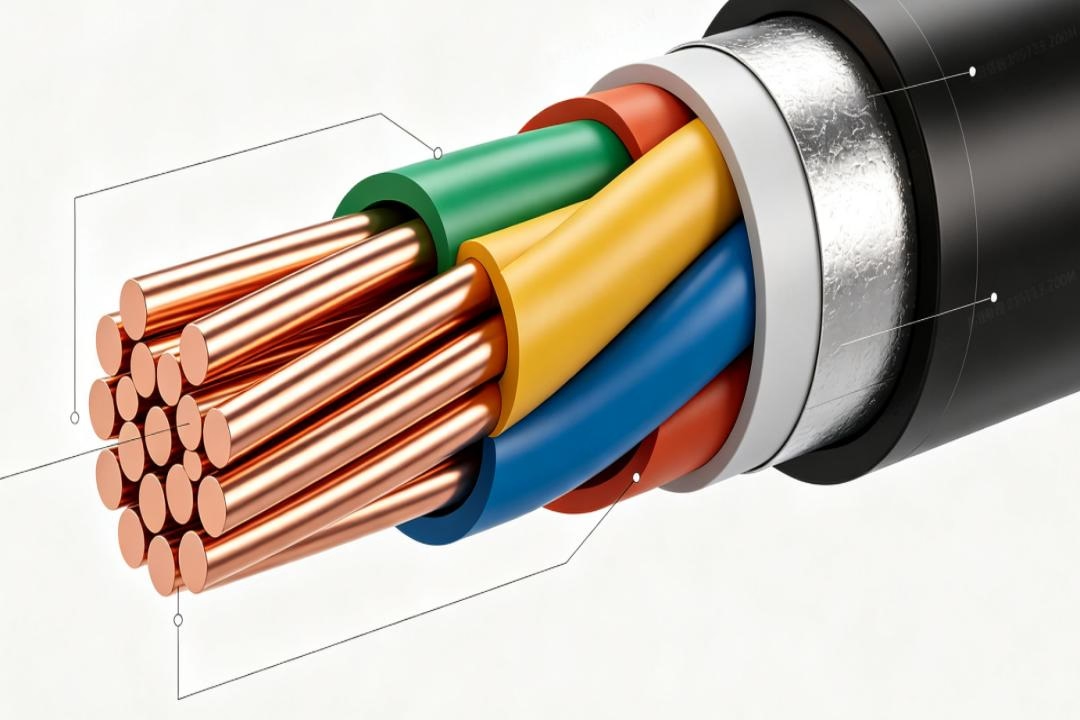
Cutaway Technical View Of Multi-Core Shielded Copper Cable, Showing Core Components: Stranded Copper Conductors, Individual Insulation, Metallic Shielding Layer And Outer Protective Jacket.
Copper conductors come in two primary types: solid and stranded, each suited to different installation environments and mechanical requirements.
Solid Copper Conductors
Solid copper cables consist of a single solid wire per conductor. They offer superior conductivity and lower attenuation over longer distances.
Best suited for:
Permanent installations inside walls, floors, and ceilings
Horizontal runs in structured cabling systems
Applications where minimal movement or flexing is expected
Advantages:
Better electrical performance over distance
More resistant to signal loss
Typically more affordable per meter
Key Consideration: Solid copper is rigid and should not be bent repeatedly, as it can crack or break.
Stranded Copper Conductors
Stranded cables are made up of multiple smaller copper wires twisted together to form a single conductor. They are far more flexible, making them ideal for environments where cables must move or bend frequently.
Best suited for:
Patch leads between wall outlets and devices
Environments where the cable may be frequently bent or unplugged
Work areas with movable equipment
Advantages:
Highly flexible and easier to handle
Less prone to breakage during movement
Preferred for patching and short interconnects
The Golden Rule: Solid core cables are used for permanent infrastructure, while stranded cables are used for moveable connections—such as patch cords.
Understanding Cable Gauge (AWG)
The gauge of a copper cable refers to the thickness of its conductor, typically measured using the American Wire Gauge (AWG) system. One of the most common misconceptions is that a larger gauge numeral means a larger wire. In reality, the opposite is true: smaller AWG numbers indicate thicker wires.
| AWG Number | Wire Thickness | Resistance | Flexibility |
|---|---|---|---|
| Lower (e.g., 10, 12, 14) | Thicker | Lower | Less Flexible |
| Higher (e.g., 24, 26, 28) | Thinner | Higher | More Flexible |
Thicker wires (lower AWG numbers) offer lower resistance and better current-carrying capacity. Thinner conductors (higher AWG numbers) are more flexible but may slightly reduce signal performance over long distances.
In networking, 24 AWG is often preferred for data centers where maximum signal integrity is critical, while 28 AWG cables provide higher flexibility for tight or dense cabling setups.
Key Applications of Copper Cable
Copper cables find use across a remarkably wide range of industries and applications.
1. Networking and Data Communications
Copper cables are the most widely used form of physical connectivity in modern networking environments. In data communications, copper cables are essential for transmitting Ethernet signals between devices such as routers, switches, servers, patch panels, and end-user terminals. These cables can carry signals over short to moderate distances—typically up to 100 metres—and are available in multiple performance categories, such as Cat5e, Cat6, and Cat6a, each offering increased bandwidth and reduced interference.
2. Power Distribution
Copper cables are the standard for electrical power distribution in residential, commercial, and industrial settings. From 14 AWG lighting circuits to large feeders, copper provides the reliability and safety that electrical systems demand.
3. Power over Ethernet (PoE)
One of copper’s most compelling advantages is its ability to simultaneously deliver power and data to devices such as IP cameras, VoIP phones, and wireless access points, reducing the need for separate electrical wiring. This makes copper cables indispensable for modern smart buildings and IoT deployments.
4. Control and Instrumentation
Control cables—such as KVV (copper conductor PVC insulated PVC sheathed control cables)—are used for monitoring, controlling, and protecting electrical circuits. They connect electrical equipment, instruments, and control systems in industrial and commercial environments.
5. Grounding and Bonding
Copper cables are frequently used for grounding applications to safely dissipate electrical faults, prevent electrical shocks, and protect equipment from static discharge.
6. EMI/RFI Shielding
Tubular braided copper cables are commonly used as an electromagnetic interference (EMI) and radio-frequency interference (RFI) shield. The braided sleeve is placed over cables to create a protective barrier, intercepting interference and safely directing it to ground.
Copper vs. Aluminum: A Critical Comparison
The choice between copper and aluminum conductors has significant implications for performance, safety, and cost. Search results from Google provide a clear picture of the differences:
Conductivity
Copper is 1.5 times more conductive than aluminum. This means a copper conductor can carry the same current as an aluminum conductor that is 50-60% larger.
Ampacity
Copper cables typically have higher ampacity than aluminum cables of similar size. An aluminum conductor has a roughly 40% lower current-carrying capacity than a copper conductor of equivalent size.
Weight
Aluminum is 3 times lighter than copper. This weight advantage makes aluminum attractive for overhead transmission lines and applications where weight is a critical factor.
Cost
Copper is generally more expensive than aluminum—often twice the price—and the cost of copper tends to fluctuate more. However, this cost difference must be weighed against performance and reliability.
Durability and Fatigue Resistance
Copper wires are more fatigue-resistant than aluminum wires. Copper’s tensile strength is roughly 40% better than aluminum, meaning copper is less likely to break.
Fire Safety
Copper’s melting point of 1,080°C makes it the clear choice for fire-resistant applications. Aluminum melts at just 660°C. Copper is a better choice for fireproof cable.
Corrosion Resistance
Copper is resistant to corrosion, making it well suited for underground installations. Aluminum is more susceptible to corrosion and requires special precautions in corrosive environments.
Environmental Impact
Studies show that due to aluminum’s higher electrical resistance, aluminum-core cables result in significantly higher operational emissions compared to copper-core cables. Aluminum also has a higher carbon footprint factor during manufacturing.
The Verdict: Copper is superior in conductivity, durability, fire resistance, and long-term reliability. Aluminum offers advantages in weight and initial cost but falls short in critical performance and safety metrics.
Industry Standards and Compliance
National Electrical Code (NEC)
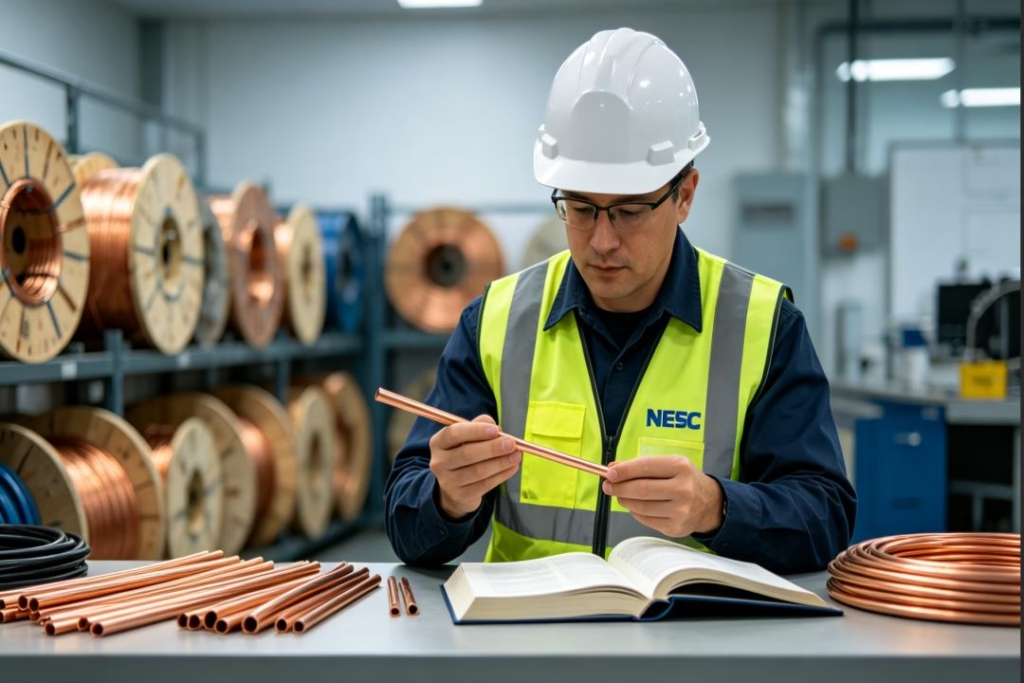
The National Electrical Code (NFPA 70) is the primary standard for electrical installations in the United States. It establishes requirements for conductor sizing, insulation types, installation methods, and safety.
NEC Table 310.16 is the standard reference for copper wire ampacity. It covers insulated conductors rated 0 through 2000 volts and provides ampacity values based on conductor size, insulation temperature rating (60°C, 75°C, or 90°C), and installation conditions.
Key ampacity values for common copper wire gauges:
| AWG Size | 60°C (140°F) | 75°C (167°F) | 90°C (194°F) |
|---|---|---|---|
| 14 AWG | 15A | 20A | 25A |
| 12 AWG | 20A | 25A | 30A |
| 10 AWG | 30A | 35A | 40A |
| 8 AWG | 40A | 50A | 55A |
| 6 AWG | 55A | 65A | 75A |
| 4 AWG | 70A | 85A | 95A |
Important: Per NEC Article 110.14(C), ampacity is limited by the lowest temperature rating in the circuit, not just the cable rating. If a 90°C-rated cable connects to a 60°C-rated terminal, all ampacity calculations use the 60°C column.
International Standards
IEC 60228 – Conductors of Insulated Cables
TIA/EIA 568 – Commercial Building Telecommunications Cabling Standards
ISO/IEC 11801 – Information Technology – Generic Cabling for Customer Premises
UL 44 and UL 83 – Thermoset and Thermoplastic Insulated Wires
ASTM B3 and B8 – Soft or Annealed Copper Wire and Concentric-Lay-Stranded Copper Conductors
How to Select the Right Copper Cable
1. Determine the Application
Start by identifying the specific application: Is this for permanent building wiring, flexible connection, power distribution, or data networking? Each application has different requirements for conductor type, insulation, and construction.
2. Choose Solid or Stranded
Solid copper: Permanent installations, in-wall wiring, punch-down terminations
Stranded copper: Flexible connections, patch cords, applications requiring frequent bending
3. Calculate the Required Ampacity
Determine the expected current load, including any derating factors for ambient temperature, conductor grouping, and installation method. Use NEC Table 310.16 or the applicable standard to find the minimum conductor size.
4. Consider Voltage Drop
For long cable runs, voltage drop can significantly impact equipment performance. NEC recommends 3% for branch circuits and 5% for combined feeder and branch circuits. Using larger conductors reduces voltage drop but increases cost.
5. Select the Appropriate Insulation
Choose insulation based on the operating environment:
Dry, indoor locations: THHN or PVC insulation
Wet or damp locations: THWN or XHHW
High-temperature areas: XLPE or silicone insulation
Outdoor or UV-exposed: UV-resistant jackets
6. Verify Compliance
Ensure the cable meets all applicable standards: NEC, UL, CSA, IEC, or other relevant certifications.
Installation Best Practices
Handling and Storage
Store cable reels in a clean, dry area
Avoid dragging cables across sharp edges
Use proper lifting equipment for heavy reels
Pulling Tension
Excessive pulling tension can damage conductors and insulation. Follow the manufacturer’s recommended maximum pulling tension.
Bending Radius
Avoid sharp bends that can damage the cable. As a general guideline, the bending radius should not be less than the cable manufacturer’s specified minimum.
Termination
Use only connectors and lugs rated for the cable size and material
Follow manufacturer torque specifications
Strip insulation carefully to avoid nicking conductors
For solid conductors, use punch-down blocks or screw terminals designed for solid wire
Testing
Before energizing, perform:
Continuity testing to verify all conductors are intact
Insulation resistance testing to ensure insulation integrity
High-potential (hipot) testing for voltage withstand capability
Frequently Asked Questions
Q: What is the difference between a wire and a cable?
A: A wire is a single conductor of electricity. A cable is a bundle of wires that work together and are generally enclosed in the same protective jacket.
Q: What is the ampacity of 10 AWG copper wire?
A: According to NEC Table 310.16, 10 AWG copper has ampacities of 30A (60°C), 35A (75°C), and 40A (90°C). However, termination ratings may limit the effective ampacity.
Q: When should I use solid copper vs. stranded copper?
A: Use solid copper for permanent installations and in-wall wiring. Use stranded copper for flexible connections, patch cords, and applications requiring frequent bending.
Q: Why is copper better than aluminum for cables?
A: Copper offers higher conductivity (1.5× that of aluminum), superior durability, better fire resistance (melting point 1,080°C vs. 660°C), and greater fatigue resistance.
Q: What does AWG mean?
A: AWG stands for American Wire Gauge. Smaller AWG numbers indicate thicker wires, which offer lower resistance and better current-carrying capacity.
Q: Where can I find official NEC ampacity tables?
A: The official tables are published in NFPA 70, the National Electrical Code. They are also available through various online references and the NFPA website (www.nfpa.org). Google search results provide numerous resources, including tables from engineering reference sites.
Conclusion
Copper and cable are inseparable partners in modern electrical and network infrastructure. Copper’s exceptional conductivity, durability, and reliability make it the gold standard for conductors, while the variety of cable types—solid and stranded, shielded and unshielded, power and data—allows engineers and installers to select the perfect solution for every application.
Understanding the differences between wire and cable, solid and stranded conductors, and copper and aluminum is essential for making informed decisions. Compliance with standards like the National Electrical Code (NEC) and international standards such as IEC 60228 ensures safety, performance, and code compliance.
When selecting copper cable, consider the application, required ampacity, voltage drop, environmental conditions, and installation method. By following best practices for installation and avoiding common mistakes, you can ensure decades of reliable service.
Copper is not just a conductor—it is an investment in safety, performance, and peace of mind.
References
National Electrical Code (NFPA 70), Table 310.16 – Ampacities of Insulated Conductors
NEC 110.14(C) – Temperature Limitations of Terminations
Belden – Understanding the Basics Can Help Guide Copper Cable Selection
FS.com – Copper Cable Basics: Everything You Need to Know
AndCorp – Copper Cables: Types, Uses & Network Performance
WireAndCableTips – What’s the Difference Between Copper and Aluminum Industrial Cable?
Various engineering reference sites including elek.com, engineersedge.com, and nfpa.org
This guide is for informational purposes only. Always consult the latest edition of the National Electrical Code and work with qualified professionals for electrical installations.