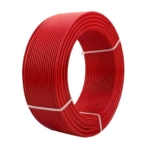
 Minxing Cable
 Jinhuanyu Cable
 Jinlongyu Cable
 Guangdong Cable
 Zhujiang Wire & Cable
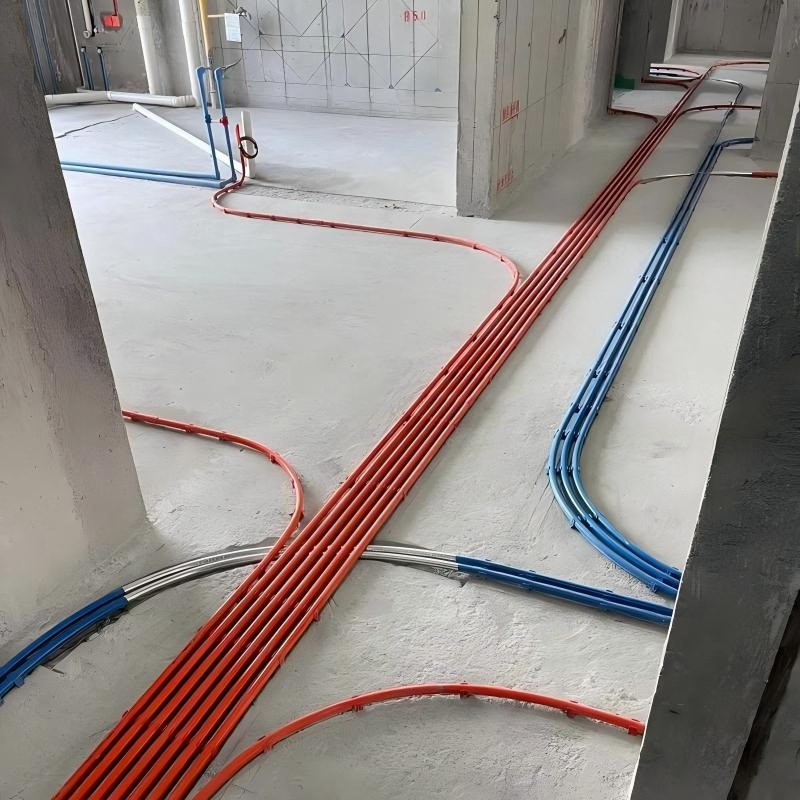
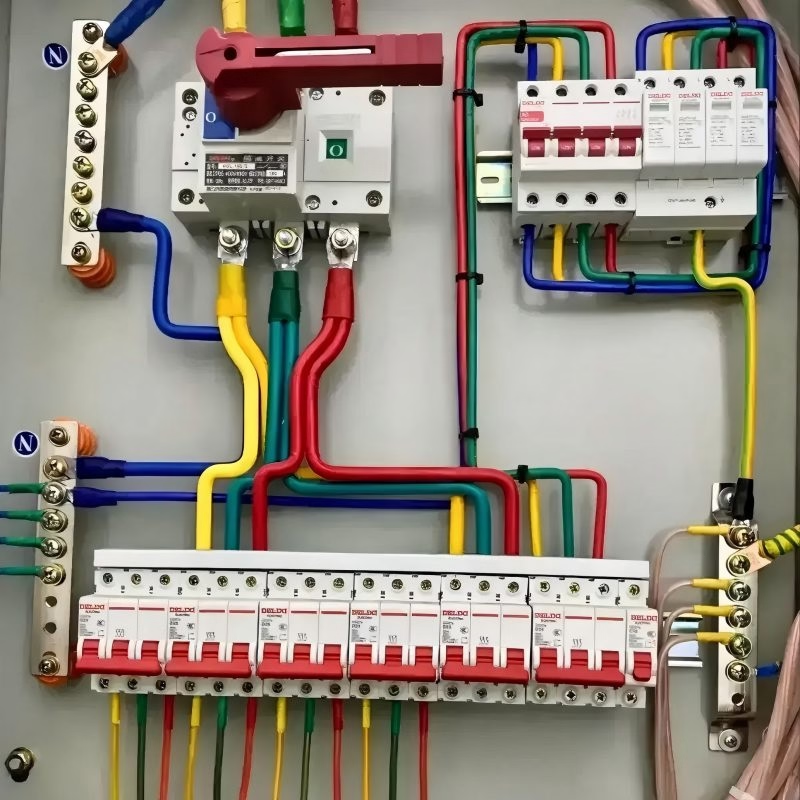
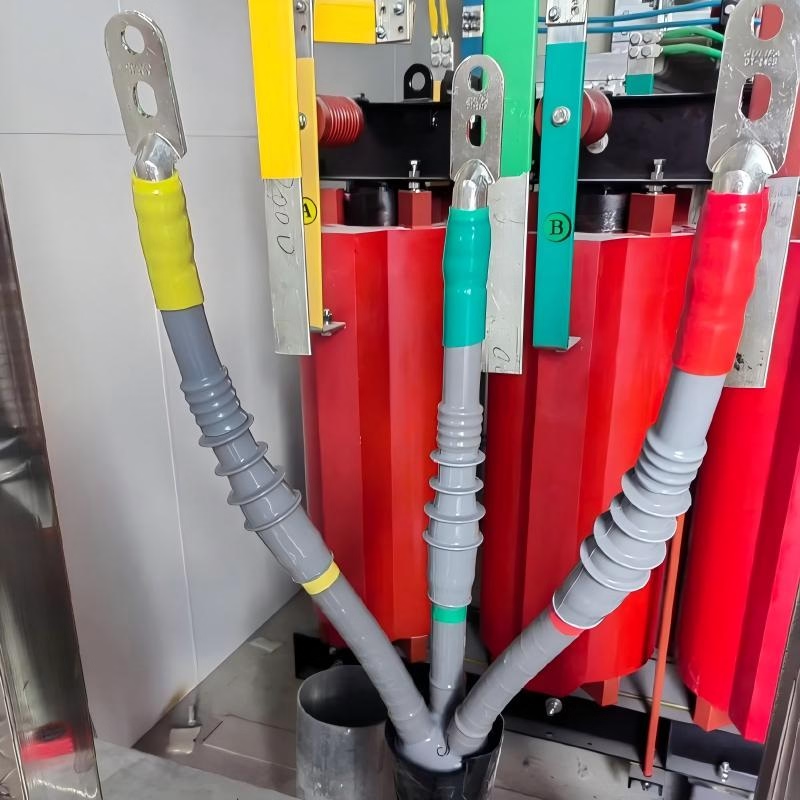



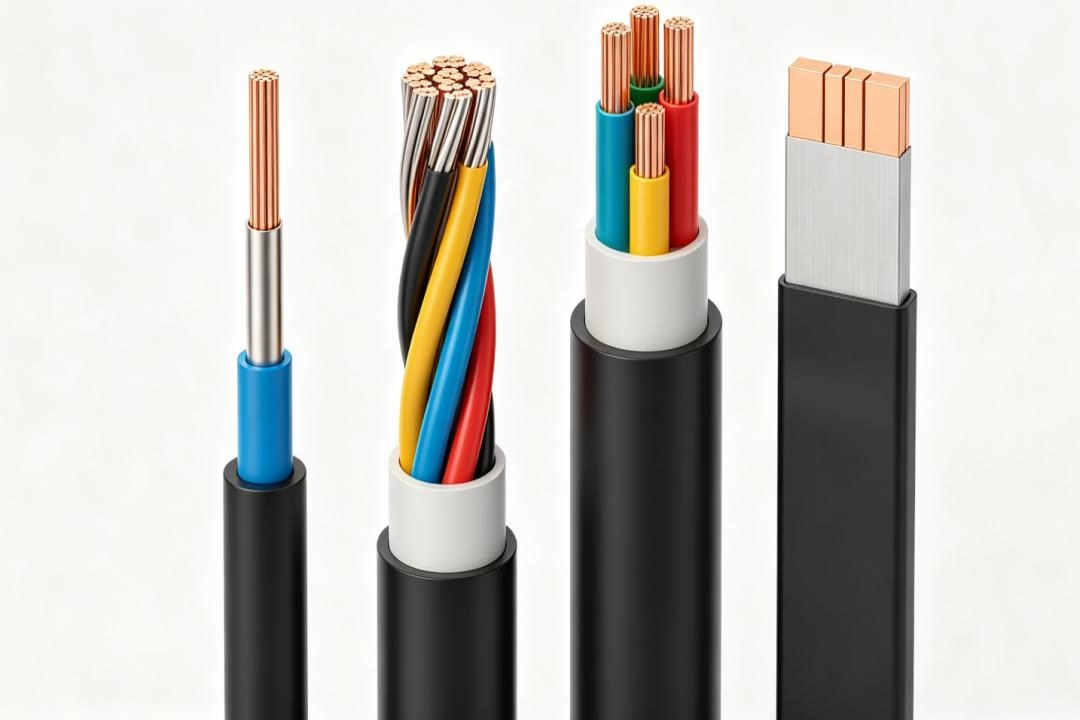
Introduction
In the vast landscape of electrical wiring, few products are as ubiquitous or as essential as PVC insulated copper cable. From the walls of your home to the complex machinery in industrial facilities, this versatile cable type forms the backbone of modern electrical infrastructure. But what exactly makes PVC insulated copper cable the default choice for so many applications? And how do you select the right type for your specific needs?
This comprehensive guide explores everything you need to know about PVC insulated copper cable—from its fundamental properties and common types to industry standards, applications, and selection criteria. Whether you are an electrical engineer, a contractor, or a DIY enthusiast, understanding PVC insulated copper cable is essential to ensuring safety, performance, and long-term reliability.
What Is PVC Insulated Copper Cable?
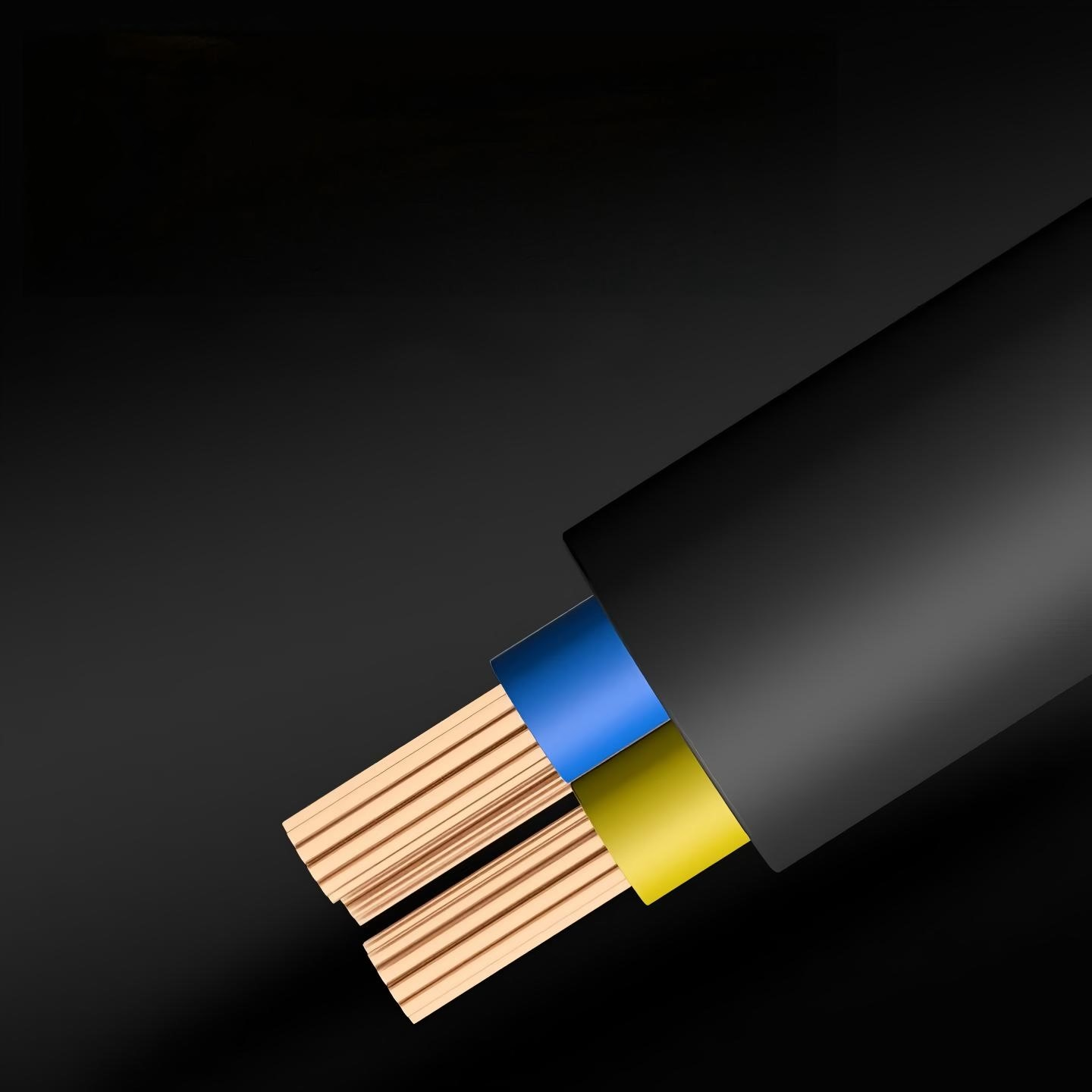
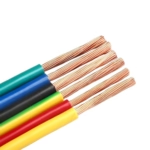
PVC insulated copper cable is an electrical cable that uses copper as the conductor and Polyvinyl Chloride (PVC) as the insulating material. The copper conductor—either solid or stranded—carries the electrical current, while the PVC insulation provides electrical isolation, mechanical protection, and resistance to environmental factors.
PVC has been used as an insulating material on electrical cables for many decades due to its low cost, ease of processing, and excellent electrical insulating properties. The combination of copper’s superior conductivity and PVC’s versatile insulation creates a cable that is reliable, cost-effective, and suitable for a wide range of applications.
The Three Key Components
Every PVC insulated copper cable consists of three essential elements:
The Copper Conductor – The core of the cable, responsible for transmitting electrical current. Copper is used because of its exceptional conductivity (100% IACS), durability, and reliability.
The PVC Insulation – Surrounds the conductor to prevent current leakage, protect against short circuits, and provide electrical isolation. PVC insulation typically has a maximum continuous operating temperature of 70°C.
The Outer Sheath (Optional) – Some PVC insulated cables include an additional PVC sheath for extra mechanical protection, moisture resistance, and durability.
Why PVC? The Advantages of PVC Insulation
PVC has become the most widely used insulation material for copper cables for several compelling reasons:
1. Cost-Effectiveness
PVC is significantly more affordable than many alternative insulation materials, making PVC insulated copper cable an economical choice for large-scale installations. This cost advantage is particularly important in residential and commercial construction, where vast quantities of cable are required.
2. Excellent Electrical Insulation Properties
PVC provides good electrical insulation, effectively preventing current leakage and protecting against short circuits. Its dielectric strength makes it suitable for voltages up to 600V in many applications.
3. Flexibility and Ease of Installation
PVC insulated cables are highly flexible and easy to install. The insulation strips cleanly and terminates easily, reducing installation time and labor costs. This flexibility is especially valuable in tight spaces and complex wiring configurations.
4. Flame Retardancy
PVC insulated wire can easily reach the flame retardant grade specified in various standards and has very good flame retardant performance. This safety feature is critical in building applications where fire prevention is paramount.
5. Water and Chemical Resistance
PVC offers good resistance to oil and water and is waterproof, making it ideal for properties with exposure to moisture. It also provides protection against many common chemicals.
6. Color Availability
PVC comes in vivid colors, allowing for easy identification of different circuits and phases. This simplifies installation, maintenance, and troubleshooting.
7. Wide Temperature Range
While PVC has a maximum continuous operating temperature of 70°C, it remains functional across a broad temperature range. General-purpose PVC compounds can operate down to -15°C.
The Limitations of PVC Insulation
While PVC offers numerous advantages, it also has limitations that must be considered:
1. Lower Temperature Rating
PVC has a maximum continuous operating temperature of 70°C, compared to 90°C for XLPE. This restricts its use in high-temperature environments.
2. Limited Short-Circuit Capacity
Under short circuit conditions, PVC insulation can withstand a conductor temperature of up to 160°C for one second, compared to 250°C for XLPE.
3. UV Susceptibility
Some grades of PVC can weather badly and are susceptible to UV light. For outdoor applications, UV-resistant jackets or additional protection may be required.
4. Toxic Fumes When Burned
PVC can give off poisonous halogen gases, toxic fumes, and smoke when burnt. This is a significant consideration in fire safety planning, particularly in enclosed spaces.
5. Chemical Sensitivity
PVC has poor performance in acid and alkali resistance, heat-resistant oil, and organic solvent resistance. PVC wires are easily damaged and cracked in specific environments.
Types of PVC Insulated Copper Cable
PVC insulated copper cables come in various types, each designed for specific applications. Some of the most common types include:
BV (Copper Core PVC Insulated Wire)
BV is a single-core, rigid PVC insulated copper wire used for fixed installation in buildings. It is one of the most common types of building wire and is suitable for AC rated voltage up to 450/750V.
Applications: Fixed wiring in buildings, power distribution, lighting circuits, and electrical equipment connections.
BVR (Copper Core PVC Insulated Flexible Wire)
BVR is a flexible version of BV, featuring stranded copper conductors that provide greater flexibility. This makes it ideal for applications where bending or movement is required.
Applications: Flexible connections, control panels, equipment wiring, and areas with vibration or movement.
BVV (Copper Core PVC Insulated PVC Sheathed Round Wire)
BVV adds an additional PVC sheath over the insulation for extra protection. The sheath provides mechanical protection, moisture resistance, and additional electrical isolation.
Applications: Building wiring requiring additional mechanical protection, outdoor applications, and industrial environments.
BVVB (Copper Core PVC Insulated PVC Sheathed Flat Wire)
BVVB is a flat, multi-core cable with PVC insulation and a PVC sheath. The flat profile makes it suitable for surface mounting and confined spaces.
Applications: Surface wiring, appliances, and equipment connections.
THHN/THWN (Thermoplastic High Heat-resistant Nylon-coated)
THHN and THWN are UL-listed building wires with PVC insulation and a nylon sheath. THHN is rated for 90°C in dry locations, while THWN is rated for 75°C in wet locations. THHN/THWN copper wire has a conductor of soft drawn bare copper with primary insulation of PVC with a NYLON jacket.
Applications: Building wiring, conduit installations, and general-purpose electrical wiring.
Key Applications of PVC Insulated Copper Cable
PVC insulated copper cables are used across an extraordinarily wide range of applications:
1. Residential Wiring
PVC insulated copper cable is the standard choice for residential electrical systems. From 14 AWG lighting circuits to larger feeder cables, PVC insulated copper provides the reliability and safety that homeowners expect. Solid copper conductors are preferred for in-wall wiring due to their superior electrical characteristics and reliable terminations.
2. Commercial Buildings
Office buildings, retail spaces, and institutional facilities rely on PVC insulated copper cables for power distribution, lighting, HVAC, and control systems. THHN and THWN are commonly used in conduit and cable trays.
3. Industrial Facilities
Manufacturing plants, processing facilities, and control panels use PVC insulated copper cables for power distribution, control wiring, and instrumentation. The cables are suitable for installation in ducts, pipes, boards, and cable trays.
4. Control Panels and Electrical Equipment
PVC insulated flexible copper wires are widely used in control panels and electrical equipment. They connect switches, relays, contactors, and other control devices.
5. Lighting Systems
PVC insulated copper cables are extensively used for lighting installations in residential, commercial, and industrial settings. The cables connect luminaires, switches, and lighting control systems.
6. Telecommunications and Instrumentation
PVC insulated copper cables are used in telecommunications and instrumentation applications. They connect telephones, data equipment, sensors, and measurement devices.
7. Power Distribution
PVC insulated copper cables are used for low-voltage power distribution in buildings and industrial facilities. They are suitable for installation indoors and outdoors, in cable ducts, underground, and in power and switching stations.
Industry Standards and Compliance
National Electrical Code (NEC)
The National Electrical Code (NFPA 70) is the primary standard for electrical installations in the United States. It establishes requirements for conductor sizing, insulation types, installation methods, and safety. The NEC requires that conductors have sufficient ampacity to carry the load without exceeding the temperature rating of their insulation.
NEC Table 310.16 – Ampacities of Insulated Conductors with Not More Than Three Current-Carrying Conductors in Raceway, Cable, or Earth (Directly Buried) – is the standard reference for copper wire ampacity. These ampacities are valid for an ambient temperature of 30°C (86°F).
Key ampacity values for common PVC insulated copper wire gauges:
| AWG Size | 60°C (140°F) | 75°C (167°F) | 90°C (194°F) |
|---|---|---|---|
| 14 AWG* | 15A | 20A | 25A |
| 12 AWG* | 20A | 25A | 30A |
| 10 AWG* | 30A | 35A | 40A |
| 8 AWG | 40A | 50A | 55A |
| 6 AWG | 55A | 65A | 75A |
| 4 AWG | 70A | 85A | 95A |
Important: Per NEC Article 110.14(C), ampacity is limited by the lowest temperature rating in the circuit, not just the cable rating. If a 90°C-rated cable connects to a 60°C-rated terminal, all ampacity calculations must use the 60°C column.
International Standards
PVC insulated copper cables must also comply with various international standards:
IEC 60227 – Polyvinyl chloride insulated cables of rated voltages up to and including 450/750V
IEC 60228 – Conductors of insulated cables
IEC 60332 – Tests on electric and optical fibre cables under fire conditions
UL 83 – Thermoplastic-Insulated Wires and Cables
BS 6500 / BS 6004 – British standards for PVC insulated cables
VDE 0281 – German standard for PVC insulated cables
EN 50525 – European standard for electric cables
PVC Insulated Copper Cable vs. XLPE Insulated Cable
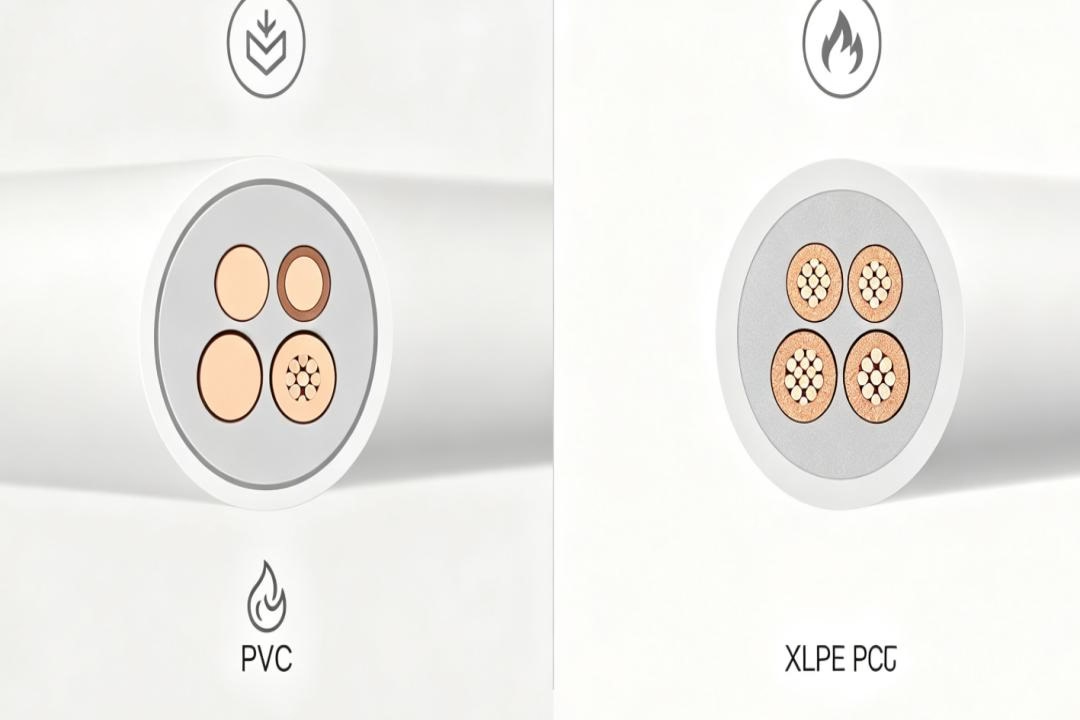
Side-By-Side Cross-Section Comparison Of Pvc Insulated Cable And Xlpe Insulated Cable. The Two Materials Differ Greatly In Continuous Operating Temperature, Short-Circuit Withstand Capability, Heat Resistance And Service Scenarios.
A common decision point in cable selection is choosing between PVC and XLPE insulation. Understanding the differences is essential.
| Factor | PVC Cable | XLPE Cable |
|---|---|---|
| Maximum Operating Temp. | 70°C | 90°C |
| Short Circuit Temp. | 160°C | 250°C |
| Heat Resistance | Average | Good |
| Chemical Resistance | Good | Very Good |
| Toughness | Good | Poor compared to PVC |
| Installation | Easy to Install | Slightly Tougher to Install |
| Cost | Lower Cost | Higher Cost |
PVC is generally more commonly used for standard electrical installations because it is flexible and economical. XLPE cables offer higher heat resistance and better electrical insulation, making them suitable for power systems where higher temperatures are expected.
The key difference lies in heat resistance and electrical performance. XLPE cables can withstand higher operating temperatures compared to PVC cables. However, for most standard building applications, PVC insulated copper cable remains the preferred choice.
How to Select the Right PVC Insulated Copper Cable
1. Determine the Application
Start by identifying the specific application: Is this for fixed building wiring, flexible connections, control wiring, or power distribution? Each application has different requirements for conductor type, insulation, and construction.
2. Choose Solid or Stranded
Solid copper (BV): Fixed installations, in-wall wiring, punch-down terminations
Stranded copper (BVR): Flexible connections, control panels, applications requiring bending
3. Calculate the Required Ampacity
Determine the expected current load and use NEC Table 310.16 or the applicable standard to find the minimum conductor size. Remember to apply derating factors for ambient temperature, conductor grouping, and installation method.
4. Consider the Environment
Dry, indoor locations: Standard PVC insulation (THHN) is suitable
Wet or damp locations: Moisture-resistant PVC (THWN) is required
High-temperature areas: Consider XLPE or other high-temperature insulation
Outdoor or UV-exposed: UV-resistant jackets or additional protection may be required
5. Verify Compliance
Ensure the cable meets all applicable standards: NEC, UL, IEC, or other relevant certifications. Always request material certification from reputable suppliers.
Frequently Asked Questions
Q: What is the maximum operating temperature of PVC insulated copper cable?
A: PVC insulated copper cable has a maximum continuous operating temperature of 70°C. Some specialized compounds may offer higher ratings, but 70°C is the standard.
Q: What is the difference between BV and BVR cable?
A: BV uses a solid copper conductor and is rigid, making it suitable for fixed installations. BVR uses stranded copper conductors and is flexible, making it suitable for applications requiring bending or movement.
Q: What is the ampacity of 12 AWG PVC insulated copper wire?
A: According to NEC Table 310.16, 12 AWG copper has ampacities of 20A at 60°C, 25A at 75°C, and 30A at 90°C. However, per NEC 240.4(D), overcurrent protection for 12 AWG is limited to 20A.
Q: Can PVC insulated copper cable be used outdoors?
A: Yes, but it requires appropriate UV-resistant jackets or additional protection. Standard PVC can weather badly and is susceptible to UV light. Outdoor-rated cables with UV-resistant jackets are recommended for exterior applications.
Q: What is the difference between THHN and THWN?
A: THHN (Thermoplastic High Heat-resistant Nylon-coated) is rated for 90°C in dry locations. THWN (Thermoplastic Heat and Water-resistant Nylon-coated) is rated for 75°C in wet locations. Both have PVC insulation with a nylon sheath.
Q: Is PVC insulated copper cable fire-resistant?
A: PVC insulated wire can easily reach the flame retardant grade specified in various standards and has very good flame retardant performance. However, PVC can give off toxic fumes and smoke when burnt.
Q: Where can I find official NEC ampacity tables?
A: The official tables are published in NFPA 70, the National Electrical Code. They are also available through various online references and the NFPA website (www.nfpa.org)[reference:89]. Google search results provide numerous resources, including tables from engineering reference sites.
Conclusion
PVC insulated copper cable is a foundational component of modern electrical infrastructure. Its combination of copper’s exceptional conductivity and PVC’s versatile insulation creates a cable that is reliable, cost-effective, and suitable for a remarkably wide range of applications.
From residential wiring to industrial power distribution, from control panels to telecommunications, PVC insulated copper cable delivers the performance and safety that electrical systems demand. Understanding the different types—BV for fixed installation, BVR for flexible connections, THHN/THWN for building wire—is essential for making informed decisions.
Compliance with standards like the National Electrical Code (NEC) and international standards such as IEC 60227 ensures safety, performance, and code compliance. By following best practices for selection and installation, you can ensure decades of reliable service from your PVC insulated copper cable.
PVC insulated copper cable is not just a product—it is an investment in safety, performance, and peace of mind.
References
National Electrical Code (NFPA 70), Table 310.16 – Ampacities of Insulated Conductors
NFPA Fact Sheet – NEC Ampacity Charts
NEC Article 110.14(C) – Temperature Limitations of Terminations
IEC 60227 – Polyvinyl chloride insulated cables
UL 83 – Thermoplastic-Insulated Wires and Cables
Various industry resources including Southwire, Prysmian, KEI Industries, and engineering reference sites
This guide is for informational purposes only. Always consult the latest edition of the National Electrical Code and work with qualified professionals for electrical installations.