
 Minxing Cable
 Jinhuanyu Cable
 Jinlongyu Cable
 Guangdong Cable
 Zhujiang Wire & Cable




Introduction
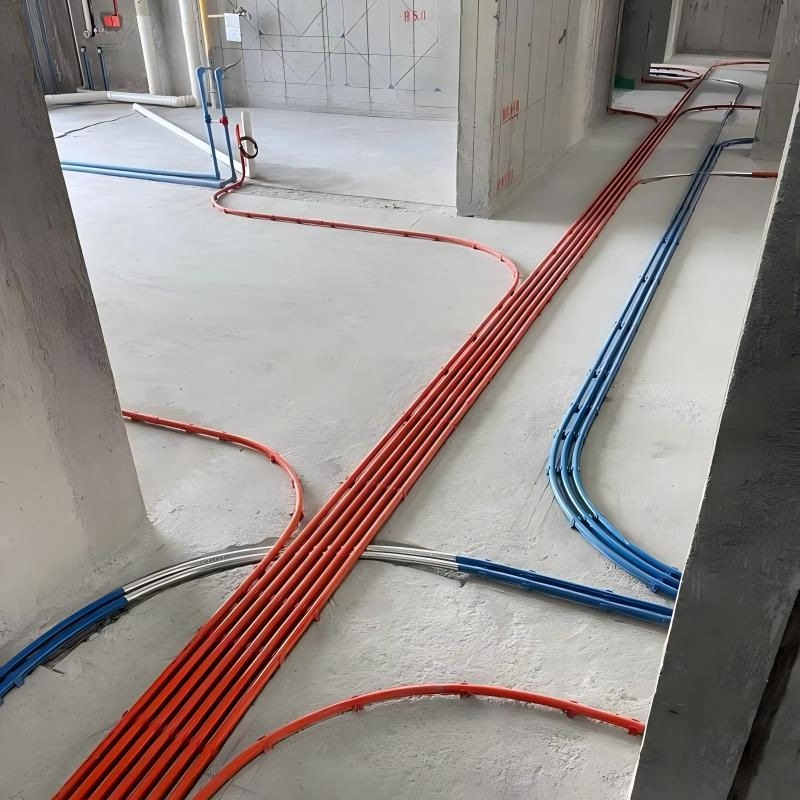
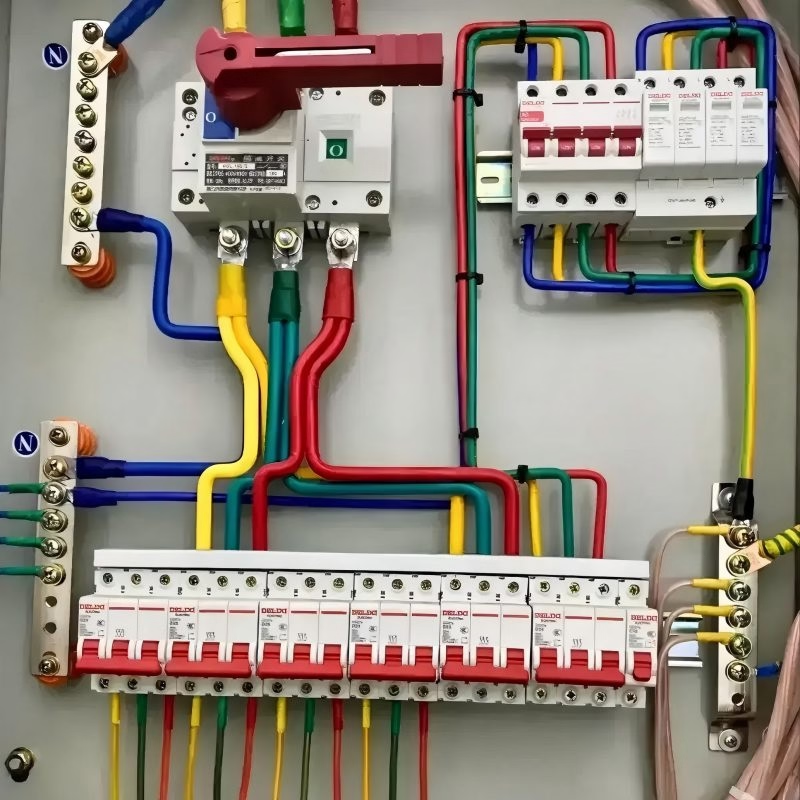
Walk into any building, any factory, any data center on the planet, and you will find it: copper cable. It runs through walls, beneath floors, across ceilings, and underground. It connects your lights, your computers, your phones, your machinery, and your entire electrical grid.
Despite all the hype about fiber optics and wireless technology, copper cable remains the undisputed backbone of global electrical infrastructure. The numbers tell a compelling story: the global copper wire and cable market was valued at USD 182.0 billion in 2025 and is projected to reach USD 324.7 billion by 2032, growing at a compound annual growth rate (CAGR) of 8.6%. Asia Pacific alone dominated the market with a 43.4% share in 2024.
Why does copper cable continue to dominate after more than a century of technological advancement? Why hasn’t aluminum, fiber optics, or wireless technology replaced it? This comprehensive guide explores the science, the applications, and the undeniable advantages of copper cable—and why it remains the conductor of choice for engineers and electricians worldwide.
What Is Copper Cable?
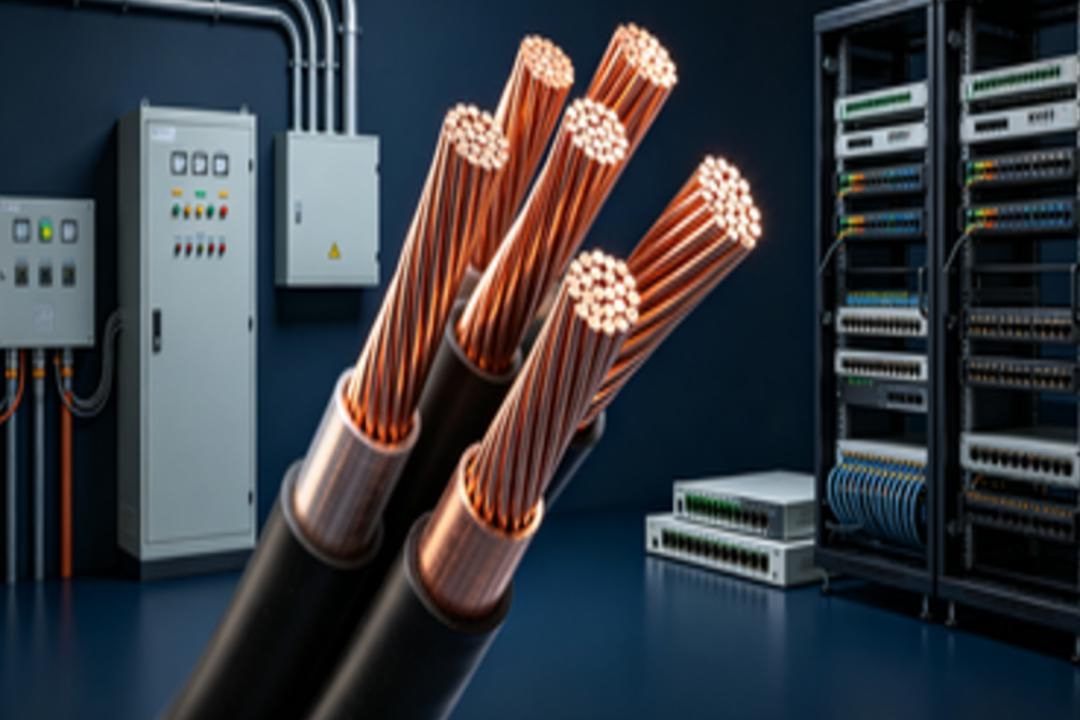
Before diving into the reasons why copper cable is so essential, it is important to understand what it actually is. Copper cables are electrical conductors made from copper wire that are used to transmit data, voice, and power in networking and electrical environments. They are the most widely used form of physical connectivity in modern electrical and networking infrastructure.
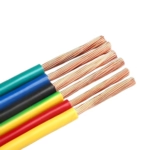
At their core, these cables contain strands or solid cores of copper—a highly conductive metal—encased in insulating material to facilitate the transmission of electrical signals. Copper’s excellent conductivity and durability have made it a long-standing choice for carrying both analogue and digital signals across countless applications.
The Anatomy of a Copper Cable
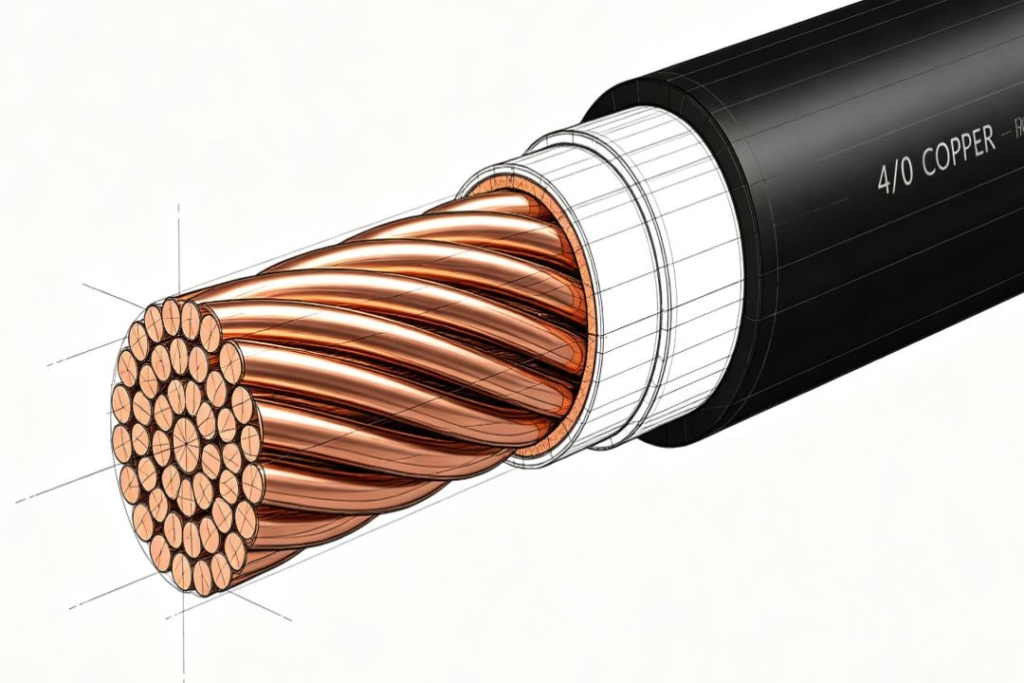
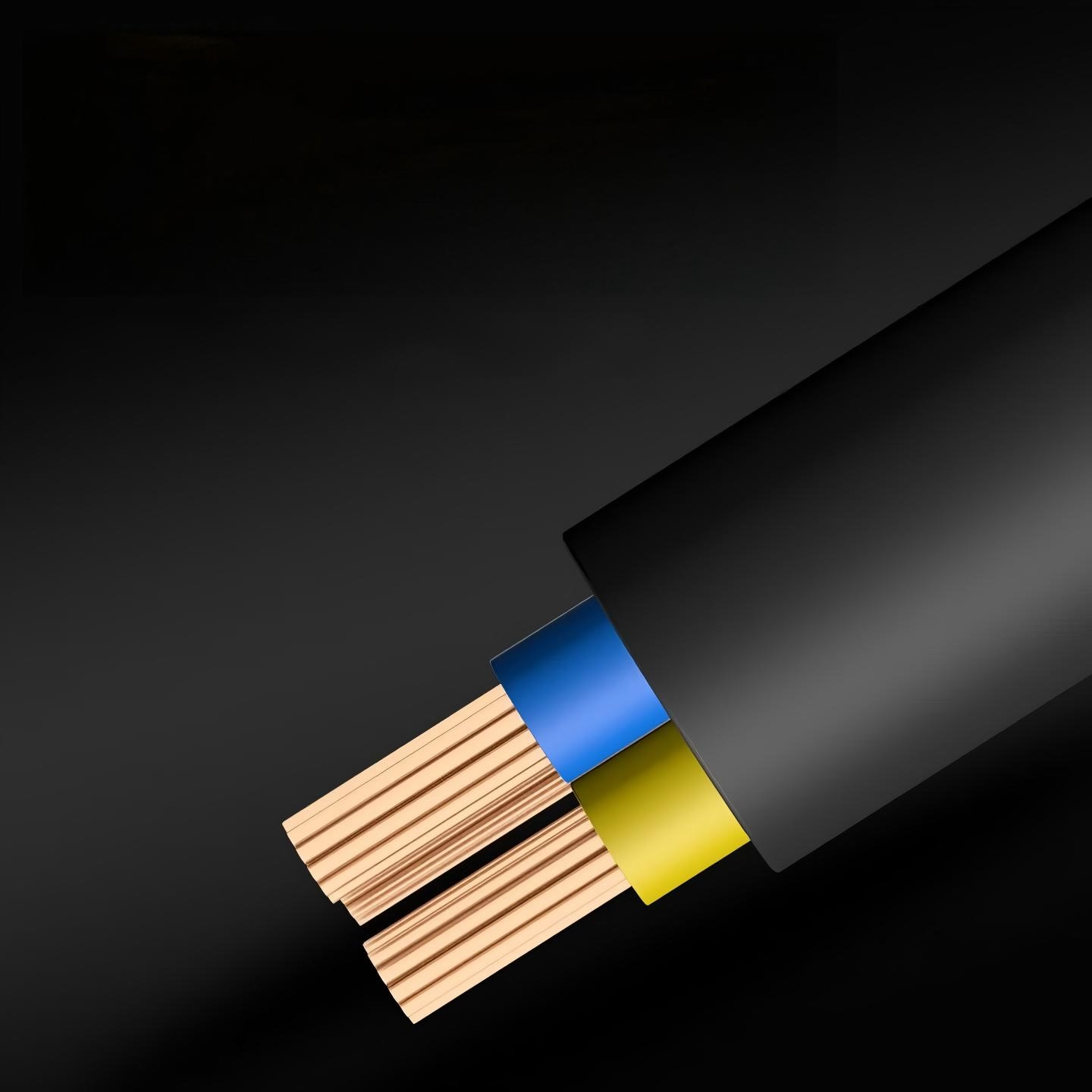
Every copper cable consists of three essential components:
The Conductor – The copper core that carries electrical current
The Insulation – The material surrounding each conductor to prevent signal leakage and short circuits
The Jacket – The outer protective layer that shields the cable from physical damage, moisture, and environmental factors
Depending on the application, copper cables may also include shielding, armor, a drain wire, and/or a ground wire for additional protection and performance.
Reason 1: Unmatched Electrical Conductivity
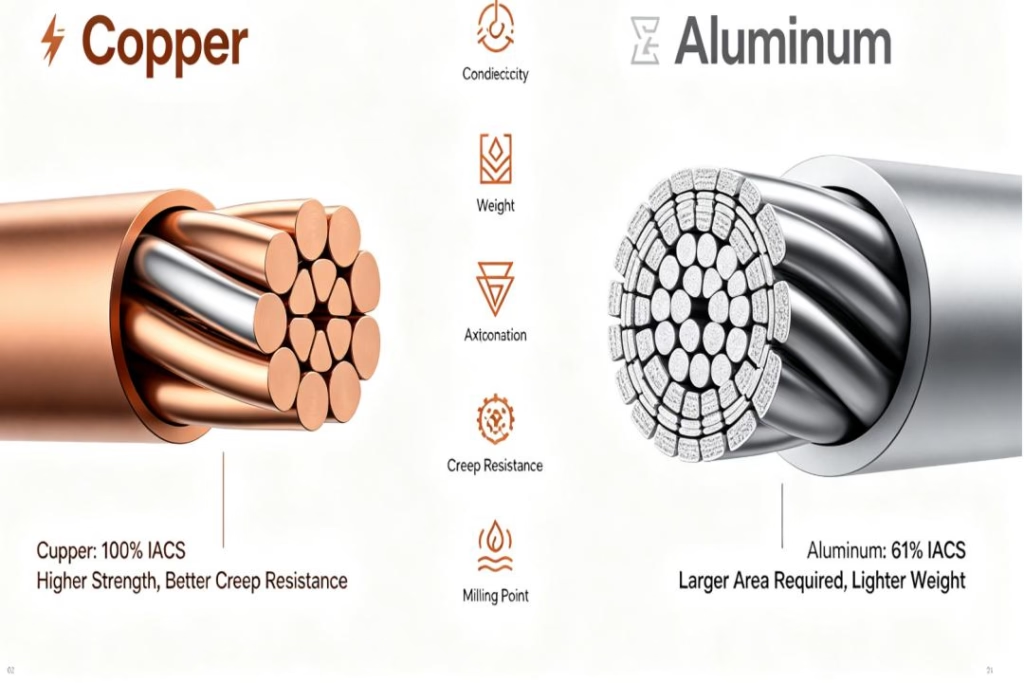
Copper is one of the best conductors of electricity, second only to silver. With a conductivity rating of 100% IACS (International Annealed Copper Standard), copper significantly outperforms aluminum, which achieves only approximately 61% IACS.
This superior conductivity means that for the same current-carrying capacity, a copper conductor can be 40% thinner than its aluminum counterpart. This translates to smaller cable diameters, more efficient use of space in conduits and cable trays, and greater flexibility in cable routing.
Copper efficiently carries electrical current due to its atomic structure. Each copper atom has 29 electrons, including readily available valence electrons that freely move in an electric field. This free movement allows electrical current to pass through copper wire easily and with minimal resistance. Since copper has excellent electrical conductivity, it has low resistivity—a measure of how much a material resists the flow of electrical current. Copper atoms vibrate less, allowing the electrons to move freely and therefore allow the current to flow more readily.
What This Means for You
For engineers, contractors, and facility managers, copper’s superior conductivity means:
Lower energy losses during transmission
Reduced voltage drop over long distances
Smaller cable sizes for the same current capacity
More efficient use of conduit space
Lower operating costs over the life of the installation
Copper offers a lower total cost-of-ownership through higher mechanical durability, fewer connection-related issues, longer service life, and less maintenance.
Reason 2: Exceptional Durability and Longevity
Copper is a robust and durable metal that can last for many years, which makes it an extremely popular material. A single copper wire can last 100 years or more in the right conditions.
Unlike iron, copper does not rust in the air and is resistant to corrosion thanks to a protective layer that forms naturally on the surface when it encounters oxygen. This copper oxide layer—called “patina”—protects the metal from further erosion. Crucially, unlike aluminum oxide which is non-conductive and can compromise connections, copper’s oxide remains conductive, ensuring reliable electrical contact over time.
Fatigue Resistance
Copper wires are more fatigue-resistant than aluminum wires. In high-cycle fatigue applications, copper can withstand up to 10⁶ cycles more than aluminum. This means copper cables are significantly less likely to fail from repeated bending, vibration, or mechanical stress—a critical advantage in industrial environments, automotive applications, and any setting where cables are subject to movement.
Tensile Strength
Copper has roughly 40% better tensile strength than aluminum, meaning copper is less likely to break during installation or operation. Copper’s exceptional strength, compared to aluminum conductors, is another reason it has remained the conductor of choice in wiring systems throughout the building industry. Copper conductors can withstand higher pulling forces than aluminum conductors without necking or breaking.
What This Means for You
Fewer replacements over the life of your installation
Lower maintenance costs
Reduced downtime from cable failures
Peace of mind knowing your infrastructure will last for decades
Reason 3: Superior Fire Safety
Fire safety is one of the most critical considerations in any electrical installation. Here, copper has a decisive advantage over aluminum.
The melting point of copper is 1,080°C, while that of aluminum is only 660°C [2†L34-L35]. This 420-degree difference is not just a number—it is a matter of life and death. In the event of a fire, copper cables can maintain circuit integrity and continue to function when aluminum cables would have melted and failed.
Mineral insulated copper cables (MICC) are inherently fire-resistant because of the mineral insulation and can withstand high temperatures and maintain circuit integrity during intense fires. Fire-resistant copper cables can be designed with low smoke density, non-flame propagating properties, and no corrosive gas emissions to protect life and property in case of fire.
Why Fire Safety Matters
Emergency systems (fire alarms, emergency lighting, smoke evacuation) must function during a fire
Evacuation depends on lighting and communication systems remaining operational
Firefighters rely on building systems to assist in rescue operations
Property damage is minimized when critical systems continue to function
Obviously, the copper conductor is a better choice for fireproof cable.
Reason 4: Flexibility and Workability
Copper is more flexible than aluminum, making it easier to work with during installation. Because copper has higher ductility and malleability than aluminum, it can bend easily during installation and be maneuvered through tight corners and constricted areas without breaking or cracking.
Conductors are made from single or multiple strands of copper wire. Stranded copper conductors allow the cable to bend and adapt during installation and expand and contract during use. The copper is drawn from a thick, single rod into thin strands for the conductor. The wires undergo a high temperature heating and cooling cycle which makes them less brittle and easier to bend and shape during installation and terminating. The same piece of copper can be annealed as many times as needed.
Solid vs. Stranded: Choosing the Right Type
Copper conductors come in two primary types, each suited to different installation environments:
Solid Conductors consist of a single solid wire per conductor. They offer superior conductivity and lower attenuation over longer distances. Due to their rigidity, solid conductors are best suited for:
Permanent installations inside walls, floors, and ceilings
Horizontal runs in structured cabling systems
Applications where minimal movement or flexing is expected
Stranded Conductors are made up of multiple smaller copper wires twisted together to form a single conductor. They are far more flexible and ideal for:
Patch leads between wall outlets and devices
Environments where the cable may be frequently bent or unplugged
Work areas with movable equipment
The golden rule: Solid core cables are used for permanent infrastructure, while stranded cables are used for moveable connections—such as patch cords.
What This Means for You
Easier installation in tight spaces
Faster termination and connection
Fewer installation errors from damaged conductors
Greater design flexibility for complex routing
Reason 5: Power over Ethernet (PoE) Capability
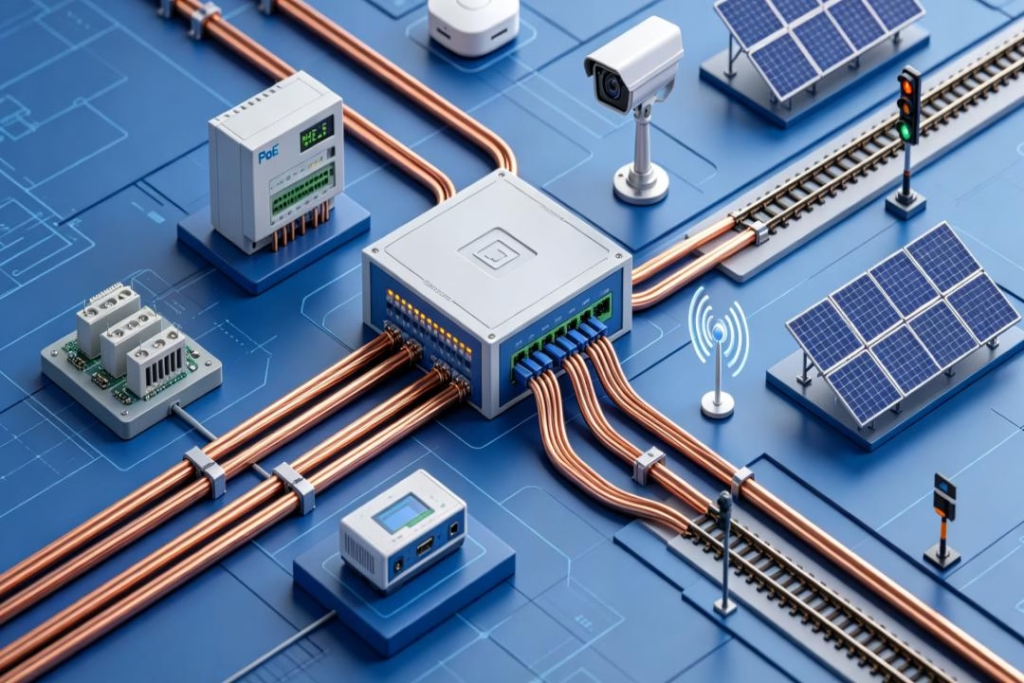
One of copper’s most compelling modern advantages is its ability to simultaneously deliver power and data over the same cable. Copper cables can simultaneously deliver power and data to devices such as IP cameras, VoIP phones, and wireless access points, reducing the need for separate electrical wiring.
This capability has revolutionized how buildings are wired. Instead of running separate power and data cables to each device, a single copper Ethernet cable can do both. This reduces installation costs, simplifies cable management, and enables the deployment of smart building technologies.
The Growing Importance of PoE
IP security cameras can be powered and connected with a single cable
Wireless access points require only a network drop, not an electrical outlet
Smart building sensors can be deployed anywhere there is network connectivity
LED lighting systems can be controlled and powered over the same cable
VoIP phones eliminate the need for separate power supplies
Reason 6: Cost-Effectiveness and Market Dominance
Despite being more expensive than aluminum on a per-pound basis, copper cable offers a lower total cost of ownership when all factors are considered. The superior conductivity means smaller conductors can be used. The durability means fewer replacements. The reliability means less downtime. The flexibility means faster installation.
Copper cabling is significantly more affordable than fiber optics for shorter-distance deployments, making it ideal for offices, schools, and data center interconnects. This is why copper continues to be the default medium for in-building cabling systems, where runs are typically under 100 meters.
Market Growth
The numbers speak for themselves:
The copper wire and cable market is estimated at USD 182.0 billion in 2025
Projected to reach USD 324.7 billion by 2032
Growing at a CAGR of 8.6%
The low-voltage segment dominated with 50.0% market share in 2024
This growth is driven by rising investments in power generation, transmission, and distribution infrastructure, along with increasing urbanization and construction activity across residential, commercial, and industrial sectors. Rapid electrification across industries, particularly the expansion of renewable energy, electric vehicles, charging infrastructure, and data centers, is significantly boosting demand for high-conductivity and reliable copper cables.
Reason 7: Environmental Sustainability
Copper is 100% recyclable. Copper can be repeatedly recycled without any loss in quality or performance so long as any impurities are removed.
Recycling a tonne of copper uses just 20% of the energy that would be used to mine and extract the same amount of copper. More than 86 million metric tons of copper are recoverable, waiting to be brought back into circulation through responsible end-of-life systems. By recycling just one cable, we can all help reclaim valuable materials like copper.
Recycling copper always requires significantly less energy than producing new metal from ore. Copper is also 100% recyclable and uses significantly less energy than mining for new materials, and can be reused to create anything from phones, transport, clean energy and medical equipment.
Environmental Impact of Copper vs. Aluminum
Due to higher electrical resistance, aluminum-core cables result in significantly higher operational emissions compared to copper-core cables. This means that even though aluminum is cheaper upfront, copper’s superior efficiency actually makes it the more environmentally responsible choice over the life of the installation.
Copper vs. Aluminum: A Side-by-Side Comparison
| Property | Copper | Aluminum |
|---|---|---|
| Conductivity (% IACS) | 100% | ~61% |
| Melting Point | 1,080°C | 660°C |
| Tensile Strength | Higher | Lower |
| Fatigue Resistance | Higher (up to 10⁶ cycles more) | Lower |
| Corrosion Resistance | Excellent (conductive oxide) | Moderate (non-conductive oxide) |
| Flexibility | Superior | Limited |
| Weight | Heavier | 3× lighter |
| Cost | Higher | Lower |
| Recyclability | 100% recyclable | Recyclable |
| Operational Emissions | Lower | Higher |
Common Types of Copper Cable
Building Wire (THHN/THWN)
THHN and THWN are UL-listed building wires with PVC insulation and a nylon sheath. THHN is rated for 90°C in dry locations, while THWN is rated for 75°C in wet locations. These are the most common copper cables used in residential and commercial building wiring.
Power Cable
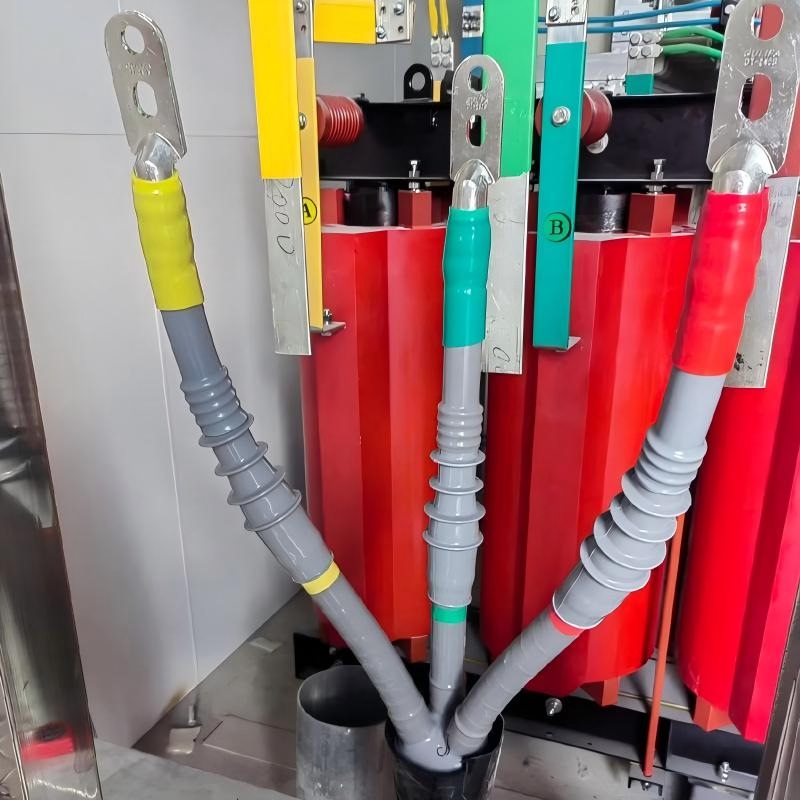
Power cables are designed for distribution of electrical power at various voltage levels. They typically feature multiple conductors, insulation, bedding, and sheathing layers for mechanical and environmental protection.
Control Cable
Control cables such as KVV (copper conductor PVC insulated PVC sheathed control cables) are used for monitoring, controlling, and protecting electrical circuits in industrial and commercial environments.
Networking Cable (Cat5e, Cat6, Cat6a)
These copper cables are used for Ethernet-based networks, connecting computers, switches, and routers. They can carry signals over short to moderate distances (typically up to 100 metres) and are available in multiple performance categories, each offering increased bandwidth and reduced interference.
Instrumentation Cable
Instrumentation cables transmit low-voltage signals from sensors, transmitters, and other measurement devices, often featuring shielding to protect against electromagnetic interference.
How to Select the Right Copper Cable
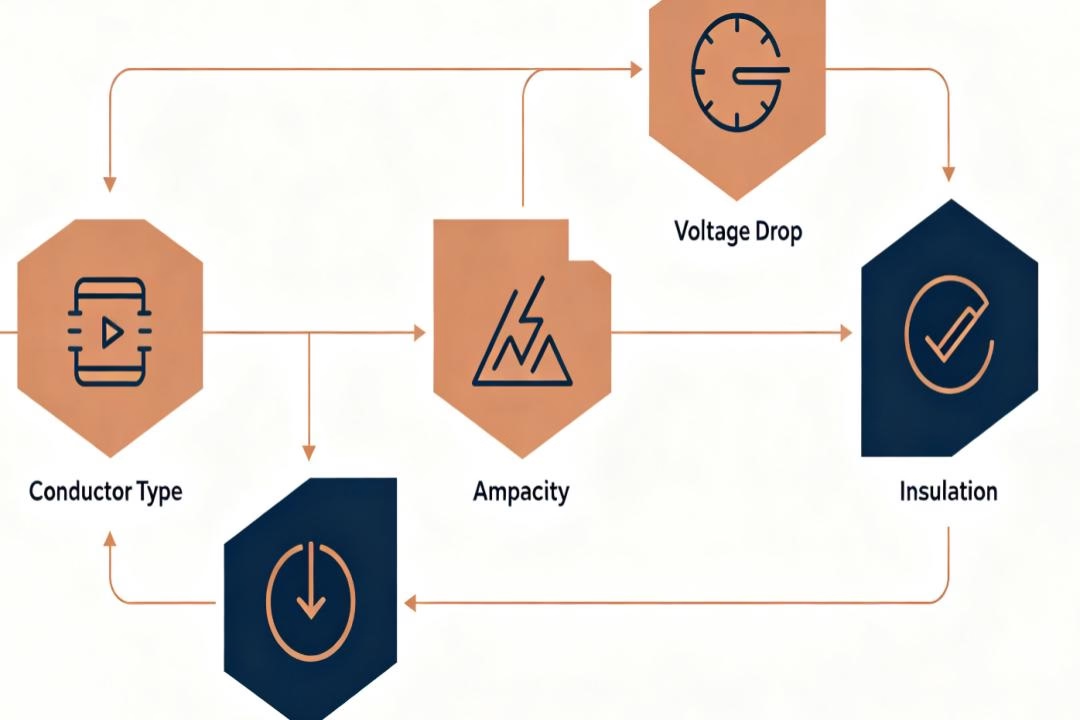
Infographic Flowchart Showing Core Factors To Evaluate During Copper Cable Selection: Conductor Type, Ampacity, Voltage Drop, Insulation And Environmental Conditions, Final Compliance Verification.
1. Determine the Application
Is this for permanent building wiring, flexible connections, power distribution, or data networking? Each application has different requirements for conductor type, insulation, and construction.
2. Choose Solid or Stranded
Solid copper: Permanent installations, in-wall wiring, punch-down terminations
Stranded copper: Flexible connections, patch cords, applications requiring frequent bending
3. Calculate the Required Ampacity
Use NEC Table 310.16 to find the minimum conductor size based on the expected current load, insulation temperature rating, and installation conditions. Remember to apply derating factors for ambient temperature and conductor grouping.
4. Consider Voltage Drop
For long cable runs, voltage drop can significantly impact equipment performance. Calculate voltage drop using the formula and increase conductor size if necessary.
5. Select the Appropriate Insulation
Dry, indoor locations: THHN or PVC insulation
Wet or damp locations: THWN or XHHW
High-temperature areas: XLPE or silicone insulation
Outdoor or UV-exposed: UV-resistant jackets
6. Verify Compliance
Ensure the cable meets all applicable standards: NEC, UL, CSA, IEC, or other relevant certifications.
Frequently Asked Questions
Q: Why is copper better than aluminum for cables?
A: Copper offers higher conductivity (1.6× that of aluminum), superior durability, better fire resistance (melting point 1,080°C vs. 660°C), greater fatigue resistance (up to 10⁶ cycles more), and forms a conductive oxide layer that maintains reliable electrical contact.
Q: What is the ampacity of 10 AWG copper wire?
A: According to NEC Table 310.16, 10 AWG copper has ampacities of 30A (60°C), 35A (75°C), and 40A (90°C).
Q: When should I use solid copper vs. stranded copper?
A: Use solid copper for permanent installations and in-wall wiring. Use stranded copper for flexible connections, patch cords, and applications requiring frequent bending.
Q: How long does copper cable last?
A: A single copper wire can last 100 years or more in the right conditions.
Q: What does AWG mean?
A: AWG stands for American Wire Gauge. Smaller AWG numbers indicate thicker wires, which offer lower resistance and better current-carrying capacity.
Q: Where can I find official NEC ampacity tables?
A: The official tables are published in NFPA 70, the National Electrical Code. They are also available through various online references and the NFPA website (www.nfpa.org). Google search results provide numerous resources, including tables from engineering reference sites.
Conclusion
Copper cable has powered the world for over a century, and it shows no signs of slowing down. From residential wiring to industrial power distribution, from data centers to renewable energy systems, copper cable delivers the performance, reliability, and safety that modern electrical infrastructure demands.
The seven reasons outlined in this guide—unmatched conductivity, exceptional durability, superior fire safety, flexibility and workability, PoE capability, cost-effectiveness, and environmental sustainability—explain why copper cable remains the conductor of choice for engineers and electricians worldwide.
Understanding the different types of copper cable—solid vs. stranded, various insulation materials, and specialized constructions—is essential for making informed decisions. Compliance with standards like the National Electrical Code (NEC) and international standards such as IEC 60228 ensures safety, performance, and code compliance.
When selecting copper cable, consider the application, required ampacity, voltage drop, environmental conditions, and installation method. By following best practices for installation and avoiding common mistakes, you can ensure decades of reliable service.
Copper cable is not just a conductor—it is an investment in safety, performance, and peace of mind.
References
National Electrical Code (NFPA 70), Table 310.16 – Ampacities of Insulated Conductors
NEC 110.14(C) – Temperature Limitations of Terminations
IEC 60228 – Conductors of Insulated Cables
UL 83 – Thermoplastic-Insulated Wires and Cables
Markets and Markets – Copper Wire & Cable Market Report 2025-2032
Prysmian – Understanding Copper Wire: Properties, Benefits and Sustainability
Various engineering reference sites including conduit-fill-calculator.com, kristechwire.com, and andcorp.com.au
This guide is for informational purposes only. Always consult the latest edition of the National Electrical Code and work with qualified professionals for electrical installations.