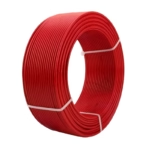
 Minxing Cable
 Jinhuanyu Cable
 Jinlongyu Cable
 Guangdong Cable
 Zhujiang Wire & Cable
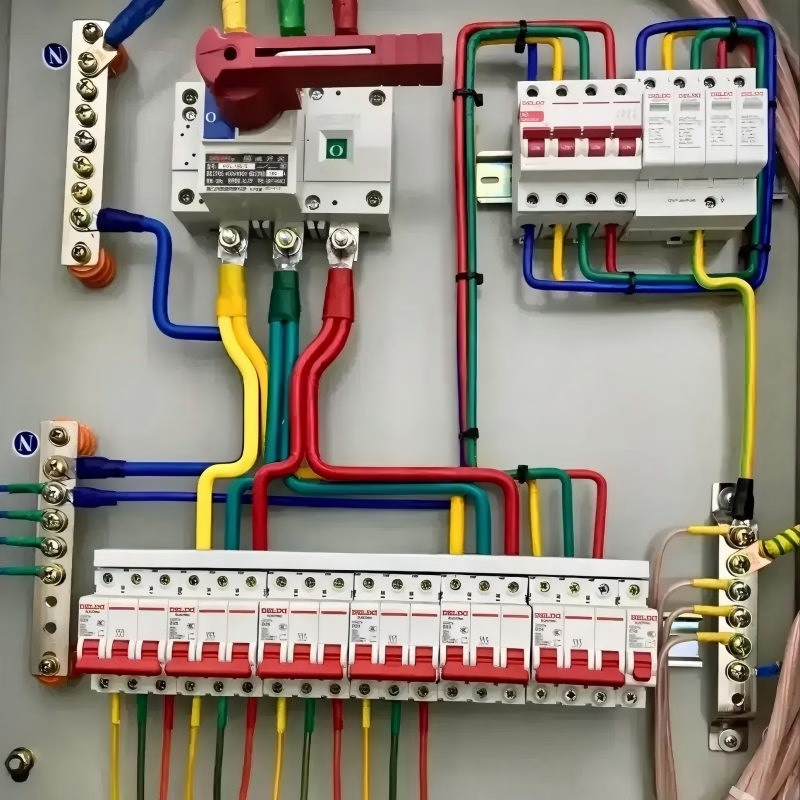
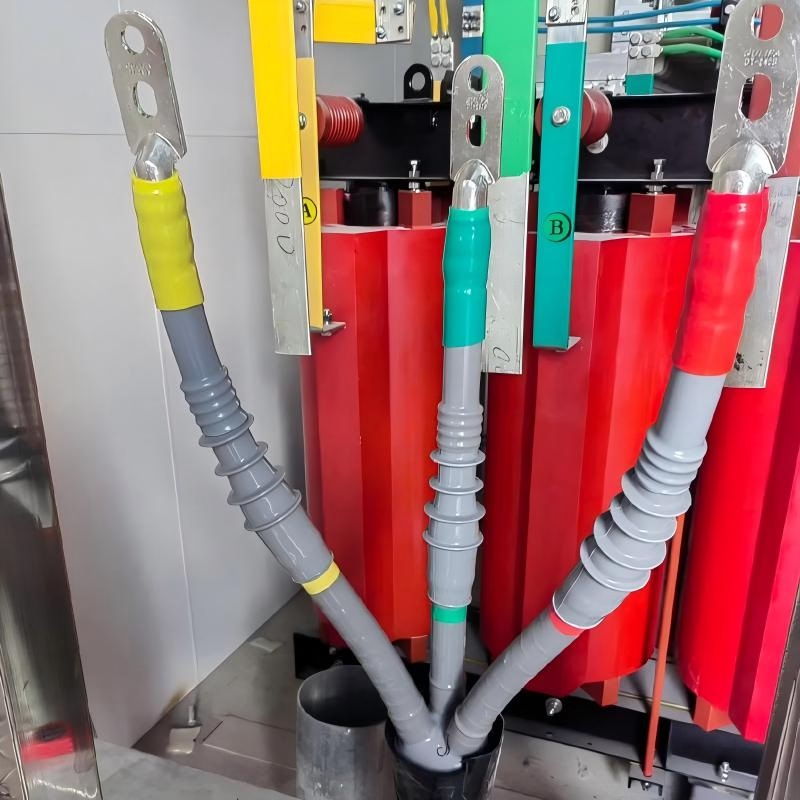
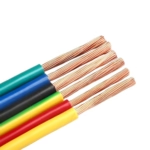




Essential Experience: Tips for Choosing and Using Wire and Cable
In the modern industrial and residential landscape, wires and cables are the invisible veins and arteries that power our world. While often overlooked, the quality and correct application of these components are fundamental to electrical safety and system efficiency. This comprehensive guide draws from decades of engineering experience to provide an in-depth look at everything you need to know about wire and cable management.

Chapter 1: Understanding the Anatomy of a Cable
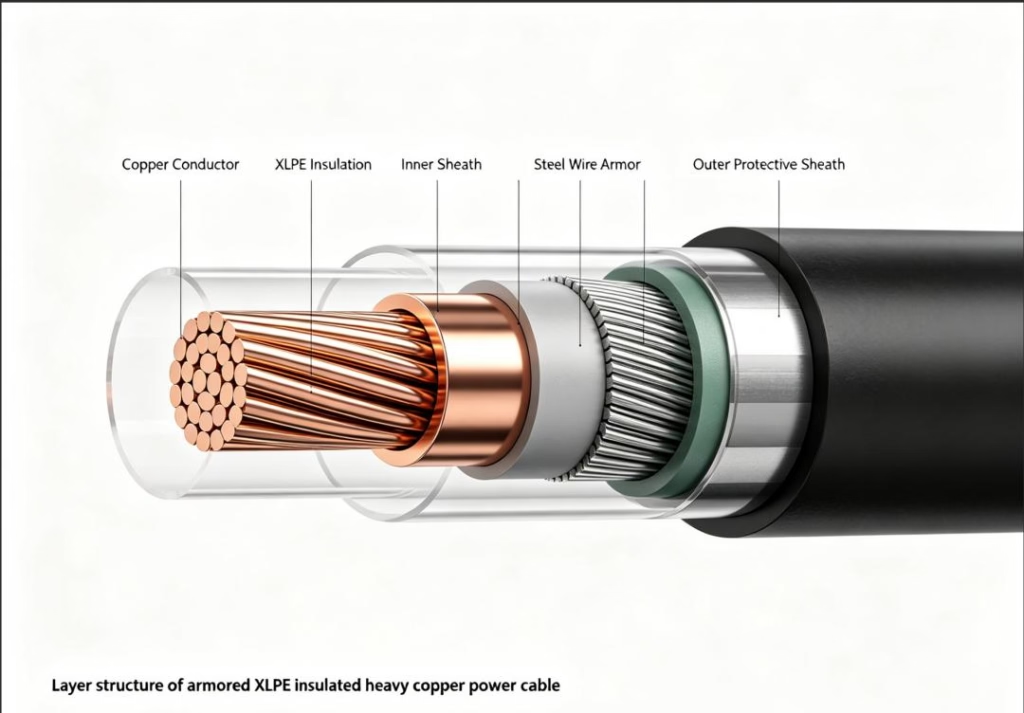
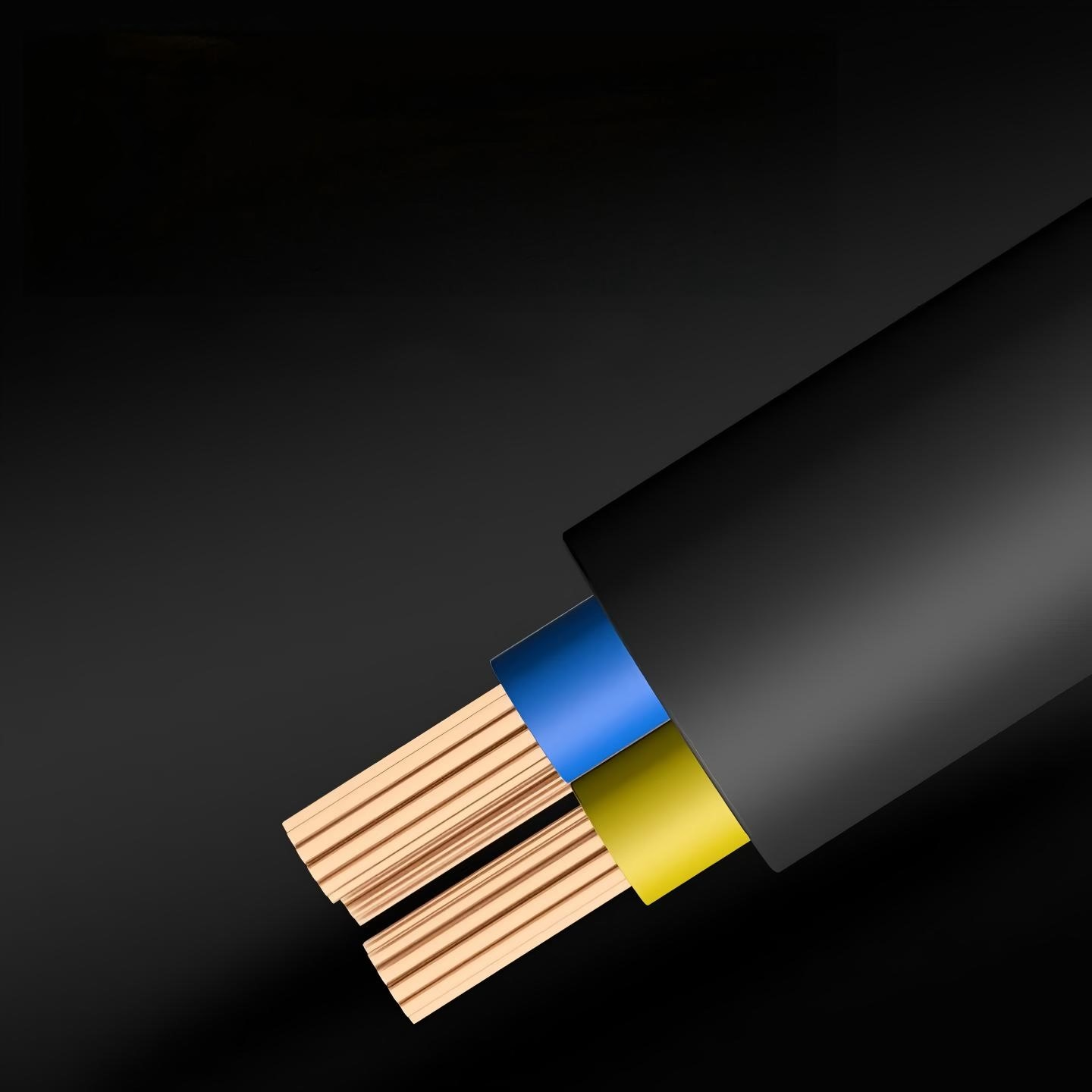
To use cables effectively, one must first understand their construction. A standard power cable consists of three primary layers:
- The Conductor: Usually copper or aluminum. Copper is preferred for its superior conductivity and flexibility, while aluminum is often used in high-voltage transmission due to its lighter weight.
- Insulation: This layer prevents electrical leakage. Materials like PVC (Polyvinyl Chloride), XLPE (Cross-linked Polyethylene), and Rubber each have different thermal and chemical resistance properties.
- The Sheath: The outermost layer that protects the internal components from mechanical damage, moisture, and chemical exposure.
Chapter 2: Critical Selection Criteria
Choosing the wrong cable can lead to voltage drops, overheating, or even catastrophic fires.
- Current Carrying Capacity (Ampacity): You must calculate the maximum current the circuit will carry. Overloading a cable causes the insulation to degrade over time.
- Voltage Drop Considerations: For long-distance runs, the resistance of the wire causes a drop in voltage. Professional installers always calculate the percentage of drop to ensure equipment receives the required power.
- Environmental Factors: UV Resistance is crucial for outdoor use. In public buildings, LSZH (Low Smoke Zero Halogen) cables are mandatory to prevent toxic gas emission during a fire.
Chapter 3: Professional Installation Techniques
Experience shows that most cable failures occur due to poor installation rather than manufacturing defects.
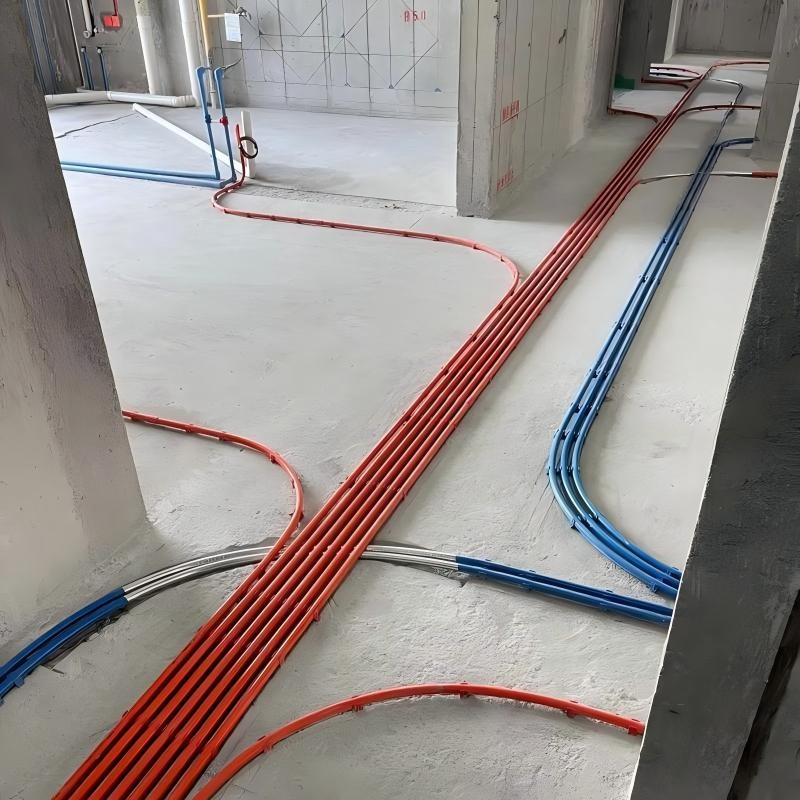
- Bending Radius: Every cable has a minimum bending radius (usually 6 to 12 times its diameter). Exceeding this can crack the insulation or damage the conductor.
- Pulling Tension: Using excessive force during installation can stretch the copper, reducing its cross-sectional area and increasing resistance.
- Separation of Power and Data: To prevent Electromagnetic Interference (EMI), power cables and data cables should never be run in the same conduit without proper shielding.
Chapter 4: Common Pitfalls and How to Avoid Them
1. Using Indoor Cables Outdoors: Standard PVC insulation will become brittle and crack when exposed to rain and temperature fluctuations.
2. Ignoring Termination Quality: A loose connection at the terminal block is the #1 cause of electrical fires. Always use the correct crimping tools and ferrules.
3. Underestimating Future Needs: When wiring a building, it is wise to install conduits with 30% extra space for future upgrades.
Chapter 5: Maintenance and Testing
A proactive maintenance schedule can extend cable life by decades. Insulation Resistance Testing (Megger Test) helps identify moisture ingress before a short circuit occurs. Additionally, Thermal Imaging can reveal “hot spots” caused by loose connections or overloading.
Conclusion
Electrical wiring is a science that requires precision and respect for safety standards. By choosing high-quality materials and following rigorous installation protocols, you ensure the longevity of your infrastructure and the safety of its occupants.
Aluminium–copper alloys (AlCu) are aluminium alloys that consist largely of aluminium (Al) and traces of copper (Cu) as the main alloying elements. Important grades also contain additives of magnesium, iron, nickel and silicon (AlCu(Mg, Fe, Ni, Si)), often manganese is also included to increase strength (see aluminium–manganese alloys). The main area of application is aircraft construction. The alloys have medium to high strength and can be age hardened. They are both wrought alloy. Also available as cast alloy. Their susceptibility to corrosion and their poor weldability are disadvantageous.
Duralumin is the oldest variety in this group and goes back to Alfred Wilm, who discovered it in 1903. Aluminium could only be used as a widespread construction material thanks to the aluminium–copper alloys, as pure aluminium is much too soft for this and other hardenable alloys such as aluminium–magnesium–silicon alloys (AlMgSi) or the naturally hard (non-hardenable) alloys.
Aluminium–copper alloys were standardised in the 2000 series by the international alloy designation system (IADS) which was originally created in 1970 by The Aluminum Association. The 2000 series includes 2014 and 2024 alloys used in airframe fabrication.
Copper alloys with aluminium as the main alloying metal are known as aluminium bronze, the amount of aluminium is generally less than 12%.