 Minxing Cable
 Jinhuanyu Cable
 Jinlongyu Cable
 Guangdong Cable
 Zhujiang Wire & Cable




Introduction
In the world of electrical conductors, few products offer the unique combination of flexibility, durability, and conductivity found in braided copper cable. Unlike solid or standard stranded conductors, braided copper cable is woven from multiple thin strands of copper into a flexible, tubular, or flat structure. This construction gives it properties that make it indispensable in applications ranging from automotive grounding to electromagnetic interference (EMI) shielding in data centers.
But what exactly is braided copper cable? How does it compare to solid copper conductors? And when should you choose it for your project? This comprehensive guide answers these questions and more, providing you with the technical knowledge needed to make informed decisions about braided copper cable.
What Is Braided Copper Cable?
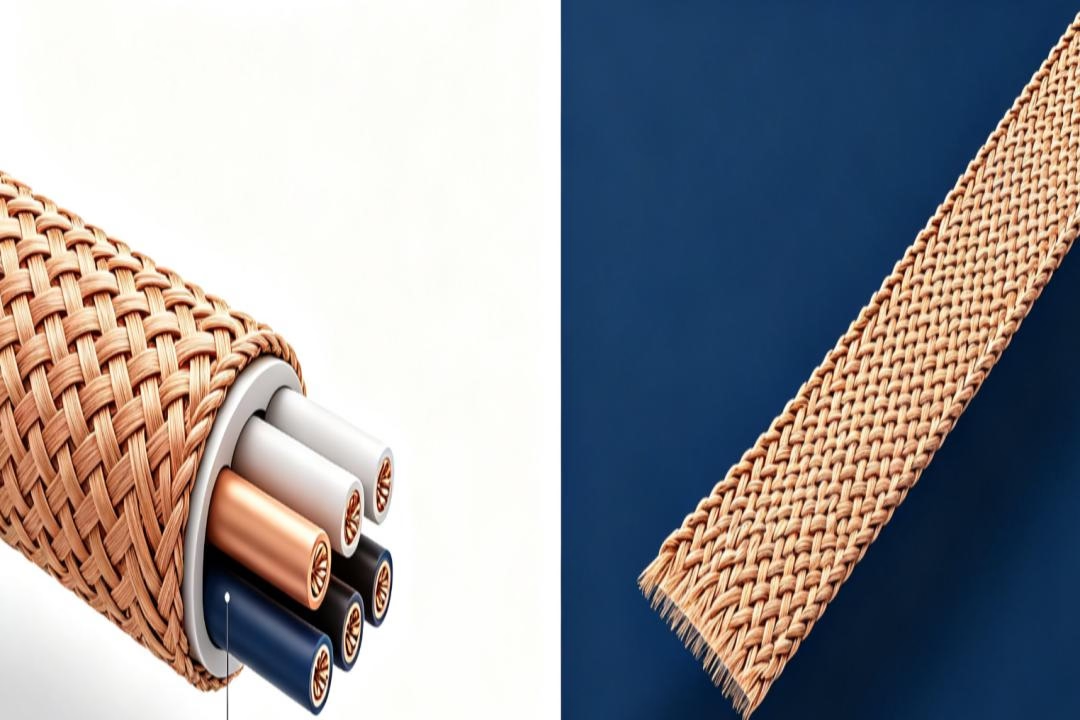
Braided copper cable is a type of electrical conductor made from multiple thin strands of copper that are woven or braided together in a helical or crisscross pattern. The braiding process involves interlacing three or more strands of copper wire to create a flexible, highly conductive cable.
The result is a conductor that can take two primary forms:
1. Tubular Braid – A hollow, sleeve-like structure designed to slide over cables or wire bundles. This form is primarily used for EMI/RFI shielding and mechanical protection.
2. Flat Braid – A dense, ribbon-like strap used for point-to-point connections such as ground straps and bonding applications.
Braided copper wire is commonly manufactured using tinned copper—copper that has been coated with a thin layer of tin. Tinning provides enhanced corrosion resistance while maintaining excellent conductivity. The wire is typically fully annealed, meaning it has been heat-treated to maximize flexibility.
Braided Copper vs. Solid Copper: A Critical Comparison
Understanding the differences between braided and solid copper conductors is essential for selecting the right product for your application.
Solid Copper Conductors
Solid copper conductors consist of a single, continuous piece of copper wire. They offer:
Superior raw conductivity – Slightly lower resistance than braided conductors of the same cross-sectional area
Higher mechanical strength – A solid conductor is stronger and more resistant to tensile forces
Simpler termination – Easier to strip, crimp, and connect
Lower cost – Simpler manufacturing process with less material waste
However, solid copper is rigid and prone to cracking when bent repeatedly or subjected to vibration.
Braided Copper Conductors
Braided copper conductors consist of multiple thin strands woven together. They offer:
Exceptional flexibility – The woven structure allows bending and twisting without breaking, making it ideal for applications involving movement or vibration
Improved heat dissipation – The increased surface area from the woven structure can actually improve heat dissipation in some applications
Better EMI shielding – The woven mesh structure provides effective electromagnetic interference protection
More even current distribution – Multiple strands help distribute current more evenly, which can be advantageous in certain high-frequency applications
However, braided copper typically commands a premium price due to its more complex manufacturing process.
The Ampacity Question
While solid conductors have a slight edge in raw amperage capacity, copper braids are not far behind. A key consideration is that a braided strap has air gaps between strands, meaning the effective conductive area is approximately 85–90% of solid copper. For most electrical applications, both options will handle current requirements adequately.
Key Applications of Braided Copper Cable
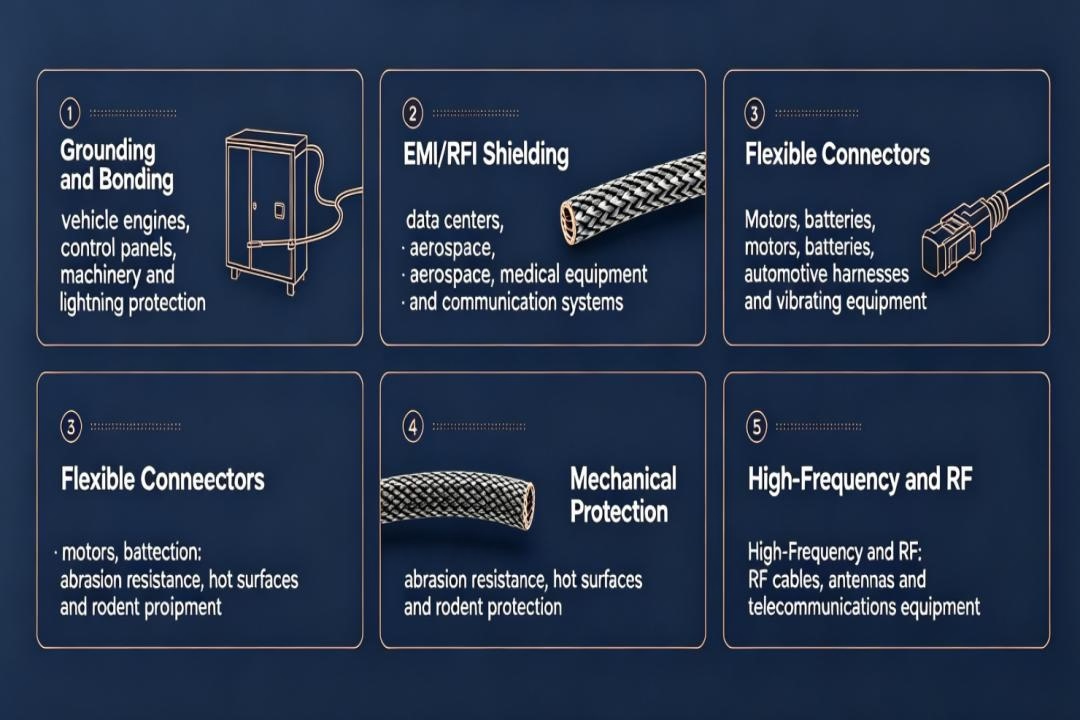
Industrial Application Grid For Braided Copper Cable, Summarizing Five Core Use Cases: Grounding &Amp; Bonding, Emi/Rfi Shielding, Flexible Connectors, Mechanical Protection, And High-Frequency &Amp; Rf Systems. Braided Copper Cable Delivers Flexibility, Shielding Performance And Reliable Long-Term Electrical Connections.
Braided copper cable finds use across a remarkably wide range of industries and applications.
1. Grounding and Bonding
This is perhaps the most common application for braided copper cable. Copper braided wire is frequently used for grounding applications to safely dissipate electrical faults, prevent electrical shocks, and protect equipment from static discharge.
The primary use of a braided cable is as an earthing strap for both safety and the elimination of static. Flat wire braid is an ideal choice for creating flexible, heavy-duty ground straps due to its large surface area and flexibility.
Common grounding applications include:
Grounding vehicle engines and body panels
Bonding doors and panels on industrial control cabinets
Providing a ground path for heavy machinery
Building grounding systems
Lightning protection systems
2. EMI/RFI Shielding
Sensitive signals can be disrupted in environments with significant electrical noise. Tubular braided copper cables are commonly used as an electromagnetic interference (EMI) and radio-frequency interference (RFI) shield.
The braided sleeve is placed over cables to create a protective barrier, intercepting interference and safely directing it to ground. A braid shield with 70–95% coverage can effectively block external electromagnetic signals. High-performance braided shields can achieve 90% braid coverage for superior shielding effectiveness.
This is critical in:
Data centers and communication systems
Aerospace and automotive wiring harnesses
Medical diagnostic equipment
Sensitive laboratory instruments
3. Flexible Connectors
Braided copper wire is used as flexible connectors in electrical and electronic devices where movement or vibration is present. The flexibility of the copper braid allows it to absorb and distribute forces without causing damage to electrical components.
Applications include:
Motor connections
Battery cables
Connections between components that experience vibration or movement
Automotive wiring harnesses
Industrial equipment
4. Mechanical Protection
In addition to its electrical properties, wire braid provides excellent protection against physical damage. A braided copper or steel cable can significantly increase resistance to abrasion, cuts, and general wear and tear.
When applied as a covering to a cable, a braid can also:
Provide increased protection against hot surfaces
Offer resistance to abrasion and cutting
Help prevent attack by rodents
This is essential in demanding environments such as:
Robotics and factory automation
Heavy equipment and construction machinery
Exposed wiring runs on the factory floor
5. High-Frequency and RF Applications
Due to its excellent electrical conductivity and flexibility, copper braided wire is suitable for high-frequency applications such as:
Radio frequency (RF) cables
Antennas
Telecommunications equipment
6. Transportation
Braided copper cable is extensively used in the automotive, aerospace, and railway industries. The flexibility and durability of braided wire make it ideal for electrically linking different parts of a vehicle, such as the hood or exhaust pipe.
Braided Copper Cable Specifications and Standards
BS 4109
Braided copper wire often meets BS 4109, the British specification for copper for electrical purposes. This standard ensures the copper used meets stringent quality and performance requirements.
Current Ratings
Braided copper cable is available in a wide range of current ratings. Examples include:
10A versions
30A versions
63A versions (e.g., 10 x 2 mm construction)
90A versions (e.g., 24 x 12 x 0.20 mm construction, 9.05 mm²)
Up to 300A and beyond
Materials
Braided copper cable is available in various materials:
Tinned copper – Excellent shielding and conductivity with corrosion resistance
Bare copper – Maximum conductivity
Silver-plated copper – High-temperature applications
Nickel-plated copper – High-temperature environments
Construction Options
Braided cable is available in:
Tubular – Hollow sleeve for sliding over cable bundles
Flat – Dense ribbon for point-to-point connections
How to Select the Right Braided Copper Cable
1. Determine the Application
Start by identifying your primary need:
Grounding/Bonding: Flat braid is typically the best choice
EMI/RFI Shielding: Tubular braid that slides over cables
Flexible Connection: Consider both flat and tubular options based on space constraints
2. Select the Material
Tinned copper – General-purpose, corrosion-resistant
Bare copper – Maximum conductivity in dry environments
Silver-plated copper – High-temperature applications
Nickel-plated copper – Extreme temperature environments
3. Determine the Current Rating
Calculate the maximum current your application will carry and select a braid with an appropriate rating. Braids are available from 10A to 300A and beyond.
4. Choose the Correct Size
For tubular braid, match the braid’s diameter to your cable bundle. The braid should fit snugly but still be able to expand to slide over the cable and any connectors.
5. Verify Compliance
Ensure the braided cable meets applicable standards such as BS 4109, ASTM, or NEC requirements.
Installation Best Practices
For Tubular Braid (Shielding)
Slide the braid over the cable before terminating connectors
Ensure the braid makes proper contact with the cable shield or drain wire
Use heat shrink or other methods to secure the braid in place
For Flat Braid (Ground Straps)
Ensure all strands make proper contact at termination points
Use appropriate termination methods (ring terminals, compression lugs, etc.)
Avoid over-tightening that could damage individual strands
Torque connections to manufacturer specifications
Common Mistakes to Avoid
Using braided cable where solid is required – Braided cable is not suitable for punch-down terminations
Exceeding current ratings – Always derate for continuous loads
Poor termination – Incomplete contact between strands and terminals can create hot spots
Ignoring environmental factors – Consider temperature, moisture, and chemical exposure
Frequently Asked Questions
Q: What is the difference between braided and stranded copper wire?
A: Stranded wire consists of multiple strands twisted together, while braided wire features strands woven in a crisscross pattern. Braided wire offers superior flexibility, better EMI shielding, and more even current distribution.
Q: Why is copper braided wire tinned?
A: Tinning (coating with tin) provides enhanced corrosion resistance while maintaining excellent conductivity. Tinned copper braid is more durable in harsh environments.
Q: What is the current rating of braided copper cable?
A: Current ratings range from 10A to over 300A, depending on the cross-sectional area and construction. A 9.05 mm² braid, for example, is rated at 90A.
Q: Can braided copper cable be used for power transmission?
A: Yes, braided copper cable can carry significant current. However, due to the air gaps between strands, the effective conductive area is approximately 85–90% of solid copper.
Q: What is BS 4109?
A: BS 4109 is the British specification for copper for electrical purposes. Braided copper wire meeting this standard ensures high quality and performance.
Q: Where can I find official information on copper braid standards?
A: Official standards are published by organizations like BSI (for BS 4109), ASTM, and UL. The NFPA website (www.nfpa.org) provides access to NEC standards. Google search results offer numerous resources from engineering reference sites and manufacturers.
Conclusion
Braided copper cable is a remarkably versatile product that solves problems solid conductors simply cannot address. Its unique combination of flexibility, durability, and conductivity makes it indispensable for grounding, EMI shielding, flexible connections, and mechanical protection across countless industries.
Understanding the differences between braided and solid copper—and knowing when to choose each—is essential for any electrical engineer, technician, or contractor. While solid copper remains the standard for fixed installations, braided copper excels in applications involving movement, vibration, tight spaces, or the need for electromagnetic shielding.
When selecting braided copper cable, consider the application, required current rating, environmental conditions, and applicable standards. By following best practices for installation and avoiding common mistakes, you can ensure reliable performance for decades to come.
Braided copper cable is not just a conductor—it is a solution to some of the most challenging problems in electrical engineering.
References
RS PRO – Braided Wire Technical Specifications (BS 4109)
L&T-SuFin – Understanding the Different Types of Copper Wire
Eland Cables – FAQ: Why Do Certain Cables Have Braiding?
TE Connectivity – Raybraid Series Technical Data
Various engineering reference sites including rs-online.com, elandcables.com, and lntsufin.com
This guide is for informational purposes only. Always consult the latest codes and standards and work with qualified professionals for electrical installations.