
 Minxing Cable
 Jinhuanyu Cable
 Jinlongyu Cable
 Guangdong Cable
 Zhujiang Wire & Cable




Introduction
You know that sinking feeling. The cable in your wall just failed—again. The electrician is on his way. The bill will be painful. And you are left wondering: Why does this keep happening?
If you have been using aluminium cables or cheap copper-clad alternatives, the answer is simple: you get what you pay for.
Copper cable is not the cheapest option on the shelf. It never has been. But there is a reason why engineers, contractors, and facility managers have chosen it for over a century. There is a reason why it remains the backbone of global electrical infrastructure. And there is a reason why the copper cable market is valued at approximately $30 billion in 2025 and projected to grow at a CAGR of around 6.5% from 2025 to 2030.
This article explores seven key advantages of copper cable that make it the smartest long-term investment for any electrical installation—and why switching to anything else is often a false economy.
Advantage 1: Unmatched Electrical Conductivity
Copper is one of the best conductors of electricity on the planet, second only to silver. Its electrical conductivity is approximately 100% IACS (International Annealed Copper Standard), while aluminium achieves only about 61% IACS. This is not a marginal difference—it is a fundamental advantage.
Lower Resistance, Less Energy Loss
Copper’s low electrical resistance means it can carry more current with less energy wasted as heat. For a given cross-sectional area, copper carries approximately 1.7 times more current than aluminium. This translates to:
Lower operating costs over the life of the installation
Less heat generation, which extends cable life
Smaller conductor sizes for the same current-carrying capacity
More efficient power transmission over longer distances
Practical Impact
In a 100-amp circuit, switching from aluminium to copper of the same size can reduce energy losses by approximately 40%. Over a year of continuous operation, that difference adds up to real money—and real heat that stays in your cable instead of escaping into your building.
Advantage 2: Superior Durability and Longevity
Copper is a robust and durable metal that can last for many years, making it an extremely popular material. Unlike iron, copper does not rust in the air and is resistant to corrosion thanks to a protective layer that forms naturally on the surface when it encounters oxygen.
Fatigue Resistance
Recent studies have demonstrated that copper wires are more fatigue-resistant than aluminium wires. In high-cycle fatigue applications, copper can withstand up to 10⁶ cycles more than aluminium. This means copper cables are significantly less likely to fail from repeated bending, vibration, or mechanical stress—a critical advantage in industrial environments, automotive applications, and any setting where cables are subject to movement.
Corrosion Resistance
Copper forms a protective oxide layer that remains conductive. Unlike aluminium oxide, which is non-conductive and can compromise connections, copper’s oxide maintains reliable electrical contact over time. This is why 80% of cable faults occur at the joint in aluminium cables—and why copper’s superior oxidation resistance is not just a technical detail, but a safety feature.
Advantage 3: Outstanding Flexibility and Workability
Copper is one of the most ductile metals available. It can be drawn into fine wires, bent around corners, and routed through tight spaces without breaking or cracking.
Stranded Copper for Maximum Flexibility
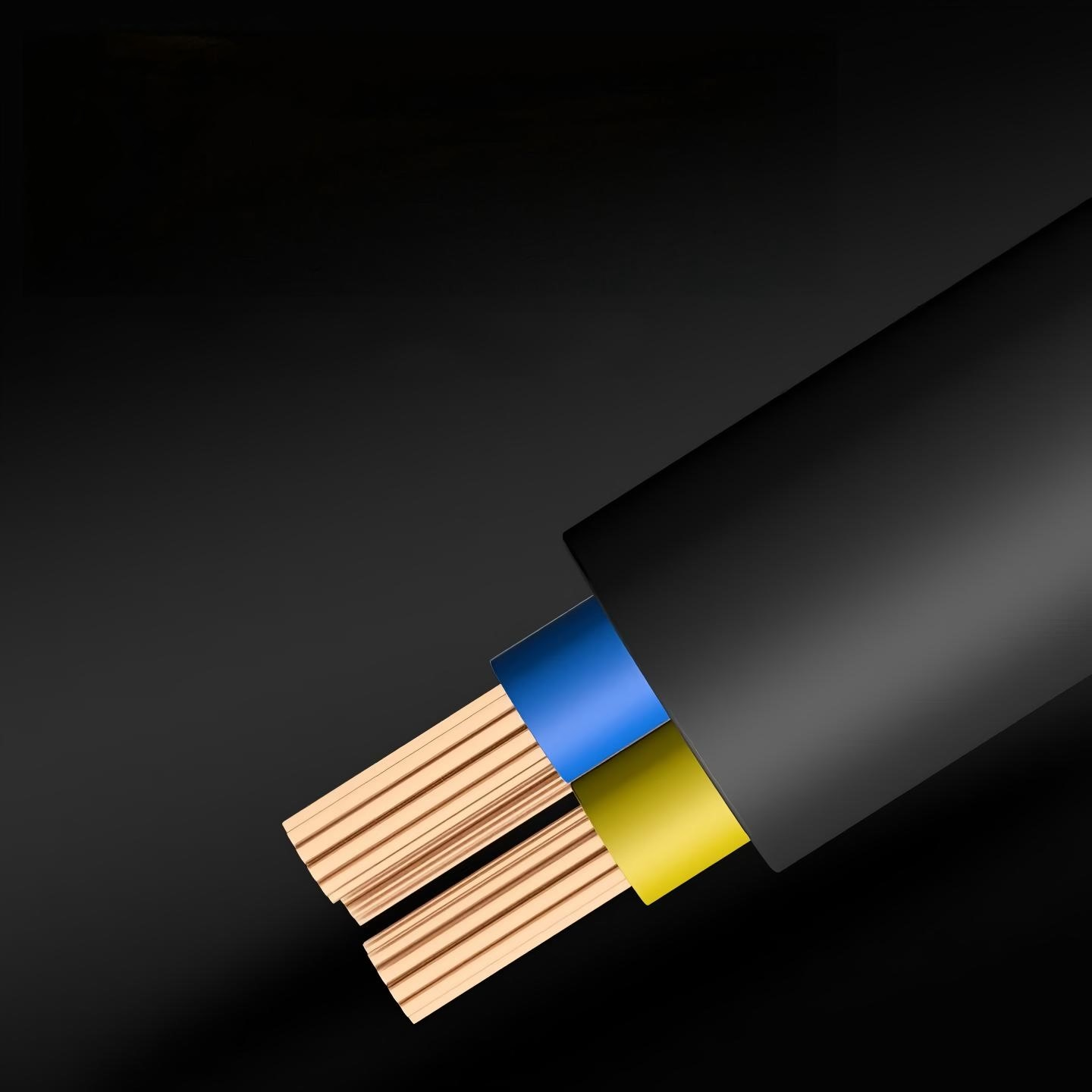
Modern copper cables use Class 5 or Class 6 stranding—hundreds of fine copper strands twisted together to create a conductor that is both highly conductive and exceptionally flexible. This makes installation faster, easier, and less labour-intensive.
Easier Termination
Copper is easier to terminate than aluminium. It forms reliable, gas-tight connections with standard connectors and lugs. Aluminium, by contrast, requires special connectors, anti-oxidant compounds, and careful torque specifications to achieve a reliable connection.
The result: Faster installation, fewer callbacks, and lower labour costs.
Advantage 4: The Unique Power of PoE
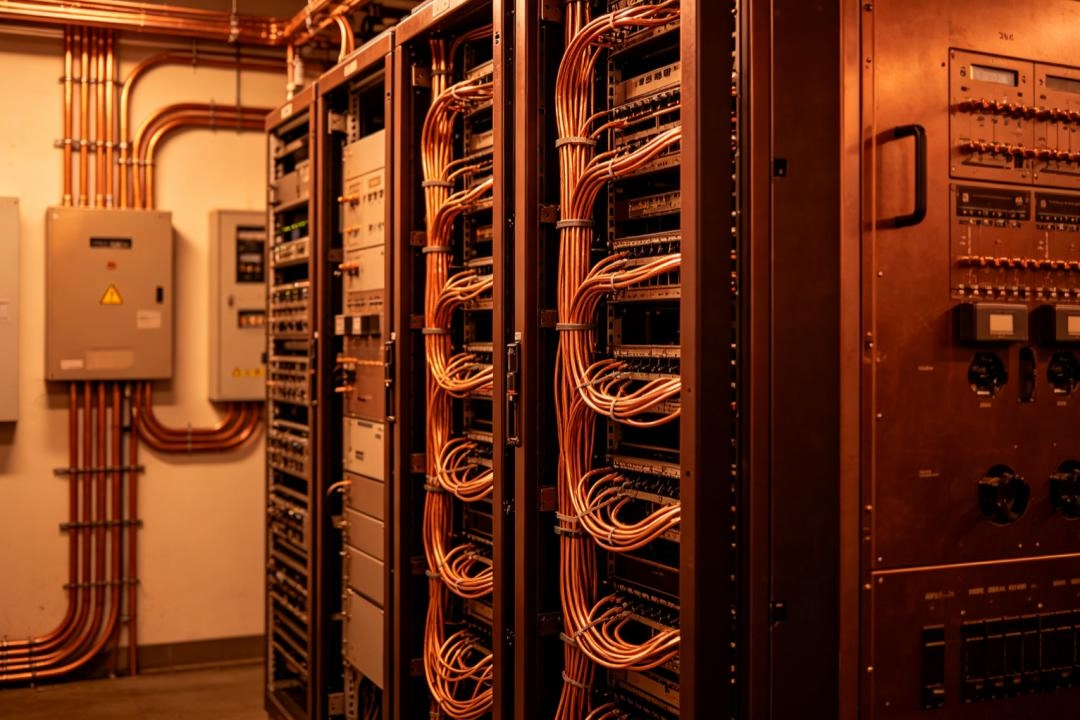
Equipment Room Interior With Neatly Routed Copper Cables Inside Server Racks And Along Wall Busbars. Copper Conductors Simultaneously Deliver Power And Data Signals, Enabling Power Over Ethernet (Poe) Applications Across Building Networks, A Unique Advantage Unavailable With Fibre Optics.
One of copper’s most compelling modern advantages is its ability to simultaneously deliver power and data over the same cable. This capability—known as Power over Ethernet (PoE)—has revolutionised how buildings are wired.
How PoE Works
Copper Ethernet cables can carry electrical power alongside data signals, eliminating the need for separate power cables and outlets. This means:
IP security cameras can be placed anywhere there is a network drop
Wireless access points require only a network cable, not an electrical outlet
VoIP phones eliminate the need for separate power supplies
IoT sensors can be deployed where running power would be impractical
PoE++ and the Future
Modern PoE standards support up to 100 watts or more over standard copper cabling. This is enough to power high-performance wireless access points, PTZ cameras, and even some laptops. Fibre optics cannot do this—fibre transmits light, not electricity. If you need to power a device, you still need a separate power cable. Copper does both.
Advantage 5: Long-Term Cost Effectiveness
Copper cable costs more upfront than aluminium. There is no denying that. But the total cost of ownership tells a different story.
Lower Maintenance Costs
Copper’s superior durability means fewer replacements. Its corrosion resistance means fewer connection failures. Its fatigue resistance means fewer cable breaks. Over the life of an installation, these advantages translate to significantly lower maintenance costs.
Energy Savings
Copper’s lower resistance means less energy wasted as heat. In a high-current application, the energy savings from using copper can offset the higher upfront cost within just a few years.
Longer Service Life
Copper cable can last 50 years or more in the right conditions. Aluminium cables, by contrast, are more prone to corrosion, fatigue, and connection failures. The aluminium may be cheaper today, but you will likely replace it sooner—and pay more in the long run.
Advantage 6: Environmental Sustainability
Copper is 100% recyclable without any loss of performance. Recycling copper uses significantly less energy than mining new copper, making it an environmentally sustainable choice.
The Circular Economy
Major cable manufacturers are already integrating recycled copper into their production. Nexans, for example, has unveiled cables made with 100% recycled materials and aims to integrate 25% recycled copper into its cable production by 2028. Recycling copper from decommissioned infrastructure saves approximately 85% of the carbon emissions associated with primary copper production.
Lower Operational Emissions
Due to higher electrical resistance, aluminium-core cables result in significantly higher operational emissions compared to copper-core cables. This means that even though aluminium is cheaper upfront, copper’s superior efficiency actually makes it the more environmentally responsible choice over the life of the installation. As one industry source notes, copper contributes just 0.2% of global GHG emissions, yet its use enables far greater carbon savings.
Advantage 7: Proven Reliability Across Every Application
Copper cable has been the standard for electrical and data transmission for over a century. Its reliability is not theoretical—it is proven.
Data Centres
The global wire and cable market was valued at $308 billion in 2025** and is forecast to grow at a CAGR of **6.6% to $422 billion in 2030. Data centres alone accounted for 1.6% of total global cable demand in 2025, rising to an estimated 6% in North America. The vast majority of these connections—inside racks, between racks, and to endpoints—are copper.
Residential and Commercial Wiring
From the walls of your home to the largest commercial buildings, copper is the standard. It is the material that electricians trust, inspectors approve, and codes require.
Industrial and Transportation
Copper cables power trains, ships, aircraft, and heavy machinery. They withstand vibration, temperature extremes, and mechanical stress. They are the backbone of modern industry—and they have been for generations.
Copper vs. Aluminium: A Side-by-Side Comparison
| Property | Copper | Aluminium |
|---|---|---|
| Conductivity (IACS) | 100% | ~61% |
| Ampacity (same size) | Higher | ~40% lower |
| Fatigue Resistance | 10⁶ cycles more | Lower |
| Melting Point | 1,080°C | 660°C |
| Corrosion Resistance | Excellent | Requires precautions |
| Flexibility | Superior | Limited |
| Termination | Easy, reliable | Requires special care |
| Lifespan | 50+ years | Shorter |
| Recyclability | 100% recyclable | Recyclable |
| Upfront Cost | Higher | Lower |
| Total Cost of Ownership | Lower | Higher |
Frequently Asked Questions
Q: What is the main advantage of copper cable over aluminium?
A: Copper has significantly higher conductivity (100% IACS vs. ~61% IACS), superior durability, better fatigue resistance, and easier termination. While aluminium is cheaper upfront, copper offers lower total cost of ownership.
Q: Can copper cable support Power over Ethernet (PoE)?
A: Yes. Copper Ethernet cables can deliver both power and data simultaneously, supporting up to 100 watts or more under modern PoE++ standards.
Q: Is copper cable environmentally friendly?
A: Yes. Copper is 100% recyclable, and recycling copper saves approximately 85% of the carbon emissions compared to primary production. Copper also enables significant energy savings through its superior conductivity.
Q: How long does copper cable last?
A: Copper cable can last 50 years or more in the right conditions.
Q: Why is copper cable more expensive than aluminium?
A: Copper is more expensive because it is a scarcer resource and requires more energy to mine and refine. However, its superior performance, durability, and lower total cost of ownership often justify the higher upfront cost.
Q: Where can I find official ampacity tables for copper cables?
A: Official ampacity tables are published in the National Electrical Code (NEC), specifically Table 310.16. These tables provide allowable ampacities for copper conductors based on insulation temperature ratings (60°C, 75°C, and 90°C). The NFPA website (www.nfpa.org) provides access to NEC standards.
Conclusion
Copper cable is not the cheapest option on the shelf. It never has been. But it is the smartest option—and that is a very different thing.
The advantages of copper cable are not theoretical. They are proven, measurable, and documented. Higher conductivity means lower energy losses. Superior durability means fewer replacements. Outstanding flexibility means faster installation. PoE capability means simpler, more efficient buildings. Long-term cost effectiveness means lower total cost of ownership. Environmental sustainability means a smaller carbon footprint. And proven reliability means peace of mind.
When you choose copper cable, you are not just buying wire—you are investing in a system that will perform reliably for decades. You are choosing the material that has powered the world for over a century—and will continue to power it for generations to come.
References
International Annealed Copper Standard (IACS) – Conductivity Ratings
National Electrical Code (NFPA 70), Table 310.16 – Ampacities of Insulated Conductors
U.S. Energy Information Administration – Copper vs Aluminium Conductivity Data
Various industry sources including Prysmian, Nexans, L-com, and AndCorp
This guide is for informational purposes only. Always consult the latest edition of the National Electrical Code and work with qualified professionals for electrical installations.