 Minxing Cable
 Jinhuanyu Cable
 Jinlongyu Cable
 Guangdong Cable
 Zhujiang Wire & Cable




Introduction
Electrical Cable Copper withstands up to 1 million more bending cycles than aluminum, making it the only reliable choice for robotics, conveyors, and portable equipment.
Copper has been the backbone of electrical infrastructure for over a century. From the first telegraph lines to today’s high-speed data centers and renewable energy systems, copper electrical cable remains the undisputed standard for conducting electricity. Its exceptional conductivity, durability, and reliability make it the material of choice for engineers, electricians, and contractors worldwide.
But with so many types, ratings, and specifications on the market, selecting the right copper electrical cable for your project can be overwhelming. This comprehensive guide covers everything you need to know—from the fundamental properties of copper conductors to practical selection criteria, installation best practices, and industry standards.Copper conducts electricity with 100% IACS efficiency – that’s nearly 40% more than aluminum’s 61%, meaning a smaller copper wire can carry the exact same load.Electrical Cable Copper is 100% recyclable, and recycling it uses only 10% of the energy needed to mine new copper – making it the most sustainable conductor for green buildings.
Whether you are wiring a residential building, designing an industrial facility, or planning a renewable energy installation, understanding copper electrical cable is essential to ensuring safety, performance, and long-term reliability.
Why Copper? The Science Behind the Choice
Unmatched Electrical Conductivity
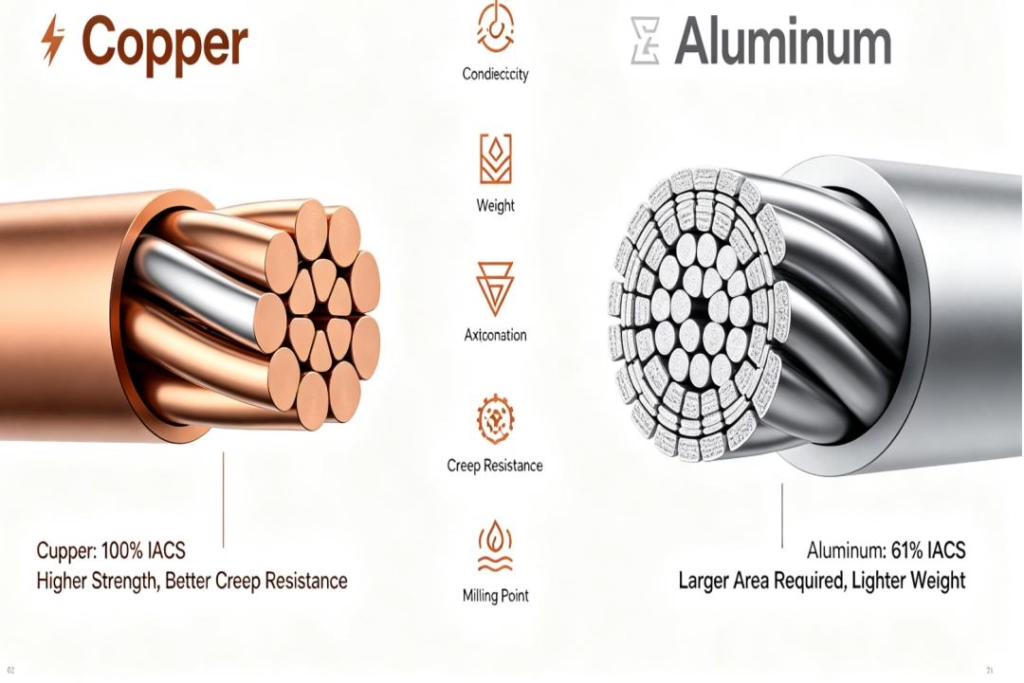
Copper is the second most conductive metal in the world, surpassed only by silver. With a conductivity of 100% IACS (International Annealed Copper Standard), copper outperforms aluminum (which achieves approximately 61% IACS) by a significant margin. This means that for the same current-carrying capacity, a copper conductor can be smaller than its aluminum counterpart, saving valuable space in conduits, cable trays, and equipment.
Superior Thermal Performance
Copper’s high thermal conductivity allows it to dissipate heat more effectively than alternative materials. This is critical in high-current applications where heat buildup can damage insulation, reduce performance, or create fire hazards. The melting point of copper is 1,080°C, compared to just 660°C for aluminum. This makes copper the only viable choice for fire-resistant cables that must maintain circuit integrity during a fire.
Exceptional Mechanical Strength
Copper wires are more fatigue-resistant than aluminum wires. In high-cycle fatigue applications, copper can withstand up to 10⁶ cycles more than aluminum. This durability translates to longer service life, fewer failures, and lower maintenance costs over the lifetime of an installation.
Corrosion Resistance
Copper naturally forms a protective oxide layer that prevents further corrosion. Unlike aluminum, which forms a non-conductive oxide that can compromise connections, copper’s oxide remains conductive, ensuring reliable terminations over decades of service.
Types of Copper Electrical Cable
Copper electrical cables come in a wide variety of configurations, each designed for specific applications. Understanding the differences is essential for making the right selection.
By Conductor Configuration
1. Solid Copper Cable
Solid copper cable uses a single, continuous strand of copper for each conductor. This construction offers lower resistance and superior electrical characteristics over a wider range of frequencies. Solid copper is more rigid than stranded cable and is the standard choice for permanent installations, in-wall wiring, and structured cabling systems.
2. Stranded Copper Cable
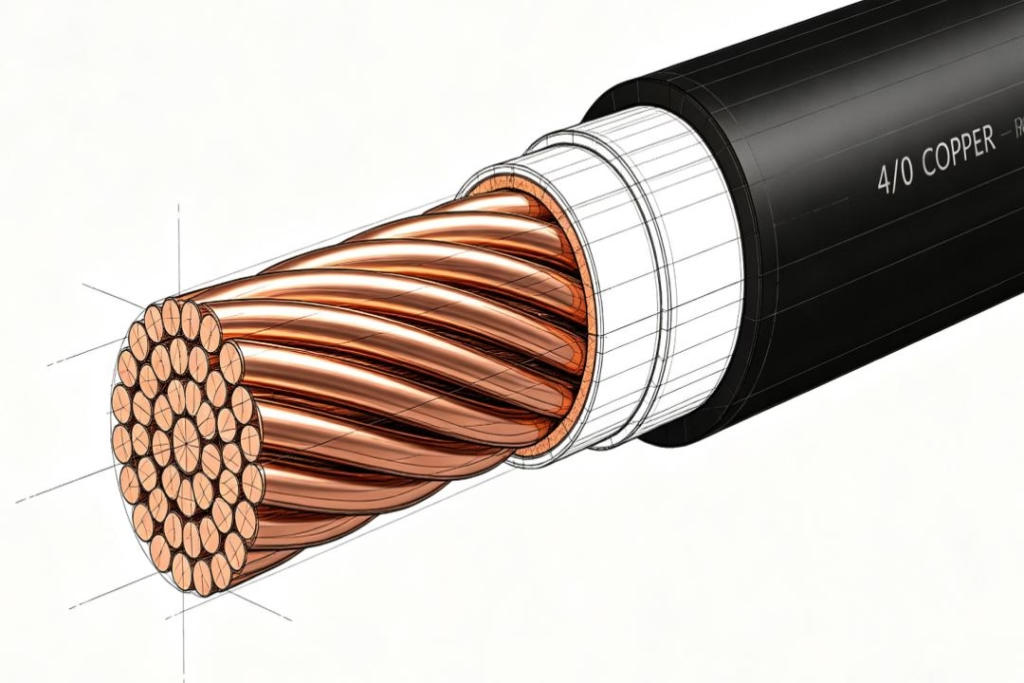
Stranded copper cable consists of multiple thin copper strands twisted together to form each conductor. This construction is much more flexible and can withstand more bending than solid conductors. Stranded cables are commonly used as patch cords, extension cords, and in applications where cables must flex frequently. However, stranded cable has slightly higher resistance and is generally more expensive to manufacture.
Key Consideration: Solid copper is the better electrical conductor, while stranded copper offers superior flexibility. Choose based on your application’s requirements.
By Insulation Type
1. THHN/THWN (Thermoplastic High Heat-resistant Nylon-coated)
THHN is one of the most common building wires in North America. It is rated for 90°C in dry locations and 75°C in wet locations. THHN copper wire is commonly used for indoor building wiring and branch circuits. Its nylon coating provides excellent abrasion resistance and makes pulling through conduit easier.
2. XHHW (Cross-Linked Polyethylene High Heat-resistant Water-resistant)
XHHW insulation offers superior moisture resistance and is rated for 90°C in both dry and wet locations. It is suitable for applications requiring low-leakage circuits. XHHW is often preferred in industrial environments where moisture and chemical exposure are concerns.
3. XLPE (Cross-Linked Polyethylene)
XLPE is a thermoset insulation material that provides excellent electrical properties, high temperature resistance (up to 90°C continuous), and superior mechanical strength. XLPE-insulated copper cables are widely used in medium and high-voltage power distribution.
4. PVC (Polyvinyl Chloride)
PVC is the most common insulation material for general-purpose wiring. It is cost-effective, provides good electrical insulation, and is suitable for temperatures up to 70°C. PVC-insulated copper cables are used extensively in residential, commercial, and industrial applications.
By Construction and Application
1. Building Wire
Building wires like THHN and XHHW are used for permanent wiring in residential, commercial, and industrial buildings. They are installed in conduit, cable trays, or as part of a cable assembly.
2. Power Cable
Power cables are designed for distribution of electrical power at various voltage levels. They typically feature multiple conductors, insulation, bedding, and sheathing layers for mechanical and environmental protection.
3. Control Cable
Control cables are used for monitoring, controlling, and protecting electrical circuits. They connect electrical equipment, instruments, and control systems. Common types include KVV (copper conductor PVC insulated PVC sheathed control cables).
4. Instrumentation Cable
Instrumentation cables transmit low-voltage signals from sensors, transmitters, and other measurement devices. They often feature shielding to protect against electromagnetic interference.
5. Flexible Cables
Flexible cables are designed for applications requiring frequent movement or bending. They use stranded conductors and specialized insulation to withstand mechanical stress.
Industry Standards and Compliance
National Electrical Code (NEC)
The National Electrical Code (NFPA 70) is the primary standard for electrical installations in the United States. It establishes requirements for conductor sizing, insulation types, installation methods, and safety.Electrical Cable Copper delivers 100% IACS conductivity – nearly 40% higher than aluminum – meaning you get more power through a smaller, lighter wire.
NEC Table 310.16 (formerly Table 310.15(B)(16)) is the standard reference for copper wire ampacity. It covers insulated conductors rated 0 through 2000 volts and provides ampacity values based on conductor size, insulation temperature rating (60°C, 75°C, or 90°C), and installation conditions.
Key ampacity values for common copper wire gauges:
| AWG Size | 60°C (140°F) | 75°C (167°F) | 90°C (194°F) |
|---|---|---|---|
| 14 AWG | 15A | 20A | 25A |
| 12 AWG | 20A | 25A | 30A |
| 10 AWG | 30A | 35A | 40A |
| 8 AWG | 40A | 50A | 55A |
| 6 AWG | 55A | 65A | 75A |
Important: Overcurrent protection for small conductors (14 AWG, 12 AWG, 10 AWG) is limited by NEC 240.4(D) to 15A, 20A, and 30A respectively, even if the conductor’s ampacity is higher.
International Standards
IEC 60228 is the international standard for conductor materials, covering copper, aluminum, and other conductor types. IEC 60332 addresses cable fire test methods.
ASTM B3 and B8 specify requirements for soft or annealed copper wire and concentric-lay-stranded copper conductors.
UL 44 and UL 83 are Underwriters Laboratories standards for thermoset and thermoplastic insulated wires, respectively.
Copper vs. Aluminum: A Critical Comparison
The choice between copper and aluminum conductors has significant implications for performance, safety, and cost.
Conductivity
Copper is approximately 1.5 times more conductive than aluminum. This means a copper conductor can carry the same current as an aluminum conductor that is 1.5 times larger.
Weight
Aluminum is approximately 3 times lighter than copper. This weight advantage makes aluminum attractive for overhead transmission lines and applications where weight is a critical factor.
Cost
Aluminum is generally less expensive than copper, which has driven increased substitution in recent years, particularly in power cables.
Durability and Reliability
Copper wires are more fatigue-resistant than aluminum wires. Copper also has superior creep resistance, meaning connections remain tight over time. Aluminum’s higher thermal expansion coefficient can loosen connections, increasing resistance and creating hot spots.
Fire Safety
Copper’s melting point of 1,080°C makes it the clear choice for fire-resistant applications. Aluminum melts at just 660°C, which is insufficient for maintaining circuit integrity during a fire.
Environmental Impact
Studies have shown that aluminum-core cables result in significantly higher operational emissions compared to copper-core cables due to aluminum’s higher electrical resistance. Copper also has a lower carbon footprint factor during manufacturing.
The Verdict: Copper is superior in conductivity, durability, fire resistance, and long-term reliability. Aluminum offers advantages in weight and initial cost but falls short in critical performance and safety metrics.
Key Applications of Copper Electrical Cable
Residential Wiring
Copper is the standard for residential electrical systems. From 14 AWG lighting circuits to 6 AWG range and dryer circuits, copper provides the reliability and safety that homeowners expect. Solid copper conductors are preferred for in-wall wiring due to their superior electrical characteristics and reliable terminations.
Commercial Buildings
Office buildings, retail spaces, and institutional facilities rely on copper for power distribution, lighting, HVAC, and data networks. THHN and XHHW copper wires are commonly used in conduit and cable trays.
Industrial Facilities
Manufacturing plants, refineries, and processing facilities demand cables that can withstand harsh conditions—high temperatures, chemicals, vibration, and mechanical stress. XLPE-insulated copper cables and control cables with copper conductors are essential for reliable industrial operations.
Renewable Energy
Solar farms, wind turbines, and energy storage systems depend on copper cables to transmit generated power efficiently. Copper’s high conductivity minimizes losses, maximizing the return on renewable energy investments.
Data Centers
The explosive growth of cloud computing and AI has driven unprecedented demand for data center capacity. Copper cables—both for power distribution and high-speed data transmission—are fundamental to data center infrastructure.
Transportation
Airports, railways, seaports, and tunnels use copper cables for lighting, signaling, power distribution, and communication systems. The demanding operating conditions require cables built to the highest standards.
Fire Safety Systems
Fire alarm systems, emergency lighting, smoke evacuation systems, and other life safety circuits require cables that maintain integrity during a fire. Copper’s high melting point makes it the only acceptable conductor material for these critical applications.
How to Select the Right Copper Electrical Cable
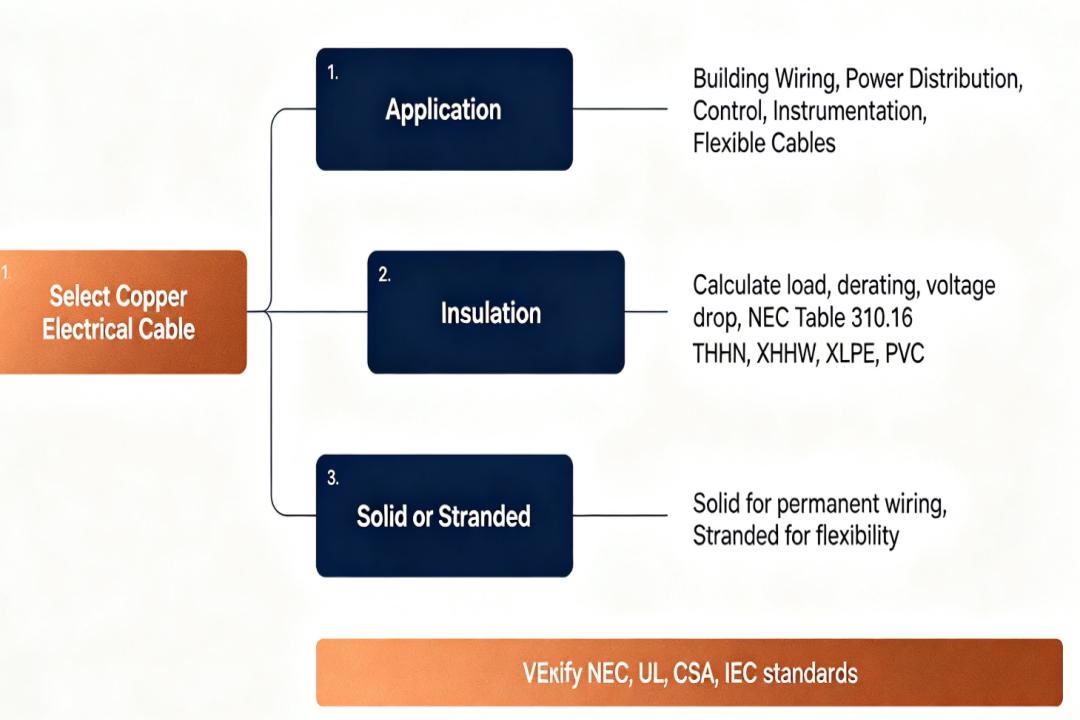
Flowchart Outlining The Key Steps To Select Copper Electrical Cable: Define Application Type, Calculate Ampacity And Select Insulation, Choose Solid Or Stranded Conductors, Then Verify Compliance With Nec, Ul, Csa And Iec Standards.
1. Determine the Application
Start by identifying the specific application: Is this for permanent building wiring, flexible connection, power distribution, or control signaling? Each application has different requirements for conductor type, insulation, and construction.
2. Calculate the Required Ampacity
Determine the expected current load, including any derating factors for ambient temperature, conductor grouping, and installation method. Use NEC Table 310.16 or the applicable standard to find the minimum conductor size.
3. Consider Voltage Drop
For long cable runs, voltage drop can significantly impact equipment performance. As a general rule, voltage drop should not exceed 3% for branch circuits or 5% for feeders. Using larger conductors reduces voltage drop but increases cost.
4. Select the Appropriate Insulation
Choose insulation based on the operating environment:
Dry, indoor locations: THHN or PVC insulation
Wet or damp locations: THWN or XHHW
High-temperature areas: XLPE or silicone insulation
Outdoor or UV-exposed: UV-resistant jackets
5. Choose Solid or Stranded
Solid copper: Permanent installations, in-wall wiring, punch-down terminations
Stranded copper: Flexible connections, patch cords, applications requiring frequent bending
6. Verify Compliance
Ensure the cable meets all applicable standards: NEC, UL, CSA, IEC, or other relevant certifications. Always request material certification from reputable suppliers.
Installation Best Practices
Handling and Storage
Store cable reels in a clean, dry area
Avoid dragging cables across sharp edges
Use proper lifting equipment for heavy reels
Do not drop or impact cable reels
Pulling Tension
Excessive pulling tension can damage conductors and insulation. Follow the manufacturer’s recommended maximum pulling tension. For solid copper conductors, the tension should be limited to protect the conductor from stretching or breaking.
Bending Radius
Avoid sharp bends that can damage the cable. As a general guideline:
Unarmored single-core: 20 × cable diameter
Armored single-core: 15 × cable diameter
Unarmored multi-core: 15 × cable diameter
Armored multi-core: 12 × cable diameter
Termination
Use only connectors and lugs rated for the cable size and material
Follow manufacturer torque specifications
Strip insulation carefully to avoid nicking conductors
For solid conductors, use punch-down blocks or screw terminals designed for solid wire
Testing
Before energizing, perform:
Continuity testing to verify all conductors are intact
Insulation resistance testing to ensure insulation integrity
High-potential (hipot) testing for voltage withstand capability
Common Mistakes to Avoid
1. Undersizing the Cable
Selecting a cable with insufficient ampacity leads to overheating, voltage drop, and premature failure. Always calculate the required ampacity based on the actual load, not an estimate.
2. Ignoring Voltage Drop
For long runs, voltage drop can be significant. Calculate voltage drop and increase conductor size if necessary to stay within acceptable limits.
3. Using Stranded Where Solid Is Required
Stranded cable is not suitable for punch-down terminations and may not meet code requirements for permanent installations. Use solid copper for in-wall wiring.
4. Overlooking Environmental Factors
Consider temperature, moisture, chemicals, and UV exposure when selecting insulation. A cable that works indoors may fail quickly outdoors.
5. Failing to Verify Compliance
Always check that the cable meets applicable standards and has the necessary certifications. Non-compliant cable can result in failed inspections, safety hazards, and legal liability.
Frequently Asked Questions
Q: What is the difference between copper and aluminum electrical cable?
A: Copper offers higher conductivity (approximately 1.5 times that of aluminum), superior durability, better fire resistance (melting point 1,080°C vs. 660°C), and greater fatigue resistance. Aluminum is lighter and less expensive but has higher resistance and poorer long-term reliability.
Q: What is the ampacity of 10 AWG copper wire?
A: According to NEC Table 310.16, 10 AWG copper has ampacities of 30A (60°C), 35A (75°C), and 40A (90°C). However, NEC 240.4(D) limits overcurrent protection for 10 AWG to 30A.
Q: When should I use solid copper vs. stranded copper?
A: Use solid copper for permanent installations, in-wall wiring, and punch-down terminations. Use stranded copper for flexible connections, patch cords, and applications requiring frequent bending.
Q: What does THHN stand for?
A: THHN stands for Thermoplastic High Heat-resistant Nylon-coated. It is a common building wire rated for 90°C in dry locations.
Q: What is the difference between THHN and XHHW?
A: THHN is rated for 90°C in dry locations and 75°C in wet locations. XHHW is rated for 90°C in both dry and wet locations and offers superior moisture resistance.
Q: Where can I find official NEC ampacity tables?
A: The official tables are published in NFPA 70, the National Electrical Code. They are also available through various online references and the NFPA website (www.nfpa.org). Google search results provide numerous resources, including tables from engineering reference sites.
Conclusion
Copper electrical cable remains the gold standard for electrical conductivity, durability, and safety. From residential wiring to industrial power distribution, from data centers to renewable energy systems, copper delivers the performance and reliability that modern electrical infrastructure demands.
Understanding the different types of copper cable—solid vs. stranded, various insulation materials, and specialized constructions—is essential for making informed decisions. Compliance with standards like the National Electrical Code (NEC) and international standards such as IEC 60228 ensures safety, performance, and code compliance.
When selecting copper electrical cable, consider the application, required ampacity, voltage drop, environmental conditions, and installation method. By following best practices for installation and avoiding common mistakes, you can ensure decades of reliable service.
Copper is not just a conductor—it is an investment in safety, performance, and peace of mind.
References
National Electrical Code (NFPA 70), Table 310.16 – Ampacities of Insulated Conductors
NEC 240.4(D) – Small Conductor Overcurrent Protection
IEC 60228 – Conductors of Insulated Cables
ASTM B3 – Soft or Annealed Copper Wire
UL 44 – Thermoset-Insulated Wires and Cables
Various engineering reference sites including engineersedge.com, flukenetworks.com, and wireandcabletips.com
This guide is for informational purposes only. Always consult the latest edition of the National Electrical Code and work with qualified professionals for electrical installations.